
Choosing an aluminum degassing unit requires more than matching a machine’s rated capacity to a plant’s annual production. The correct system must handle the actual molten aluminum flow rate, achieve the required hydrogen reduction, maintain stable treatment conditions, and fit the existing casting line. Rotor configuration, inert gas supply, temperature control, chamber design, and maintenance access all affect equipment selection. Evaluating these factors before requesting a quotation helps avoid undersized equipment, unnecessary investment, and inconsistent casting quality.
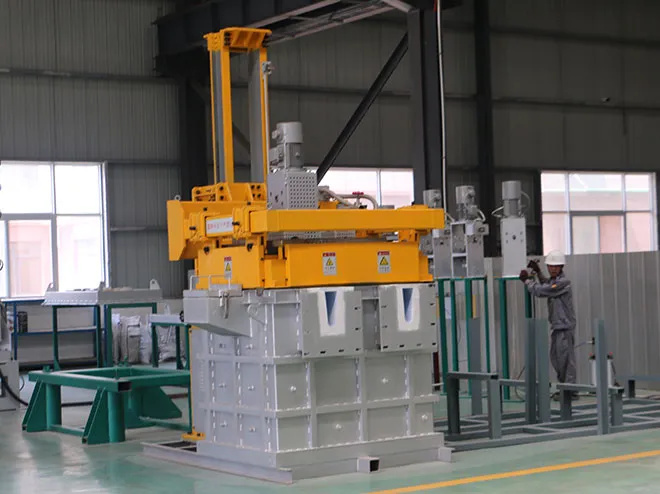
What Capacity Should an Aluminum Degassing Unit Have?
Processing capacity is one of the first specifications buyers compare, but it is also one of the easiest to misunderstand.
A degassing unit must handle the rate at which molten aluminum actually enters the treatment chamber. A plant’s total daily output or nominal casting capacity does not necessarily represent the flow rate required during operation.
For example, two casting lines may each produce 30 tonnes of aluminum per day. One may operate continuously for several hours, while the other may have a shorter casting window and a higher instantaneous flow rate. Although their daily output is identical, their degassing capacity requirements may differ.
How Do You Calculate the Required Degassing Capacity?
Begin by calculating the average mass flow rate during the relevant operating period.
Average mass flow rate = Total aluminum processed ÷ Actual processing time
For example, if a production line processes 30 tonnes of aluminum during five hours of active operation:
30 tonnes ÷ 5 hours = 6 tonnes per hour
If the same quantity must pass through the treatment system within three hours, the average required rate becomes:
30 tonnes ÷ 3 hours = 10 tonnes per hour
These figures are planning estimates, not final equipment specifications. The actual selection must account for the highest sustained flow rate, casting schedule, treatment requirements, and the manufacturer’s rated capacity under the intended operating conditions.
The critical distinction is between daily production and the maximum flow rate the degassing unit must treat. Selecting equipment from daily tonnage alone may result in an undersized system.
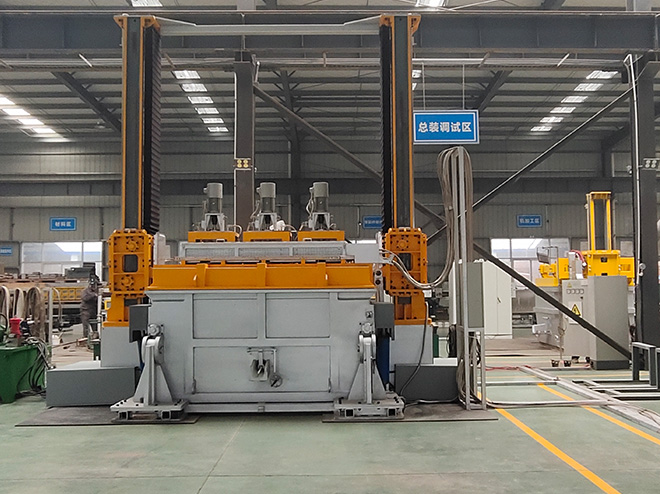
What Degassing Capacities Should Buyers Compare?
AdTech’s published online degassing unit specifications list configurations with nominal maximum flow capacities of 15, 35, and 65 tonnes per hour.
| Published maximum flow capacity | Listed chamber and rotor configuration | What to evaluate |
|---|---|---|
| 15 t/h | One chamber, one rotor (1B1R) | Actual flow demand and required hydrogen reduction |
| 35 t/h | Two chambers, two rotors (2B2R) | Production throughput and treatment configuration |
| 65 t/h | Three chambers, three rotors (3B3R) | High-throughput requirements and line integration |
These are the manufacturer’s published model ratings, not a guarantee that every configuration will deliver the same treatment result at its maximum flow rate. Actual performance depends on alloy, incoming hydrogen content, gas supply, rotor operating conditions, chamber design, and the required final hydrogen level.
Before selecting a model, ask the supplier to confirm the rated capacity for your specific process and the treatment performance expected at that throughput.
How Many Rotors Does an Aluminum Degassing Machine Need?
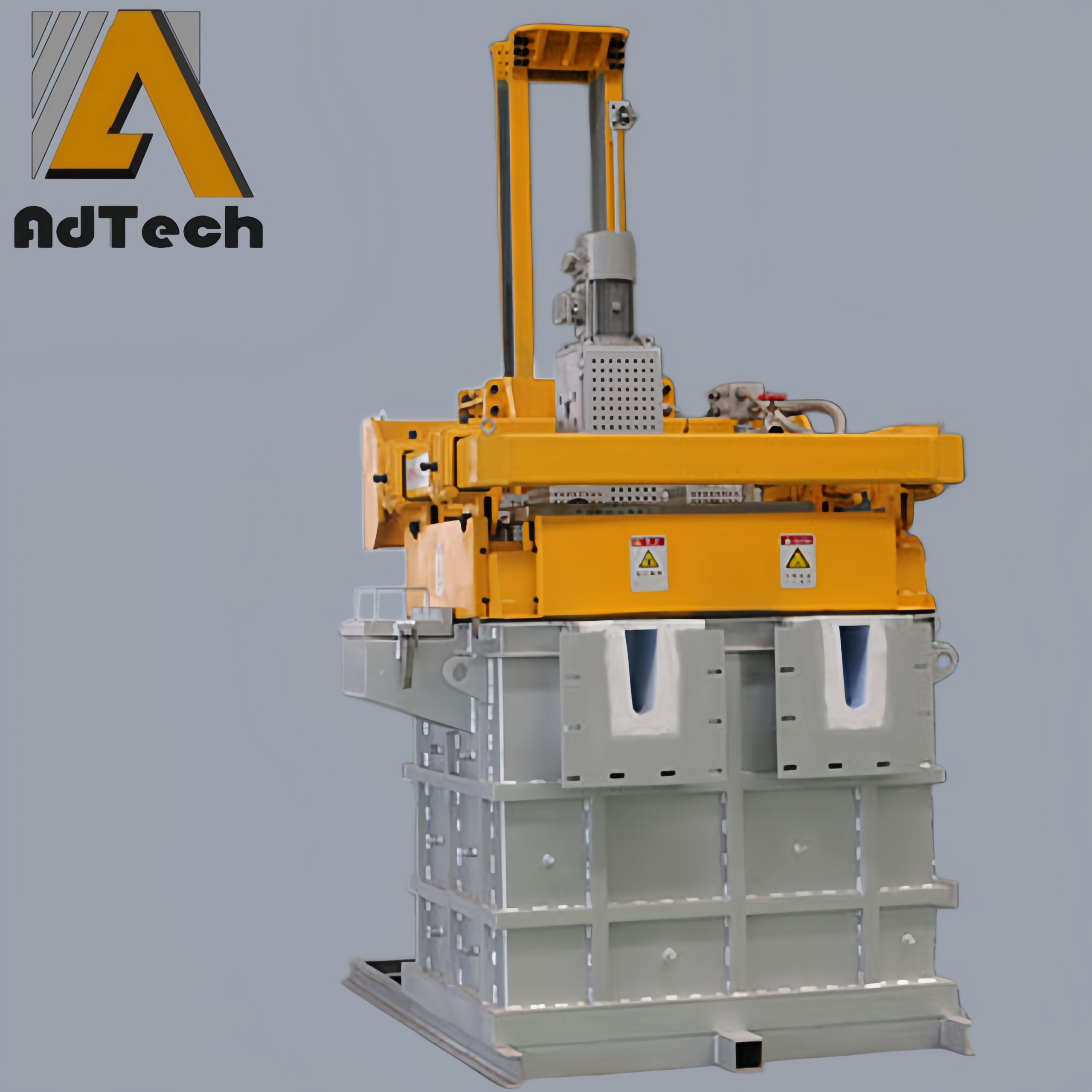
Rotor configuration determines how gas is introduced and dispersed within the molten aluminum. However, simply adding more rotors does not guarantee better degassing performance.
In a rotary degassing system, an impeller or rotor rotates within the molten metal while introducing inert gas. Rotation breaks the gas stream into bubbles and promotes their distribution throughout the treatment chamber.
Hydrogen then transfers from the molten aluminum into the gas bubbles. As the bubbles rise, they carry the absorbed hydrogen out of the melt. Depending on the process and conditions, bubbles can also help transport certain inclusions toward the surface.
The effectiveness of this process depends on bubble size, gas distribution, mixing conditions, residence time, and the characteristics of the melt.
Is a Single-Rotor or Multi-Rotor System Better?
| Selection factor | Single-rotor configuration | Multi-rotor configuration |
|---|---|---|
| Equipment arrangement | Generally simpler | More complex |
| Treatment configuration | One rotor-based treatment point | Multiple rotor-based treatment points |
| Capacity suitability | Depends on the model and process demand | Can be designed for higher-throughput applications |
| Maintenance | Fewer rotor assemblies to service | More rotor assemblies and associated components to maintain |
| Main consideration | Whether the required treatment can be achieved at the target flow rate | Whether the additional configuration provides the required capacity and treatment performance |
The appropriate configuration should be selected from measured production requirements, not from rotor count alone.
For a smaller casting line, a single-rotor system may be sufficient if it can meet the required throughput and hydrogen target. A higher-capacity line may require a multi-rotor arrangement, but the final decision still depends on how the treatment system is designed and operated.
What Should You Check When Choosing the Rotor?
Rotor selection should account for:
- Material compatibility: Confirm that the rotor material is suitable for the alloy, operating temperature, and intended treatment conditions.
- Rotor speed control: The available speed range should support the operating parameters recommended for the specific unit.
- Gas distribution: Rotor geometry and gas introduction should provide suitable bubble dispersion for the chamber design.
- Wear resistance: Assess expected service life, inspection intervals, and replacement requirements.
- Maintenance access: Verify how the rotor and shaft can be removed, inspected, and replaced during routine maintenance.
Avoid selecting a rotor simply because it has a higher maximum speed. Excessive rotation can produce unwanted turbulence, encourage oxide entrainment, or change the bubble distribution in ways that do not improve treatment efficiency.
The best rotor configuration is the one that provides the required gas dispersion and mixing without creating unnecessary turbulence or maintenance costs.
Which Inert Gas Should You Use for Aluminum Degassing?
Nitrogen and argon are commonly used as purge gases in rotary aluminum degassing. Both can introduce bubbles that facilitate hydrogen removal, but the choice should be based on the alloy, process requirements, gas quality, and applicable operating procedures.
When Should You Consider Nitrogen?
Nitrogen is widely used in many conventional aluminum casting operations. It can be a practical choice when the alloy specification and treatment process permit its use.
Before selecting nitrogen, verify its suitability for the particular alloy and application. Gas purity, supply stability, moisture contamination, and operating parameters should all be considered.
When Should You Consider Argon?
Argon may be preferred for applications with specific alloy or gas-chemistry requirements. Its use should be evaluated in conjunction with the required cleanliness target, operating conditions, and gas-supply cost.
Neither gas should be assumed to provide superior results under every set of conditions. The quality of gas dispersion and the overall treatment process are also important.
What Matters More Than Gas Choice Alone?
Even an appropriate purge gas can deliver poor results when the system is incorrectly configured.
| Fator | Why it matters |
|---|---|
| Gas purity and dryness | Contaminated gas can undermine melt treatment |
| Vazão | Excessive or insufficient flow can affect bubble dispersion and treatment performance |
| Velocidade do rotor | Influences bubble formation and mixing |
| Treatment residence time | Determines how long the melt is exposed to the treatment process |
| Incoming hydrogen content | Affects the treatment duty required |
| Post-treatment handling | Hydrogen can be reintroduced if the melt is exposed to moisture after treatment |
Gas flow and rotor speed should therefore be set according to the equipment design and verified through process measurements. There is no single universal gas-flow setting or rotor speed that suits every aluminum alloy and production rate.
Does an Aluminum Degassing Unit Need an Integrated Heating System?
Heating and insulation can be important when the treatment chamber introduces significant heat loss or when molten aluminum must remain within a tightly controlled temperature range.
A degassing system should be evaluated as part of the entire transfer route, rather than as an isolated machine.
When Is Heating Worth Considering?
Integrated heating or additional thermal insulation may be particularly relevant when:
- The line has a long molten aluminum transfer path.
- The production schedule includes extended periods of operation or interruption.
- The allowable temperature window is narrow.
- The treatment chamber creates a measurable temperature drop.
- Metal temperature must remain stable before downstream filtration or casting.
What Happens If the Metal Temperature Drops Too Far?
A lower temperature can increase the risk of localized solidification or restricted flow when the melt approaches the relevant alloy’s liquidus temperature. It can also disrupt stable operation in downstream equipment.
On the other hand, excessive heating can increase energy consumption and may aggravate oxidation or refractory wear under some conditions.
The goal is not simply to maintain the highest possible temperature. It is to keep the melt within the required process window while minimizing unnecessary heat loss.
What Should You Check in the Heating and Insulation Design?
Ask the supplier to clarify:
- Whether heating is included or optional.
- How temperature is measured and controlled.
- How the chamber is insulated.
- How the unit handles start-up and interruptions.
- What temperature operating range is recommended.
- What provisions exist for safe maintenance of heating components.
AdTech’s published degassing unit design includes an insulated processing chamber, with heating and temperature-control arrangements depending on the configuration. Confirm the detailed design for the exact model being quoted.
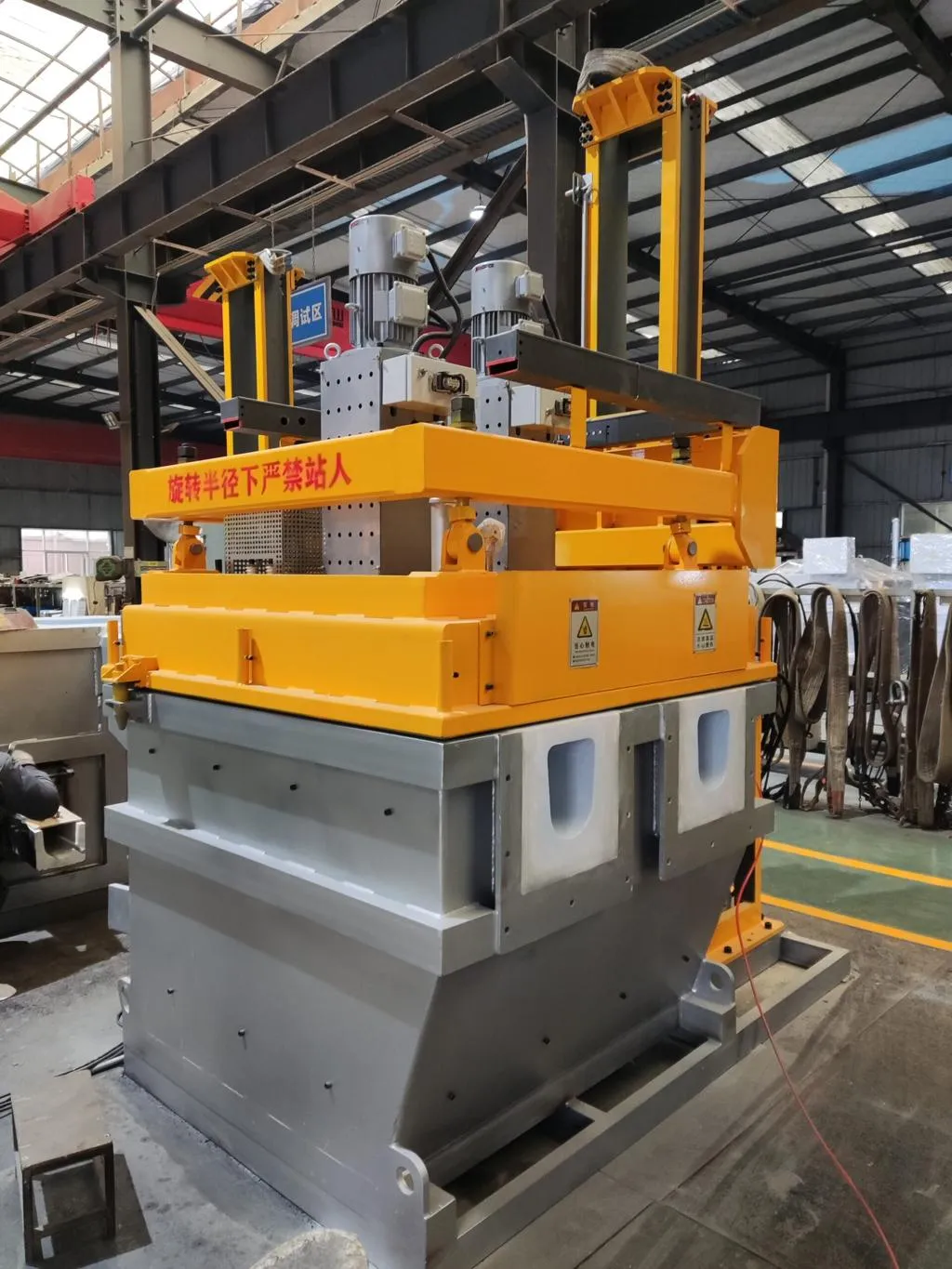
How Does Chamber Design Affect Degassing Performance?
The treatment chamber affects metal flow distribution, residence time, thermal stability, and the interaction between the molten aluminum and dispersed gas bubbles.
A suitable system should allow molten aluminum to enter, undergo treatment, and leave through a controlled flow path without creating excessive turbulence or unintended short-circuiting.
Why Does Residence Time Matter?
Hydrogen removal depends partly on how long the melt remains in contact with the dispersed bubbles.
At a fixed chamber volume, increasing the flow rate generally reduces the nominal residence time. Whether treatment remains adequate depends on the efficiency of gas dispersion, mixing, and mass transfer.
This means a larger flow rating should not be considered independently of the required hydrogen reduction.
What Should You Evaluate in the Chamber Configuration?
Flow path. The arrangement should support effective contact between the molten metal and the dispersed gas bubbles.
Treatment and holding functions. Some designs separate treatment and temperature-maintenance functions into different zones.
Slag removal. The chamber should provide a practical way to remove accumulated dross or treatment residues.
Drainage. Consider how retained aluminum is handled during maintenance or shutdown.
Thermal stability. Insulation and any integrated heating should suit the intended operating schedule.
For continuous production, these design details can influence availability and maintenance requirements as much as the nominal throughput rating.
Where Should the Degassing Unit Be Installed in the Casting Line?
Online degassing equipment is commonly installed between the holding furnace and the casting machine. This allows molten aluminum to be treated during transfer to casting rather than through a separate batch process.
However, the exact location and configuration depend on the existing line layout.
How Should Degassing and Filtration Be Coordinated?
Degassing and filtration address different aspects of melt quality.
A degassing unit primarily reduces dissolved hydrogen. A ceramic foam filter primarily removes solid non-metallic inclusions. The two functions should be planned together when the product specification requires both hydrogen control and inclusion reduction.
In many production lines, degassing and filtration are integrated into the same molten aluminum treatment route. The appropriate order and physical arrangement depend on the system design, existing equipment, and operating requirements.
A AdTech oferece online degassing equipment for molten aluminum e filtros de espuma cerâmica para fundição de alumínio for these complementary functions.
The important point is to confirm the complete flow path, including the inlet and outlet elevations, launder connections, temperature requirements, and access needed for inspection and maintenance.
What Other Equipment Interfaces Should You Check?
The degassing unit must fit the physical and operational requirements of the surrounding line.
Before confirming a design, review:
- Inlet and outlet positions.
- Launder dimensions and connection points.
- Available floor space and lifting clearance.
- Electrical supply and control-system requirements.
- Inert gas supply and connection details.
- Slag removal and maintenance access.
- Required operating temperature and insulation.
- Coordination with downstream filtration equipment.
Where metal transfer is a critical source of temperature loss or flow instability, a compatible refractory casting launder system should also be evaluated.
An otherwise suitable degassing unit can become difficult to operate if its connections, access points, or maintenance arrangements are poorly matched to the line.
How Can You Tell Whether Your Existing Degassing Unit Is Undersized?
Persistent hydrogen-related defects do not automatically mean the equipment lacks capacity. The root cause may instead be excessive incoming hydrogen, unsuitable operating parameters, rotor wear, gas-supply problems, inconsistent testing, or contamination introduced after treatment.
A useful investigation separates equipment capacity from actual treatment performance.
| Observed symptom | What to investigate first |
|---|---|
| Hydrogen remains high after treatment | Compare inlet and outlet measurements; inspect operating conditions |
| Results vary significantly between runs | Check gas supply, rotor condition, alloy consistency, and sampling |
| Quality deteriorates when throughput increases | Evaluate actual flow rate, residence time, and model suitability |
| Temperature drops during extended operation | Review insulation, heat loss, heating capacity, and operating schedule |
| Unexpected maintenance interruptions | Review rotor life, access, drainage, and component replacement procedures |
| Hydrogen improves after treatment but defects remain | Investigate inclusions, solidification, downstream handling, and other defect mechanisms |
If treatment results deteriorate specifically as flow rate rises, the nominal capacity and treatment performance at that throughput deserve closer review. Increasing the system size may be appropriate, but only after the process has been checked for preventable operating problems.
What Information Should You Prepare Before Requesting a Degassing Unit Quotation?
The more complete the technical information, the easier it is for a supplier to recommend a suitable configuration.
Instead of asking for a generic machine price, prepare a concise process specification.
| Information to provide | Why it matters |
|---|---|
| Aluminum alloy grade or alloy family | Establishes relevant treatment requirements |
| Required flow rate (t/h) | Helps determine the necessary capacity |
| Total production volume and active casting hours | Helps distinguish daily output from actual operating throughput |
| Incoming hydrogen level, if available | Provides a baseline for the treatment duty |
| Target hydrogen level or quality specification | Defines the required treatment result |
| Purge gas preference or availability | Establishes gas-supply compatibility |
| Current rotor configuration | Helps assess existing equipment and upgrade needs |
| Faixa de temperatura de operação | Helps define thermal-control requirements |
| Current treatment and filtration arrangement | Identifies system interfaces |
| Launder layout and installation dimensions | Allows physical integration to be evaluated |
| Automation requirements | Helps determine control and operational needs |
| Maintenance and downtime constraints | Helps evaluate service access and reliability |
If the main problem is persistent porosity, provide recent test results where available. If the issue is inadequate throughput or unstable operation, provide flow-rate data and the casting schedule.
These details help distinguish between a capacity problem and a process problem before equipment selection begins.
How Should You Compare Aluminum Degassing Unit Suppliers?
Price matters, but it is only one part of the purchasing decision. Two units with similar nominal capacities can differ in rotor configuration, chamber design, temperature control, maintenance requirements, and their ability to integrate with the existing casting line.
Before comparing quotations, confirm that each supplier has priced equipment for the same operating conditions.
What Should Be Included in a Technical Comparison?
Rated capacity and performance basis. Confirm the throughput rating and the operating conditions under which the supplier expects the unit to meet the required treatment target.
Rotor and drive system. Review the specified rotor material, speed control, replacement parts, and maintenance access.
Gas control. Confirm the compatible gas type, connection requirements, and control arrangements.
Thermal management. Check insulation, heating configuration, temperature measurement, and control options.
Chamber maintenance. Understand how the chamber is cleaned, how residual aluminum is handled, and how refractory components are serviced.
Automation and integration. Verify compatibility with the casting line’s electrical controls and operating procedures.
Suporte técnico. Establish which installation information, operating guidance, spare parts, and troubleshooting assistance are included.
A supplier should be able to explain why a particular configuration matches the process requirements rather than recommending a larger machine without a clear technical basis.
Select a Degassing Unit Around Your Casting Process, Not Just Its Rated Capacity
The correct degassing unit must meet the required metal throughput while achieving the necessary hydrogen reduction under real operating conditions. Rotor arrangement, gas distribution, chamber design, temperature management, and installation layout all influence whether that target can be maintained consistently.
Choosing a machine by nameplate capacity alone can overlook the details that determine treatment quality and long-term operating cost. A more reliable approach starts with actual flow-rate data, the required final metal quality, the existing line layout, and the maintenance conditions of the plant.
AdTech supplies online aluminum degassing units in multiple configurations for different molten aluminum treatment requirements.
To discuss a suitable model, provide your alloy grade, actual flow rate, target hydrogen level, casting schedule, gas availability, and existing equipment layout. AdTech can then help evaluate the required capacity and configuration for your production line.
Perguntas frequentes
1. How do I choose the right aluminum degassing unit capacity?
Start with the actual molten aluminum flow rate during casting rather than daily production alone. Consider peak throughput, alloy type, incoming hydrogen content, and the required final hydrogen level. The selected unit must achieve the required treatment performance at the intended operating flow rate.
2. What is the difference between a single-rotor and a dual-rotor degassing unit?
A single-rotor unit uses one rotor to disperse inert gas into molten aluminum, while a dual-rotor unit uses two rotor assemblies. The appropriate configuration depends on processing capacity, chamber design, gas distribution, and treatment requirements. More rotors do not automatically guarantee better degassing performance.
3. Which gas is better for aluminum degassing: nitrogen or argon?
Both nitrogen and argon are commonly used as purge gases for rotary aluminum degassing. The choice depends on alloy requirements, gas purity, operating conditions, availability, and cost. Confirm gas compatibility with the alloy and equipment rather than assuming one gas is always more effective.
4. How does a rotary degassing unit remove hydrogen from molten aluminum?
A rotating rotor disperses inert gas into fine bubbles within the molten aluminum. Dissolved hydrogen diffuses from the metal into the bubbles, which rise and carry the hydrogen out of the melt. Effective treatment depends on bubble dispersion, residence time, gas flow, rotor operation, and initial hydrogen content.
5. Can an aluminum degassing unit remove oxide inclusions as well as hydrogen?
Degassing primarily targets dissolved hydrogen. Gas bubbles may also help certain inclusions float toward the melt surface, but rotary degassing should not replace dedicated filtration when solid-inclusion removal is required. Ceramic foam filtration and degassing are complementary processes for many aluminum casting lines.
6. Why is hydrogen content still high after degassing?
Possible causes include excessive incoming hydrogen, unsuitable gas flow or rotor settings, inadequate treatment capacity, worn rotor components, or moisture pickup after treatment. Compare hydrogen measurements before and after degassing under consistent sampling conditions, then inspect the gas supply, rotor condition, and actual metal throughput.
7. Where should an online aluminum degassing unit be installed?
An online degassing unit is commonly integrated into the molten aluminum transfer route between holding and casting operations. Its exact position depends on the production line layout, launder connections, filtration arrangement, temperature requirements, and maintenance access. The complete flow path should be evaluated before installation.
8. Does molten aluminum temperature affect degassing performance?
Yes. Temperature affects metal fluidity, process stability, and the risk of localized solidification during treatment. The unit should operate within the temperature range specified for the alloy and casting process. Excessive heating is not a substitute for correct gas flow, rotor operation, or adequate treatment capacity.
9. How can I tell whether my aluminum degassing unit is undersized?
Investigate whether hydrogen levels consistently fail to meet the required target, particularly when throughput increases. Compare inlet and outlet measurements at different flow rates and review operating settings, rotor condition, and gas supply. Persistent problems may indicate insufficient capacity, but they should be diagnosed before replacing or upgrading the equipment.
10. What information should I provide when requesting an aluminum degassing unit quotation?
Provide the alloy grade, actual molten aluminum flow rate, target hydrogen level, incoming hydrogen measurement if available, casting schedule, preferred purge gas, and existing equipment layout. Information about rotor configuration, heating requirements, filtration equipment, and automation preferences also helps AdTech evaluate a suitable degassing unit for your production line.