
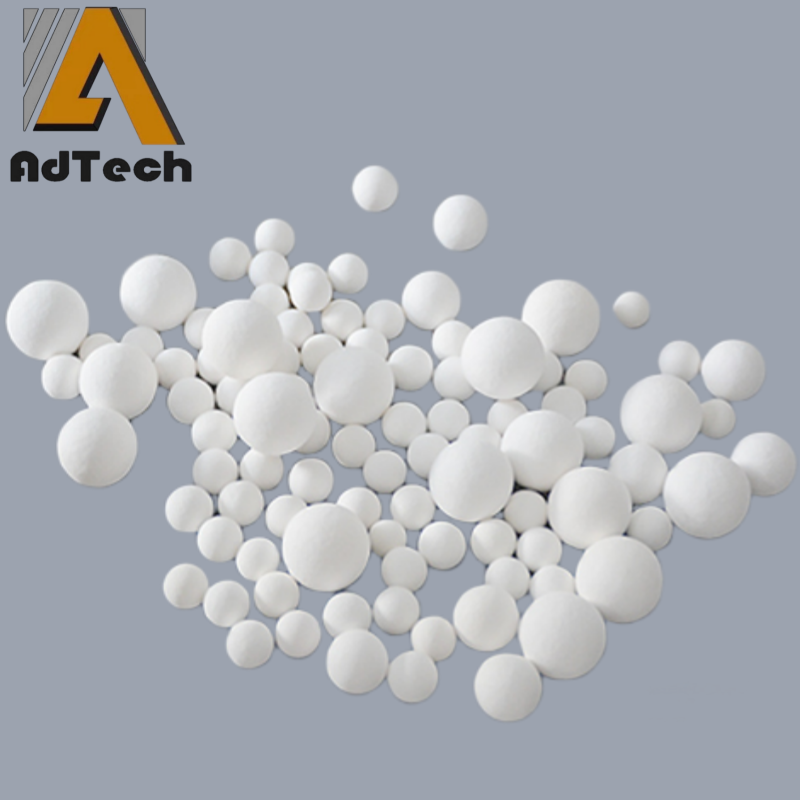
As esferas de cerâmica de alumina são amplamente utilizadas como meio filtrante em sistemas de filtração de leito profundo para alumínio fundido. Sua função principal não é simplesmente sustentar o leito filtrante, mas criar um caminho de filtração controlado que capture inclusões não metálicas, estabilize o fluxo do metal e melhore a eficiência geral da filtração. Para os produtores de alumínio que buscam níveis mais baixos de inclusões, melhor qualidade de superfície e maior vida útil do filtro, o tamanho correto das esferas de alumina, a pureza e a configuração do leito podem influenciar significativamente o desempenho da fundição.
Por que as esferas cerâmicas de alumina são utilizadas em sistemas de filtração de leito profundo?
Ao contrário dos filtros de espuma cerâmica, que se baseiam em uma rede porosa para reter impurezas, a filtração em leito profundo funciona forçando o alumínio fundido a passar por várias camadas de meio granular.
À medida que o metal passa pelo leito filtrante:
- Inclusões de grande porte ficam presas entre as camadas do meio.
- As partículas menores aderem às superfícies cerâmicas.
- A velocidade do fluxo diminui.
- A turbulência é reduzida.
O resultado é que o alumínio fundido que entra no processo de fundição está mais puro.
Essa abordagem é particularmente eficaz no tratamento de grandes volumes de metal, nos quais a filtragem padrão, por si só, pode não ser suficiente para remover todas as impurezas.
Que tipos de inclusões as esferas cerâmicas de alumina podem remover?
Muitos defeitos em peças fundidas de alumínio têm origem em inclusões introduzidas durante a fusão, a ligação, a transferência ou a manutenção em temperatura.
Contaminantes comuns no alumínio fundido
| Tipo de inclusão | Fonte típica |
|---|---|
| Filmes de óxido | Oxidação superficial |
| Partículas de espinélio | Ligas contendo magnésio |
| Fragmentos refratários | Desgaste do revestimento do forno |
| Partículas de escória | Operações de limpeza de fornos |
| Resíduos de carboneto | Contaminação do processo |
Quando essas inclusões chegam à fase de fundição, podem causar:
- Riscas na superfície
- Linhas pretas
- Defeitos de extrusão
- Resistência à fadiga reduzida
- Problemas com a anodização
Um leito de esferas de alumina adequadamente projetado aumenta a probabilidade de captura de inclusões antes que o metal chegue ao molde.
Esferas de cerâmica de alumina x filtros de espuma cerâmica: qual remove mais impurezas?
Essa é uma das perguntas mais comuns feitas pelas usinas de alumínio.
A resposta depende do objetivo da filtração.
Filtros de espuma cerâmica
Mais indicado para:
- Linhas de lingotamento contínuo
- Fundição de lingotes
- Purificação geral do alumínio fundido
- Sistemas compactos de filtragem
Leitos de esferas de cerâmica de alumina
Mais indicado para:
- Grande capacidade de processamento de metal
- Percursos de filtragem estendidos
- Elevados requisitos de limpeza
- Unidades de filtração de leito profundo
Na prática, muitas instalações modernas de fundição utilizam ambas as tecnologias.
Um filtro de leito profundo costuma servir como etapa primária de purificação, enquanto filtros de espuma cerâmica para filtragem de alumínio fundido funcionar como um filtro de acabamento final antes da fundição.
Essa combinação geralmente proporciona um melhor resultado de limpeza do que qualquer um dos métodos isoladamente.
Qual é o teor de alumina recomendado?
Um maior teor de alumina geralmente proporciona melhor resistência ao ataque do alumínio fundido.
No entanto, nem sempre é necessário usar mais alumina.
Diretrizes típicas de seleção
| Teor de Al₂O₃ | Aplicação recomendada |
| 90–93% | Filtragem industrial geral |
| 93–98% | A maioria das operações de fundição de alumínio |
| 98–99.8% | Alumínio de alta pureza e ligas essenciais |
Para a maioria das fundidoras de tarugos e placas, a alumina 93–98% oferece um equilíbrio eficaz entre desempenho e custo.
Os tipos de pureza ultra-alta são geralmente escolhidos na produção de:
- Ligas aeroespaciais
- Lâminas de alumínio para baterias
- Materiais eletrônicos
- Produtos laminados de alta qualidade
Como o tamanho da esfera afeta a eficiência da filtração?
O diâmetro da esfera tem um grande impacto no desempenho da filtração.
Muitos compradores se concentram apenas no teor de alumina, sem levar em conta a escolha do tamanho do meio filtrante.
Bolas maiores
Vantagens:
- Menor queda de pressão
- Maior capacidade de vazão
- Risco reduzido de entupimento
Desvantagens:
- Menor precisão de filtragem
Bolas menores
Vantagens:
- Maior eficiência de captura de inclusões
- Maior área de filtragem
Desvantagens:
- Maior resistência ao fluxo
Guia Geral de Seleção
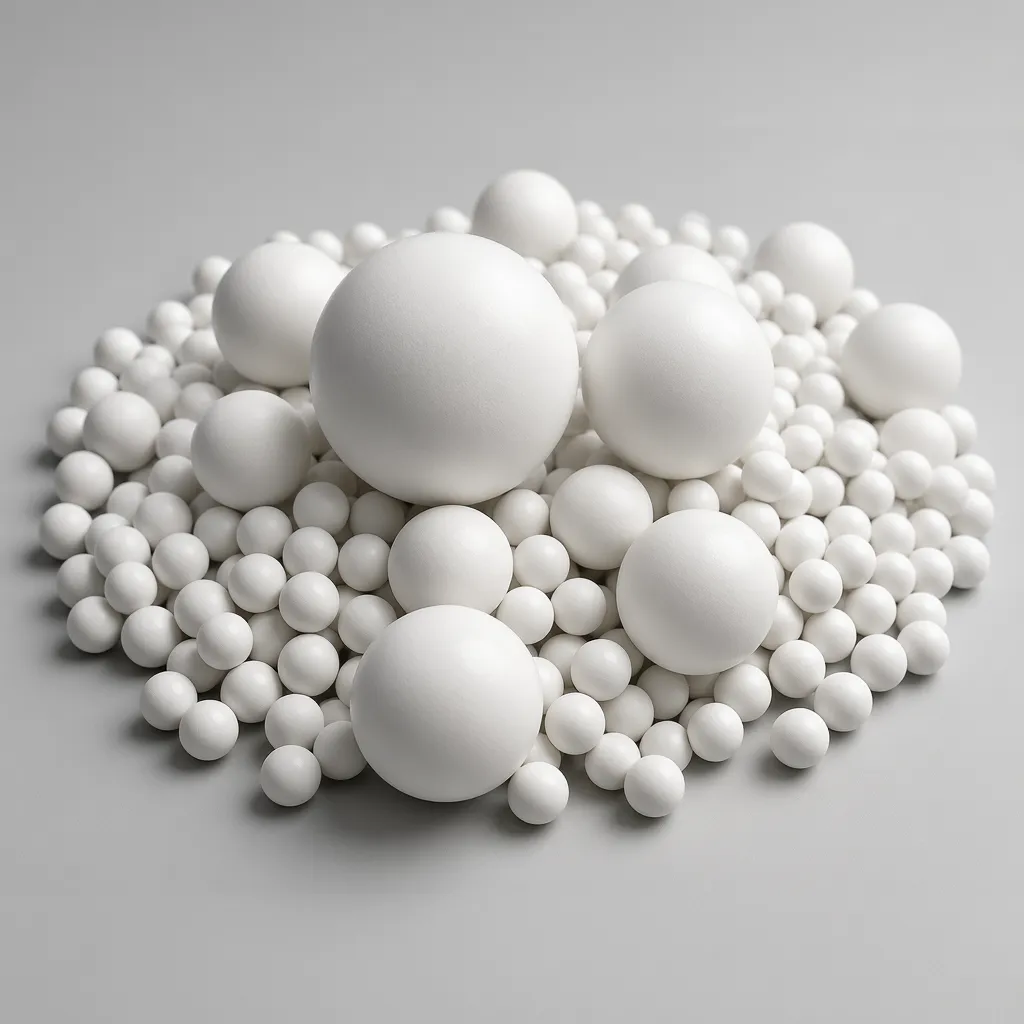
| Tamanho do papel | Uso típico |
| Φ19 mm | Sistemas de alto fluxo |
| Φ13 mm | Leitos de filtração padrão |
| Cascalho de 3 a 6 mm | Camada intermediária |
| Cascalho de 2 a 4 mm | Camada de filtragem fina |
Muitos filtros de leito profundo utilizam uma estrutura em camadas, em vez de um único tamanho de meio filtrante.
Por que alguns filtros de leito profundo duram mais do que outros?
A vida útil do filtro é influenciada por muito mais do que apenas a qualidade do meio filtrante.
Várias condições operacionais desempenham um papel fundamental.
Limpeza do metal antes da filtragem
Se entrar uma quantidade excessiva de escória no leito filtrante, o entupimento ocorre muito mais rapidamente.
É por isso que muitas fábricas instalam equipamento de desgaseificação rotativo online a montante, para reduzir a carga de impurezas antes da filtração.
Estabilidade do fluxo
Um fluxo instável de metal pode causar a formação de canais no interior do leito.
À medida que se formam canais, o alumínio fundido contorna partes do meio filtrante, reduzindo a eficiência.
Projetado adequadamente sistemas de canaletas refratárias ajudam a manter uma distribuição uniforme do fluxo na câmara do filtro.
Avaliação de mídia
A disposição incorreta das camadas costuma levar ao aumento prematuro da pressão.
Uma base devidamente nivelada distribui os contaminantes de maneira mais uniforme e prolonga a vida útil.
As esferas cerâmicas de alumina podem melhorar a qualidade da superfície dos tarugos?
Indiretamente, sim.
As esferas de cerâmica de alumina, por si só, não melhoram a qualidade da superfície.
Em vez disso, eles reduzem a quantidade de material de enchimento que entra no molde.
Níveis mais baixos de inclusão geralmente resultam em:
- Superfícies mais limpas dos tarugos
- Menos defeitos em forma de listras
- Resposta aprimorada à anodização
- Maior consistência na extrusão
- Redução da quantidade de refugo nas etapas posteriores do processo
O efeito torna-se ainda mais significativo quando a filtragem é combinada com o controle do hidrogênio e práticas adequadas de tratamento da massa fundida.
Quando as esferas cerâmicas de alumina devem ser substituídas?
Não existe um intervalo universal para a substituição.
O momento certo depende de:
- Tipo de liga
- Volume de produção
- Carregamento de inclusão
- Temperatura de filtração
- Vazão
No entanto, os operadores devem monitorar:
- Aumento da queda de pressão
- Capacidade de fluxo reduzida
- Diminuição da eficiência de filtragem
- Deterioração visível do material de mídia
Esperar até que ocorra um bloqueio total geralmente aumenta os custos operacionais e pode comprometer a qualidade da fundição.
Como selecionar as esferas cerâmicas de alumina adequadas para a filtragem de alumínio fundido
Ao avaliar os meios de filtração, os compradores devem levar em conta quatro fatores:
1. Objetivo da filtração
O objetivo é:
- Purificação geral?
- Produção de metais de alta pureza?
- Fabricação de ligas críticas?
2. Taxa de transferência
Vazões mais altas exigem configurações diferentes do leito.
3. Características da inclusão
Ligas diferentes geram perfis de contaminantes diferentes.
4. Projeto do sistema de filtragem existente
A escolha do meio deve estar de acordo com a geometria do equipamento e os parâmetros operacionais.
Os melhores resultados de filtragem são obtidos quando as esferas de cerâmica de alumina são selecionadas como parte de um sistema integrado de tratamento de alumínio fundido, em vez de serem utilizadas como um consumível independente.
Perguntas frequentes
1. Para que servem as esferas de cerâmica de alumina na filtragem do alumínio fundido?
As esferas de cerâmica de alumina são utilizadas principalmente como meio de filtração em sistemas de filtração de leito profundo. Elas ajudam a capturar inclusões não metálicas, melhoram a pureza do alumínio fundido, estabilizam o fluxo do metal e contribuem para uma maior qualidade da fundição.
2. Qual é o teor de alumina recomendado para aplicações de filtragem de alumínio?
Na maioria das operações de fundição de alumínio, as esferas de cerâmica de alumina com teor de Al₂O₃ entre 93% e 98% oferecem um excelente equilíbrio entre estabilidade térmica, resistência à corrosão e custo-benefício. Os tipos de maior pureza são normalmente utilizados em materiais aeroespaciais e eletrônicos.
3. Como as esferas de cerâmica de alumina removem as inclusões do alumínio fundido?
À medida que o alumínio fundido flui através do leito de filtração compactado, as inclusões são capturadas por meio de interceptação mecânica, sedimentação e adesão superficial. Esse processo ajuda a reduzir as camadas de óxido, as partículas de escória e os resíduos refratários antes da fundição.
4. Qual é a diferença entre esferas cerâmicas de alumina e filtros de espuma cerâmica?
Os filtros de espuma cerâmica removem as impurezas por meio de uma estrutura porosa, enquanto as esferas de cerâmica de alumina criam um leito de filtração profundo que aumenta o percurso de contato do alumínio fundido. Muitas usinas de alumínio utilizam ambas as tecnologias em conjunto para alcançar maior eficiência de filtração.
5. As esferas de cerâmica de alumina podem remover o hidrogênio do alumínio fundido?
Não. As esferas cerâmicas de alumina são projetadas para remover inclusões sólidas, e não gases dissolvidos. A remoção do hidrogênio é normalmente realizada por meio de equipamentos de desgaseificação rotativos em linha, antes da etapa de filtração.
6. Como faço para escolher o tamanho correto da esfera de cerâmica de alumina?
O tamanho das esferas depende da vazão do metal, dos requisitos de filtragem e do projeto do equipamento. Esferas maiores proporcionam menor resistência ao fluxo, enquanto esferas menores oferecem maior precisão de filtragem. Configurações de meios filtrantes multicamadas são comumente utilizadas para obter o melhor desempenho.
7. Qual é a vida útil das esferas de cerâmica de alumina em um filtro de leito profundo?
A vida útil varia de acordo com o tipo de liga, a pureza do metal, a temperatura de operação e o volume de produção. Sistemas de filtragem com manutenção adequada costumam funcionar por longos períodos antes que seja necessária a substituição do meio filtrante.
8. As esferas de cerâmica de alumina podem melhorar a qualidade da superfície dos tarugos e das placas?
Sim. Ao reduzir a entrada de inclusões não metálicas no processo de fundição, as esferas de cerâmica de alumina ajudam a minimizar defeitos superficiais, riscos e problemas nas etapas posteriores do processamento, contribuindo para uma melhor qualidade do produto.
9. As esferas de cerâmica de alumina são resistentes à corrosão causada pelo alumínio fundido?
Sim. As esferas de cerâmica com alto teor de alumina são projetadas especificamente para ambientes de alta temperatura e oferecem excelente resistência ao ataque do alumínio fundido, ao choque térmico e ao desgaste mecânico.
10. As esferas de cerâmica de alumina podem ser utilizadas na produção de alumínio reciclado?
Sim. Elas são amplamente utilizadas no processamento de alumínio reciclado, pois o metal reciclado geralmente contém níveis mais elevados de inclusões. A filtragem em leito profundo com esferas de cerâmica de alumina ajuda a melhorar a pureza do metal e a consistência da fundição.