
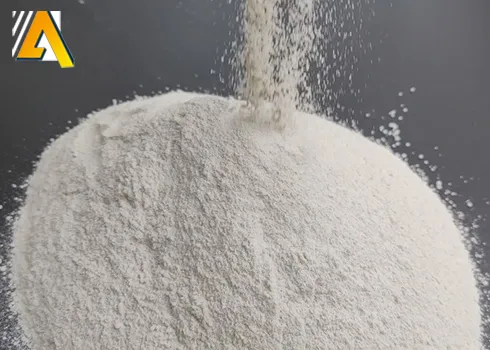
Drossing flux is also known as a deslagging flux in aluminum melt treatment. It is mainly used to separate metallic aluminum from oxide dross, reduce metal loss during slag removal, and improve melt recovery efficiency. Unlike refining fluxes that focus on hydrogen and inclusion removal, drossing flux works primarily on the slag-metal separation process during aluminum melting and casting.
What Is Drossing Flux and Why Is It Used in Aluminum Casting?
Drossing flux is a chemical treatment material designed for removing and treating aluminum dross generated during melting operations. In the aluminum industry, dross is not simply waste material. It is a mixture of aluminum oxide, other non-metallic compounds, and valuable metallic aluminum trapped inside the oxide network.
During aluminum melting, the contact between molten aluminum and oxygen inevitably produces oxide films. Continuous furnace charging, alloying, stirring, and metal transfer can accelerate oxidation, causing more dross formation. Without proper treatment, a considerable amount of molten aluminum remains trapped inside the dross layer and is lost during skimming.
A properly selected флюс для удаления окалины с алюминия helps break down the oxide structure, improve the separation between aluminum metal and slag, and transform sticky wet dross into a drier and easier-to-remove residue.
| Пункт | Описание |
|---|---|
| Product name | Флюс Дроссинга |
| Also known as | Deslagging Flux, Aluminum Slag Removal Flux, Slagging Agent |
| Main application | Aluminum melting and casting |
| Primary function | Separate metallic aluminum from oxide dross |
| Main benefit | Reduce aluminum loss and improve metal recovery |
The main purpose of drossing flux is not simply to “remove slag faster”. The real production value comes from recovering aluminum that would otherwise leave the furnace together with the dross.
How Does Drossing Flux Work in Molten Aluminum?
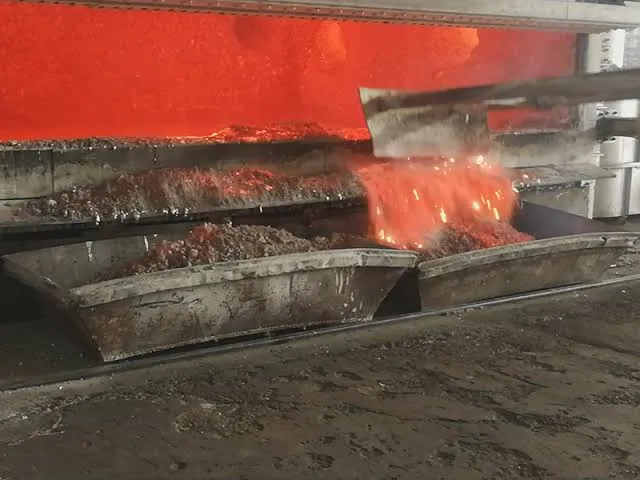
The working mechanism of флюс для удаления окалины с алюминия involves several physical and chemical effects. Most commercial drossing fluxes contain chloride-based salts combined with fluoride compounds and other active ingredients. The exact formulation varies depending on alloy type, furnace conditions, and application requirements.
When added to molten aluminum, the flux penetrates the dross layer and improves the fluidity of the oxide mixture. This allows small aluminum droplets trapped inside the dross to merge together and flow back into the molten bath.
The main effects include:
1. Reducing dross viscosity
Fresh aluminum dross is often dense, sticky, and difficult to separate because aluminum droplets are physically trapped inside oxide networks. Drossing flux modifies this structure and helps release metallic aluminum.
2. Improving metal-slag separation
The flux reduces the interfacial resistance between aluminum metal and oxide compounds. As a result, aluminum droplets can separate more easily from the slag phase.
3. Producing dry and removable dross
After effective treatment, dross usually becomes lighter, more powdery, and less metallic. This makes mechanical skimming easier and reduces unnecessary aluminum loss.
| Dross Condition | Appearance | Production Meaning |
|---|---|---|
| Wet dross | Heavy, sticky, metallic appearance | High aluminum trapped inside |
| Flux-treated dross | Dry, loose, powdery | Better aluminum recovery |
| Over-oxidized dross | Dark, dense, burnt appearance | Excessive oxidation and metal loss |
A common mistake in aluminum production is judging flux performance only by the amount of slag removed. A better evaluation method is measuring how much aluminum remains inside the removed dross.
What Is the Difference Between Drossing Flux and Refining Flux?
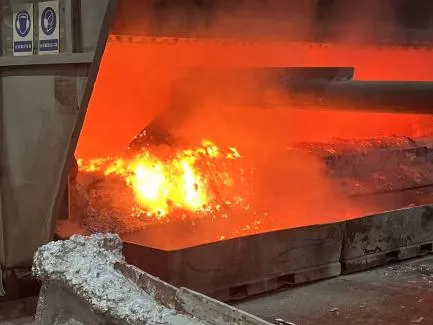
Although both products belong to aluminum melt treatment, drossing flux and refining flux serve different purposes. Selecting the wrong flux type may increase consumption without solving the actual melt quality problem.
Drossing flux focuses on slag treatment and aluminum recovery, while refining flux is mainly used for improving melt cleanliness by removing dissolved hydrogen and non-metallic inclusions.
| Тип флюса | Основная функция | Target Problem |
|---|---|---|
| Флюс Дроссинга | Separate aluminum from surface dross | Metal loss during slag removal |
| Флюс для рафинирования | Clean molten aluminum | Oxides, inclusions, melt cleanliness |
| Дегазирующий флюс | Reduce hydrogen content | Gas porosity risk |
| Покрывающий флюс | Protect melt surface | Oxidation prevention |
For applications requiring higher melt cleanliness, drossing flux is often used together with other aluminum purification technologies, such as фильтрация расплавленного алюминия и rotary degassing systems. Filtration removes solid inclusions, while degassing equipment reduces dissolved hydrogen before casting.
This combination is especially important for applications such as:
- automotive aluminum casting
- high-pressure die casting (HPDC)
- aluminum extrusion billets
- aluminum alloy wheels
- recycled aluminum production
Learn More About Our Molten-Aluminum Treatment
How Should Drossing Flux Be Used During Aluminum Melt Treatment?
The performance of a drossing flux depends not only on chemical composition but also on application method. Excessive addition, improper temperature control, or poor mixing practice can reduce treatment efficiency.
A typical application process includes:
Step 1: Prepare the molten aluminum surface
Before adding flux, excessive turbulence should be avoided. A calm melt surface allows the flux to contact the dross layer more effectively.
Step 2: Add flux evenly
The flux should be distributed across the dross area instead of being concentrated in one location. Uniform coverage improves reaction efficiency.
Step 3: Allow sufficient reaction time
The flux needs time to penetrate the oxide structure and release trapped aluminum. Immediate skimming may reduce recovery efficiency.
Step 4: Remove treated dross
After treatment, the dross becomes easier to separate and remove from the furnace.
| Processing Factor | Recommended Consideration |
|---|---|
| Furnace temperature | Usually adjusted according to alloy and flux formulation |
| Addition method | Even spreading over dross surface |
| Reaction time | Depends on dross condition and furnace operation |
| Перемешивание | Avoid excessive turbulence and oxidation |
| Final evaluation | Check dross dryness and metal recovery |
In industrial aluminum melting, process control is often as important as the flux itself. A high-performance drossing flux cannot compensate for excessive oxidation caused by poor furnace operation.
What Types of Aluminum Alloys Can Use Drossing Flux?
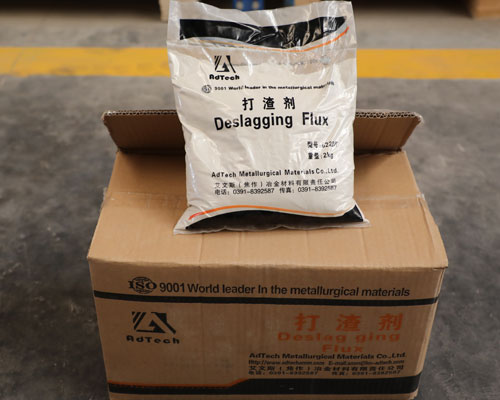
Aluminum drossing flux is widely used in different aluminum melting operations, including primary aluminum processing, secondary aluminum recycling, and aluminum casting. However, the most suitable flux formulation depends on alloy composition, furnace type, and the required melt quality.
For common aluminum alloys, drossing flux helps improve aluminum recovery by reducing the amount of metallic aluminum trapped inside oxide slag. This is especially valuable in recycling operations, where oxidation losses can significantly affect production efficiency.
| Aluminum Alloy / Application | Suitability of Drossing Flux | Основные соображения |
|---|---|---|
| Pure aluminum | Suitable | Mainly focuses on oxide dross separation |
| Al-Si alloys | Suitable | Commonly used in casting applications |
| Сплавы Al-Mg | Requires suitable formulation | Magnesium increases oxidation tendency |
| Recycled aluminum alloys | Highly beneficial | Helps recover aluminum from high-dross conditions |
| Die casting alloys | Suitable | Helps maintain cleaner melt before casting |
For high-magnesium alloys, the selection of aluminum slagging agent requires more attention because magnesium oxide (MgO) formation can change dross characteristics. A flux designed for general aluminum alloys may not always provide the best performance for magnesium-containing melts.
Therefore, when selecting a drossing flux, manufacturers should consider:
- alloy chemistry
- melting temperature
- furnace design
- dross generation rate
- required aluminum recovery rate
How Does Drossing Flux Reduce Aluminum Loss During Melting?
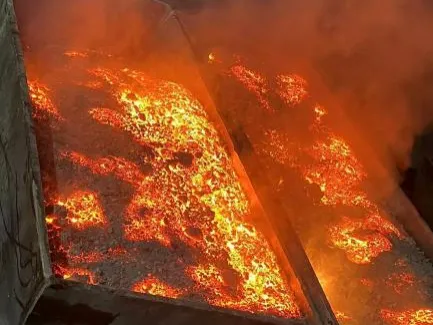
Aluminum loss caused by dross is one of the major efficiency concerns in melting operations. Fresh aluminum dross may contain a considerable amount of metallic aluminum because small aluminum droplets become physically trapped inside oxide layers.
Without proper treatment, these aluminum particles are removed together with slag during skimming.
The main benefit of флюс для алюминия is improving metal recovery by:
- breaking the oxide network structure
- releasing trapped aluminum droplets
- improving slag fluidity
- reducing metallic aluminum content in removed dross
| Without Drossing Flux | With Proper Drossing Flux Treatment |
|---|---|
| Sticky and heavy dross | Dryer and easier-to-remove dross |
| More aluminum trapped in slag | Higher aluminum recovery |
| Increased metal loss | Improved melting efficiency |
| More difficult slag handling | Cleaner furnace operation |
However, drossing flux should not be considered a replacement for good melting practices. Excessive furnace temperature, unnecessary stirring, and long holding times can increase oxidation and generate additional dross.
The most effective approach is combining:
- optimized furnace operation
- suitable flux treatment
- proper slag removal procedures
How Do You Choose the Right Drossing Flux for Aluminum Melting?
Choosing a suitable drossing flux requires more than selecting a product based only on price. Different aluminum melting conditions require different flux characteristics.
Key factors include:
Alloy Composition
Different alloys generate different types of oxide films. For example, aluminum-magnesium alloys usually require fluxes with stronger oxidation control performance compared with standard aluminum-silicon alloys.
Тип печи
The requirements may vary between:
- reverberatory furnaces
- crucible furnaces
- rotary furnaces
- holding furnaces
A flux suitable for one furnace condition may not provide the same results in another environment.
Casting Requirements
Applications such as automotive components, extrusion billets, and high-quality aluminum products often require better melt cleanliness and lower inclusion levels.
| Коэффициент отбора | Почему это важно |
|---|---|
| Тип сплава | Determines oxide characteristics |
| Furnace condition | Influences oxidation and dross formation |
| Dross amount | Affects required treatment strength |
| Environmental requirements | Determines suitable flux chemistry |
| Final product quality | Defines melt treatment requirements |
Modern aluminum producers increasingly focus on low-smoke, low-residue, and environmentally improved flux solutions. Therefore, sodium-free drossing flux and other customized formulations are becoming more common for specific applications.
Is Drossing Flux the Same as Slagging Agent?
Although the terms are sometimes used interchangeably, drossing flux и шлакообразующий агент may refer to slightly different product functions depending on the supplier.
In aluminum processing, both terms generally describe flux materials used to treat surface dross and improve separation between molten aluminum and non-metallic residues.
However, “slagging agent” is a broader term and may describe products used for:
- collecting oxide impurities
- modifying slag properties
- assisting slag removal
“Drossing flux” is more specific and is commonly associated with aluminum recovery from dross.
| Term | Common Meaning |
|---|---|
| Флюс Дроссинга | Flux used to treat aluminum dross and recover metal |
| Флюс для удаления шлака | Another name for slag removal flux |
| Slagging agent | General term for materials that promote slag separation |
| Флюс для рафинирования | Used mainly for melt purification |
For aluminum casting plants, it is important to confirm the actual purpose of the product rather than selecting based only on terminology.
Свяжитесь с нами для получения технической консультации
Why Is Drossing Flux Important in Modern Aluminum Casting?
As aluminum production becomes more focused on cost control and sustainability, reducing metal loss during melting has become increasingly important.
Dross is no longer viewed simply as waste. Effective dross treatment can improve:
- aluminum yield
- raw material efficiency
- recycling performance
- furnace productivity
For secondary aluminum producers, where recycled material naturally produces more oxidation products, the role of aluminum dross removal flux becomes even more significant.
However, the best results come from treating dross as part of a complete melt management system. Flux treatment should work together with:
- proper furnace operation
- дегазация расплавленного алюминия
- ceramic filtration
- temperature control
A well-designed melt treatment process helps manufacturers achieve cleaner aluminum, lower metal loss, and more stable casting performance.
Drossing Flux Supplier for Aluminum Melt Treatment
AdTech provides aluminum melt treatment solutions designed for different casting and recycling applications, including drossing flux, refining flux, degassing solutions, and filtration products.
Our drossing flux products are developed to help aluminum producers improve slag separation, reduce aluminum loss, and optimize melt recovery during melting operations.
For customized recommendations, please provide:
- aluminum alloy type
- furnace type
- current dross condition
- required application temperature
- monthly consumption
Our technical team can recommend a suitable flux solution according to your production conditions.
Свяжитесь с нами для получения технической консультации
Часто задаваемые вопросы
1. Для чего используется флюс для удаления окалины?
Drossing flux is used to separate metallic aluminum from oxide dross, reduce aluminum loss, and improve metal recovery during melting.
2. Флюс для удаления шлака — это то же самое, что и флюс для удаления окалины?
Yes. In aluminum melt treatment, drossing flux is also commonly called deslagging flux because both are used for slag removal and dross treatment.
3. Does drossing flux remove hydrogen from molten aluminum?
No. Drossing flux mainly treats oxide dross. Hydrogen removal requires degassing processes such as rotary degassing.
4. Can drossing flux be used for recycled aluminum?
Yes. Drossing flux is especially useful in recycled aluminum production because recycled materials usually generate more oxide dross.
5. What is the difference between drossing flux and refining flux?
Drossing flux improves slag-metal separation, while refining flux is mainly used to remove inclusions and improve aluminum melt cleanliness.
6. How much drossing flux should be added to molten aluminum?
The dosage depends on alloy type, dross condition, and flux formulation. The supplier should provide recommended addition rates.
7.Can drossing flux be used for aluminum die casting?
Yes. It can be used before die casting to improve melt recovery and reduce oxide-related problems.
8. What temperature is suitable for using drossing flux?
The operating temperature depends on alloy composition and flux design, but it is generally applied within the normal aluminum melting temperature range.
9. Does drossing flux reduce aluminum waste?
Yes. By releasing aluminum trapped inside oxide dross, it can improve aluminum recovery and reduce metal loss.
10. How do I choose the right aluminum drossing flux?
Consider alloy type, furnace condition, dross generation level, casting requirements, and environmental requirements before selecting a flux.