
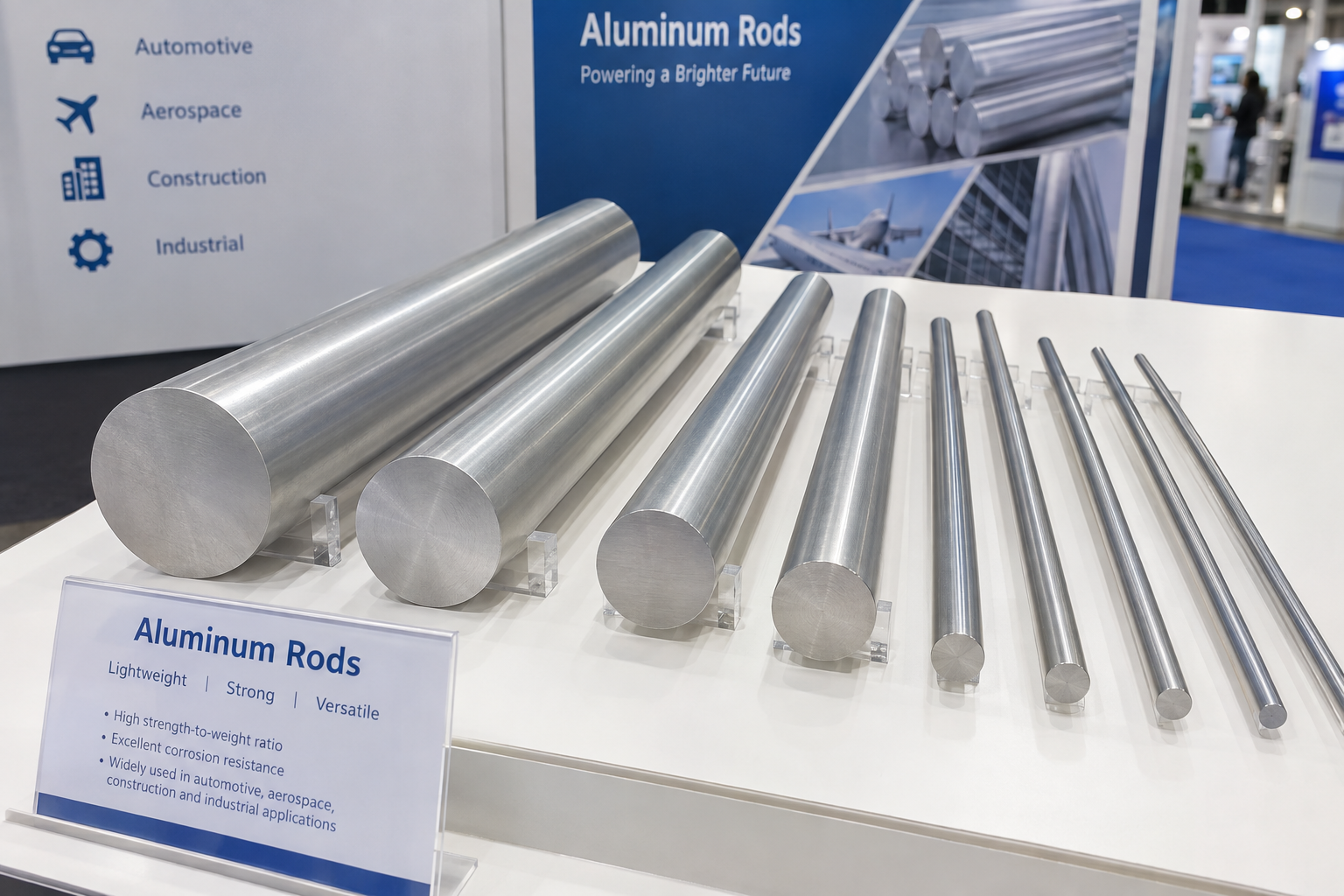
The aluminum rod production process depends on the type of rod being made. Continuous-cast aluminum rod can be produced directly from molten aluminum through continuous casting and rolling, while extruded rod and bar start from cast billet and are formed by extrusion and, when required, drawing. These are different production routes with different equipment, quality controls, and applications.
For plants producing rod directly from molten aluminum, the core sequence is:
Raw Materials → Melting → Alloy Adjustment → Melt Treatment → Continuous Casting → Rolling → Cooling → Coiling
Understanding the route is essential because the casting method, melt quality, and downstream forming process all affect the final rod.
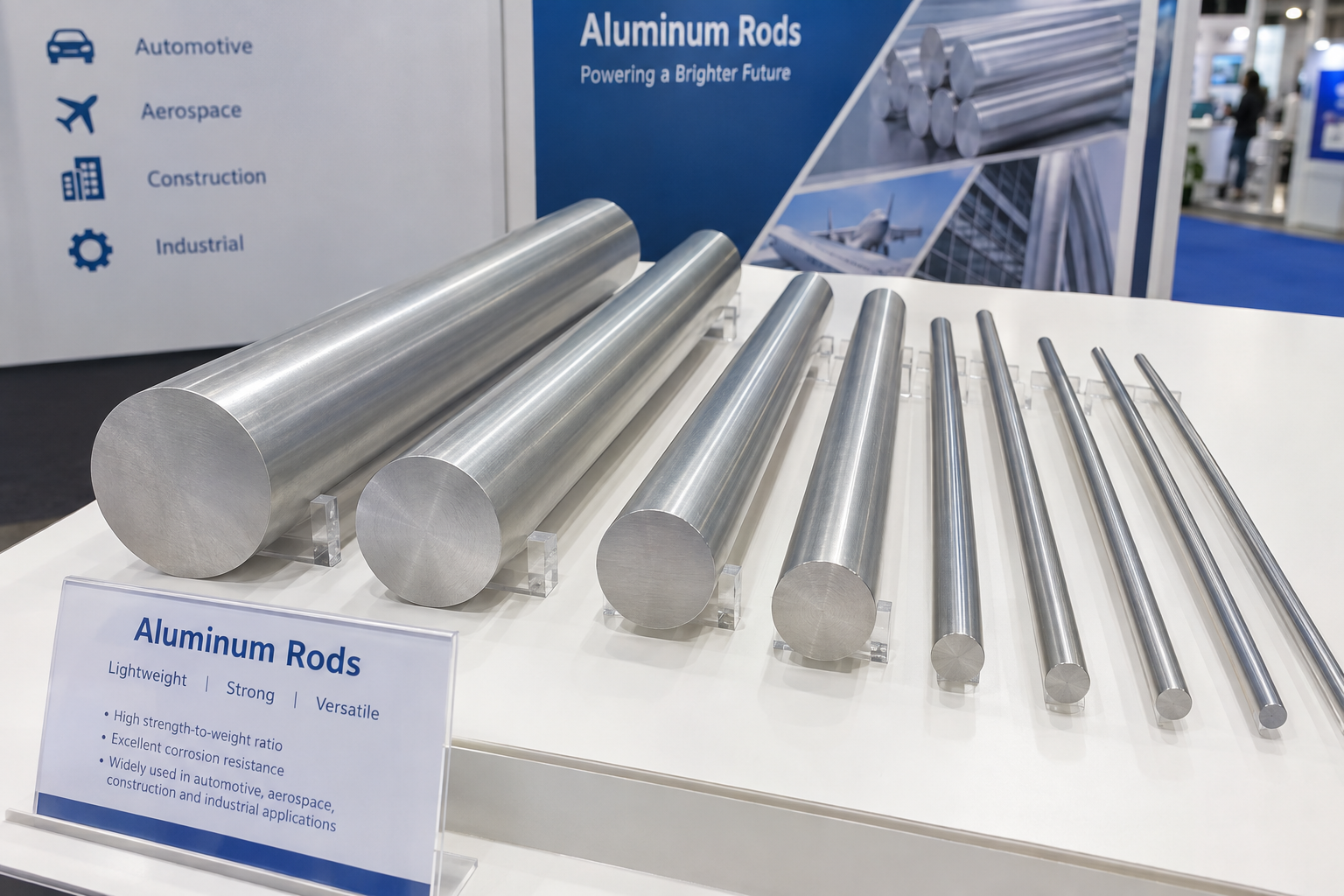
What Are the Main Aluminum Rod Production Methods?
Aluminum rod is not made by one universal process. The production route depends mainly on the product and its intended use.
| Production Route | Starting Material | Main Forming Process | Typical Products |
|---|---|---|---|
| Continuous cast rod | الألمنيوم المنصهر | Continuous casting + in-line rolling | Electrical conductor rod, alloy rod |
| Rolled rod from ingot | Cast ingot | Reheating + rolling | Drawing stock and other rod products |
| Extruded rod/bar | Cast billet | Extrusion | Rod, bar and solid profiles |
| Drawn rod/wire | Rod or extruded product | Drawing | Smaller-diameter rod or wire |
The Aluminum Association distinguishes redraw rod from extruded and drawn rod, and defines rod casting as continuous casting followed by in-line rolling.
Which route is used for electrical aluminum rod?
Electrical conductor rod is commonly produced on continuous casting and rolling lines. These systems can produce conductor-grade and alloy aluminum rod directly from molten metal and deliver the finished rod in coils.
Which route is used for extruded aluminum rod and bar?
When the product is made as an extrusion, the starting material is normally a cast billet. The billet is heated and pushed through a die to create the required cross section. Drawing may then be used when smaller dimensions or tighter dimensional control are required.
How Is Aluminum Rod Made Directly From Molten Aluminum?
For a continuous-cast rod line, the process begins at the melting furnace and ends with a finished rod coil.
1. Charge and Melt the Aluminum
The first step is preparing the charge according to the required alloy composition.
Depending on the plant, the charge may include primary aluminum, remelt ingot, clean aluminum scrap, and alloying additions.
The charge is melted in a furnace under controlled temperature conditions. At this stage, both chemical composition and melt cleanliness need attention.
Moisture in charge materials should also be controlled because it can introduce hydrogen into molten aluminum.
2. Adjust the Alloy Composition
After melting, the chemical composition is checked and adjusted to meet the target alloy.
The required chemistry depends on the final rod application. Electrical conductor rod, for example, has different composition requirements from mechanical or specialty alloy rod.
The important point is that alloy adjustment comes before casting, because the downstream rolling process does not correct an incorrect melt chemistry.
3. Treat the Molten Aluminum
Before the melt reaches the caster, it may undergo several treatment steps to control hydrogen, inclusions, and other melt-quality variables.
A typical sequence is:
Refining → Degassing → Filtration
These processes have different functions:
- Degassing: reduces dissolved hydrogen.
- Filtration: removes suspended non-metallic inclusions.
- Flux treatment: may be used where specific chemical or dross-control requirements exist.
For continuous rod production, melt treatment needs to remain stable for the entire casting run rather than only produce acceptable results for one batch.
An وحدة إزالة الغازات عبر الإنترنت can be installed before filtration to continuously treat molten aluminum as it moves toward the casting machine.
4. Filter the Melt Before Casting
Filtration provides a controlled barrier against non-metallic inclusions before the metal enters the caster.
Oxide films, refractory particles, and other inclusions can affect downstream product quality and may become more difficult to manage after solidification.
Depending on the line design, plants may use ceramic foam filters, plate-type filtration, cartridge filtration, or other molten aluminum filtration systems.
A typical arrangement is:
Holding Furnace → On-Line Degassing → Ceramic Foam Filter → Launder → Continuous Caster
This is where the melt-treatment stage connects directly to the rod-production process.
5. Continuously Cast the Aluminum
After melt treatment, the aluminum enters the continuous casting section.
Unlike conventional billet production, the metal is solidified continuously and immediately transferred to the rolling stage. The Aluminum Association defines rod casting as continuous casting followed by in-line rolling.
The caster must maintain stable conditions for:
- Molten-metal temperature
- Metal flow
- سرعة الصب
- Solidification
- Cooling
- Metal level
- Caster operation
Instability at this stage can create defects that remain visible or affect performance after rolling.
6. Roll the Cast Bar Into Rod
The continuously cast feed enters a rolling train where its cross section is progressively reduced.
Multiple rolling stands gradually transform the cast feed into the required rod diameter.
This is one of the major differences between continuous aluminum rod production and billet extrusion: the rod is formed in-line after casting, rather than being produced by pushing a solid billet through an extrusion die.
Continuous casting and rolling systems are specifically designed for producing aluminum rod coils directly from molten aluminum.
7. Cool the Rod
After rolling, the rod is cooled under controlled conditions.
Cooling affects the temperature and metallurgical condition of the finished rod. The appropriate cooling practice depends on alloy composition, rod size, rolling conditions, and final property requirements.
For conductor rod, maintaining consistent process conditions is particularly important because the rod is subsequently drawn into wire.
8. Coil the Finished Rod
The finished rod is continuously wound into coils for storage, transport, or downstream wire drawing.
For electrical applications, the rod may be drawn into smaller-diameter wire and then stranded to make conductors.
This gives the overall production chain:
Molten Aluminum → Continuous Casting → Rolling → Aluminum Rod Coil → Wire Drawing → Conductor
The Aluminum Association identifies electrical transmission as a major application for aluminum rod and bar products.
What Aluminum Alloys Are Used for Rod Production?
The appropriate alloy depends on the application rather than simply the alloy series.
Examples of alloys used in continuous aluminum rod production include 1350, 1100, 6101, 6201, 8176, and other electrical or mechanical alloys. Commercial continuous-rod systems are available for both EC-grade and alloy rod production.
| التطبيق | Example Alloy Types |
|---|---|
| Electrical conductor rod | 1350, 6101, 6201, 8176 |
| General-purpose aluminum rod | 1xxx and selected alloy grades |
| Mechanical alloy rod | Selected 3xxx, 5xxx, 6xxx and other alloy systems |
| Specialty rod | Depends on required mechanical, electrical, or forming properties |
The exact alloy designation should always follow the applicable product specification rather than assuming that every alloy in a series is commonly made as rod.
What Is the Difference Between Aluminum Rod and Aluminum Billet?
This distinction matters because the production route is different.
Aluminum rod is a long, relatively small cross-section product that may be continuously cast and rolled, or produced by extrusion and drawing.
Aluminum billet is a cast semifinished form commonly used as feedstock for extrusion and other downstream processes.
The two should not be treated as interchangeable starting materials.
على سبيل المثال:
Continuous Rod Route
Molten aluminum → Continuous casting → Rolling → Rod
Extrusion Route
Molten aluminum → DC billet casting → Homogenization → Extrusion → Rod/Bar
The Aluminum Association separately identifies redraw rod, extruded rod and bar, and billet as different product categories.
Why Does Molten Aluminum Quality Matter in Rod Production?
The final rod quality starts before the rolling mill.
Hydrogen
Excess dissolved hydrogen can contribute to gas porosity during solidification. Degassing before casting helps reduce dissolved hydrogen.
Non-Metallic Inclusions
Inclusions can originate from oxide films, refractory wear, charge materials, or melt handling. Filtration is used to reduce suspended inclusions before casting.
Chemical Composition
An alloy that is outside the required chemistry can produce the wrong electrical, mechanical, or forming properties. Chemical analysis and alloy adjustment therefore need to be completed before casting.
درجة الحرارة
Molten aluminum must remain within the appropriate temperature window for casting. Excessive temperature or excessive temperature loss can both create process problems.
Melt Stability
Continuous rod lines operate for extended periods, so stable melt quality is important. A process that produces acceptable metal intermittently may not be sufficient for continuous production.
What Equipment Is Used in an Aluminum Rod Production Line?
A continuous aluminum rod production line may include:
- Melting furnace
- Holding or treatment furnace
- Alloying and refining equipment
- On-line degassing unit
- Filtration system
- Molten aluminum launder
- Continuous casting machine
- Rolling mill
- Cooling system
- Coiling machine
The exact configuration depends on rod alloy, production capacity, casting technology, and final product requirements.
For a plant focused on molten-metal quality, the upstream section may be configured as:
Melting → Holding → Degassing → Filtration → Transfer → Continuous Casting → Rolling
This is the part of the process where temperature, hydrogen, inclusions, and metal flow need to be controlled before the rod enters the forming stages.
What Are the Main Quality Checkpoints?
A good aluminum rod process does not wait until the finished coil for quality inspection.
| المرحلة | Main Control Points |
|---|---|
| Charge preparation | Raw-material condition and moisture |
| الذوبان | Temperature and alloy chemistry |
| Melt treatment | Hydrogen and inclusion level |
| الترشيح | Filter condition and metal flow |
| الصب المستمر | Temperature, speed, cooling and stability |
| Rolling | Rod diameter, surface and rolling conditions |
| Cooling | Product temperature and cooling conditions |
| Coiling | Coil shape, surface condition and traceability |
| Final inspection | Required electrical, mechanical and dimensional properties |
This process-based approach helps identify whether a rod defect originated in the melt, caster, rolling mill, or downstream handling.
What Causes Problems During Aluminum Rod Production?
The most useful way to troubleshoot rod production is to connect the defect to the stage where it may have started.
| المشكلة | Possible Process Area |
|---|---|
| Gas-related porosity | Hydrogen control, melt preparation, casting |
| عيوب التضمين | Melt cleanliness, filtration |
| عيوب السطح | Casting, rolling, cooling or handling |
| Diameter variation | Rolling or process control |
| Unstable casting | Temperature, metal flow, casting speed or cooling |
| Poor electrical conductivity | Alloy chemistry, impurities, processing |
| Wire-break problems downstream | Rod quality, inclusions, surface defects or drawing conditions |
Not every rod problem originates in the rolling mill. A defect visible in the finished coil may have started much earlier in the melt-treatment or casting stage.
Aluminum Rod vs. Aluminum Wire vs. Aluminum Bar
These products are related but are not the same.
Aluminum rod is commonly used as a finished product or as drawing stock.
Aluminum wire is a smaller cross-section product that can be made by drawing rod.
Aluminum bar is a long solid product that can be produced by extrusion, rolling, or other forming processes depending on the product specification.
The Aluminum Association classifies redraw rod, extruded/drawn rod and bar, and bare wire separately.
What Is the Complete Aluminum Rod Manufacturing Flow?
For continuous-cast electrical or alloy rod, the process can be summarized as:
Raw Materials
↓
الذوبان
↓
Alloy Adjustment
↓
Refining / Melt Treatment
↓
إزالة الغازات
↓
الترشيح
↓
الصب المستمر
↓
Rolling
↓
Cooling
↓
Coiling
↓
Wire Drawing or Other Downstream Processing
The key difference from billet-based production is that the cast rod feed goes directly into the rolling process instead of becoming a conventional extrusion billet first.
الأسئلة الشائعة
1. What is the aluminum rod production process?
Aluminum rod can be produced by different routes. For continuous-cast rod, the typical process is melting, alloy adjustment, degassing, filtration, continuous casting, rolling, cooling, and coiling.
2. Can aluminum rod be made directly from molten aluminum?
Yes. Continuous casting and rolling systems can produce aluminum rod coils directly from molten aluminum without first producing conventional billets for the rod-forming stage.
3. What is the process for producing electrical aluminum rod?
A typical electrical rod route is melting → alloy adjustment → melt treatment → continuous casting → rolling → cooling → coiling. The rod can then be drawn into wire for conductor production.
4. What aluminum alloys are commonly used for conductor rod?
Examples include 1350, 6101, 6201, and 8000-series electrical alloys. The appropriate grade depends on the required conductivity, strength, and conductor application.
5. Why is degassing used in aluminum rod production?
Degassing reduces dissolved hydrogen in the molten aluminum before casting, helping control hydrogen-related porosity in the solidified rod.
6. Why is filtration needed before casting aluminum rod?
Filtration removes suspended non-metallic inclusions from molten aluminum before it enters the casting machine. It complements degassing, which primarily targets dissolved hydrogen.
7. What is the difference between continuous-cast rod and extruded rod?
Continuous-cast rod is produced through continuous casting followed by rolling, while extruded rod starts from a solid billet that is pushed through a die. The two routes serve different product and application requirements.
8. Is aluminum rod drawn into wire?
Often, yes. Aluminum rod is a major feedstock for wire drawing, where dies progressively reduce the rod diameter to produce wire.
9. What equipment is required for continuous aluminum rod production?
A continuous rod line generally includes melting and holding equipment, melt-treatment and filtration equipment, a continuous caster, rolling mill, cooling section, and coiler.
10. What is the most important step before aluminum rod casting?
There is no single step that determines rod quality. The melt should enter the caster with controlled chemistry, temperature, hydrogen level, and inclusion content so that the casting and rolling stages can operate consistently.