
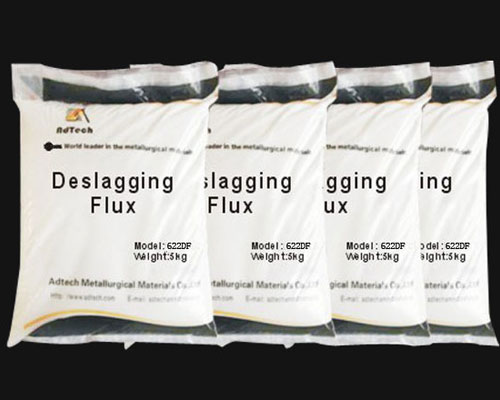
Deslagging agent is an aluminum melt treatment flux used to separate and remove oxide slag, dross, and non-metallic residues from the surface of molten aluminum. It improves slag-metal separation, reduces aluminum loss during slag removal, and helps maintain stable melt quality when used together with refining agents and covering agents in aluminum casting operations.
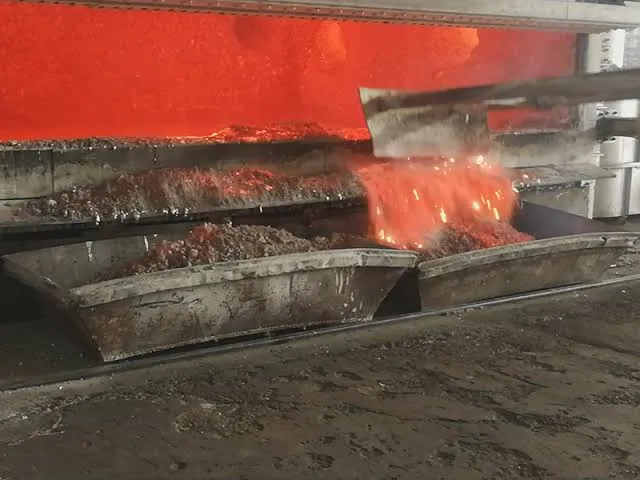
What Is a Deslagging Agent Used for in Aluminum Melting?
A средство для удаления шлака is a powder-based flux designed for the treatment of aluminum slag generated during melting and holding processes. It is widely used in aluminum foundries, recycling plants, and casting operations where oxide formation is unavoidable.
During aluminum melting, molten metal reacts with oxygen in the atmosphere and forms oxide films. Additional oxidation occurs during:
- charging solid aluminum materials
- alloying additions
- mechanical stirring
- metal transfer
- extended holding time
These oxides accumulate on the melt surface and form slag. Because aluminum has a strong affinity for oxygen, the slag layer usually contains not only oxides but also small amounts of metallic aluminum.
The purpose of an aluminum deslagging agent is not simply to remove surface residue. Its main function is to modify slag characteristics, improve separation between aluminum and oxide compounds, and make slag removal more efficient.
| Пункт | Описание |
|---|---|
| Product name | Средство для удаления шлака |
| Also known as | Aluminum slag remover, slag breaker, oxide cleaning agent |
| Заявка | Aluminum melting and holding processes |
| Main target | Surface oxide slag and dross |
| Main benefit | Better slag separation and reduced aluminum loss |
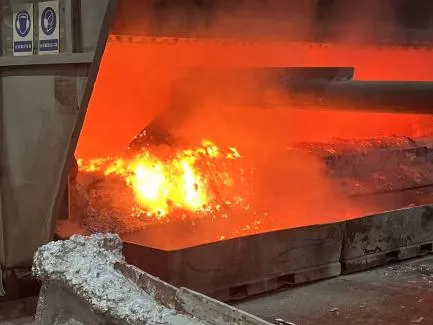
Learn More About Our Molten-Aluminum Treatment
How Does an Aluminum Deslagging Agent Work?
The working principle of a deslagging agent is based on improving the physical properties of aluminum slag.
Fresh aluminum slag is often dense and sticky because oxide films surround small aluminum droplets. This structure makes mechanical removal difficult and increases the amount of aluminum lost with the slag.
After adding a suitable aluminum slag remover, active components in the flux react with the oxide layer and change the slag structure. The treated slag becomes looser, drier, and easier to separate from the molten aluminum.
The main effects include:
Improving slag fluidity
Untreated slag may form a compact layer that traps metallic aluminum. The deslagging agent helps loosen this structure and allows aluminum droplets to return to the molten bath.
Reducing aluminum loss
A large amount of aluminum loss occurs when wet slag containing metallic aluminum is removed from the furnace. Proper slag treatment improves metal recovery.
Making slag removal easier
After treatment, slag usually becomes more powdery and less adhesive, reducing the difficulty of manual or mechanical skimming.
| Before Treatment | After Deslagging Treatment |
|---|---|
| Sticky slag layer | Dry and loose slag |
| High metallic aluminum content | Improved aluminum recovery |
| Difficult removal | Easier skimming |
| More labor required | Reduced cleaning effort |
What Is the Difference Between Deslagging Agent and Refining Agent?
Deslagging agent and refining agent are both used in aluminum melt treatment, but they solve different problems.
A common misunderstanding is that one flux can replace all melt treatment processes. In practice, aluminum purification usually requires different treatments for different contamination sources.
A очищающий агент mainly targets dissolved hydrogen and non-metallic inclusions inside molten aluminum, while a средство для удаления шлака focuses on surface slag removal.
| Treatment Agent | Main Purpose | Target Issue |
|---|---|---|
| Очищающий агент | Melt purification | Hydrogen and inclusions |
| Deslagging agent | Удаление шлака | Surface oxide slag |
| Покрывающий агент | Melt protection | Oxidation prevention |
| Degassing system | Hydrogen removal | Gas porosity control |
A typical aluminum melt treatment sequence is:
- Melt aluminum alloy and adjust temperature
- Add refining agent to remove dissolved hydrogen and inclusions
- Apply deslagging agent to treat surface slag
- Remove treated slag
- Add covering agent to reduce further oxidation
This combination provides better control over aluminum melt cleanliness compared with using only one type of flux.
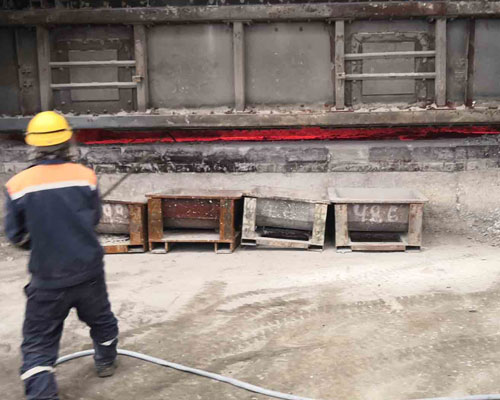
How Is Deslagging Agent Used During Aluminum Melt Treatment?
The application method depends on furnace design, alloy type, and slag condition. However, the general process includes several steps.
Step 1: Control molten aluminum temperature
The aluminum alloy should reach the recommended treatment temperature before flux addition. Excessively high temperatures accelerate oxidation and increase slag generation.
For many aluminum alloys, treatment temperatures are commonly within approximately 680–760°C, depending on alloy composition and production requirements.
Step 2: Add refining agent if required
Before slag treatment, refining is usually performed to reduce dissolved hydrogen and improve melt cleanliness.
The refining agent is introduced into the molten aluminum and distributed through the melt using suitable tools or rotary equipment.
Step 3: Apply deslagging agent to the slag surface
After refining, the deslagging agent is added onto the surface slag layer. The flux can be spread evenly across the slag or added according to the supplier’s recommended method.
Step 4: Remove treated slag
After sufficient reaction time, the treated slag becomes easier to break and remove.
| Processing Step | Цель |
|---|---|
| Temperature adjustment | Ensure effective melt treatment |
| Refining treatment | Reduce hydrogen and inclusions |
| Deslagging treatment | Improve slag separation |
| Удаление шлака | Remove oxide residues |
| Covering treatment | Reduce oxidation during holding |
Why Is a Covering Agent Used After Slag Removal?
After slag removal, molten aluminum remains exposed to the atmosphere. Continuous contact with oxygen and moisture can cause new oxide formation and increase hydrogen absorption.
A covering agent for aluminum melting is applied to create a protective layer on the melt surface. This helps:
- reduce oxidation
- minimize heat loss
- limit atmospheric contamination
- maintain melt stability during holding
The covering agent serves a different purpose from a deslagging agent. One removes existing surface slag, while the other protects clean molten aluminum from further oxidation.
Are Deslagging Agent and Oxide Cleaning Agent the Same?
In many aluminum processing applications, the terms средство для удаления шлака и oxide cleaning agent may describe similar products because both are related to oxide removal.
However, the exact meaning depends on the manufacturer’s product definition.
Generally:
- Deslagging agent emphasizes slag separation and removal.
- Oxide cleaning agent emphasizes cleaning oxide residues from the melt surface or furnace area.
| Term | Common Application |
|---|---|
| Средство для удаления шлака | Treating and removing aluminum slag |
| Средство для удаления алюминиевого шлака | General slag separation product |
| Oxide Cleaning Agent | Removing oxide residues |
| Slag Breaker | Breaking compact slag structure |
When selecting a product, aluminum producers should focus on actual performance requirements rather than terminology alone.
Свяжитесь с нами для получения технической консультации
How to Choose the Right Deslagging Agent for Aluminum Casting?
The correct deslagging agent depends on several production factors:
| Коэффициент отбора | Почему это важно |
|---|---|
| Aluminum alloy type | Different alloys generate different oxide conditions |
| Тип печи | Influences slag formation and treatment method |
| Casting requirement | Determines required melt cleanliness |
| Slag condition | Affects flux selection |
| Environmental requirements | Influences flux formulation |
Например:
- recycling furnaces often require stronger slag treatment due to higher oxidation levels;
- high-quality casting applications may require combining deslagging treatment with filtration and degassing;
- magnesium-containing alloys may require specially designed flux chemistry.
A suitable deslagging agent should improve slag handling without causing unnecessary reactions or excessive residue.
Deslagging Agent for Efficient Aluminum Melt Treatment
Effective aluminum melt treatment requires cooperation between different processes. A deslagging agent plays an important role by improving slag removal efficiency, reducing aluminum loss, and supporting stable casting operations.
For aluminum producers, selecting the correct flux depends on alloy composition, furnace conditions, and production targets.
AdTech provides aluminum melt treatment solutions, including deslagging agents, refining fluxes, covering agents, degassing equipment, and filtration systems for different aluminum casting applications.
Часто задаваемые вопросы
1. What is a deslagging agent?
A deslagging agent is an aluminum melt treatment flux used to separate and remove oxide slag from molten aluminum.
2. What does deslagging agent remove from aluminum?
It mainly removes surface oxide slag and dross, while improving separation of trapped aluminum metal.
3. Is deslagging agent the same as refining agent?
No. Refining agents mainly remove hydrogen and inclusions, while deslagging agents treat surface slag.
4. What is aluminum deslagging agent used for?
It is used in aluminum melting, holding, recycling, and casting processes to improve slag removal efficiency.
5. Can deslagging agent reduce aluminum loss?
Yes. It helps release aluminum trapped in slag and improves metal recovery.
6. What is the difference between deslagging agent and slag remover?
They are similar terms. Both refer to products used to assist slag separation and removal from molten aluminum.
7. When should deslagging agent be added?
It is usually added after refining treatment when surface slag has formed on molten aluminum.
8. Can deslagging agent replace degassing?
No. Deslagging agent does not remove dissolved hydrogen. Degassing equipment or refining treatment is required for hydrogen removal.
9. Why use covering agent after deslagging?
Covering agent protects the cleaned aluminum surface from oxidation and hydrogen absorption.
10. How do I select a suitable deslagging agent?
Selection depends on alloy type, furnace condition, slag characteristics, and casting requirements.