
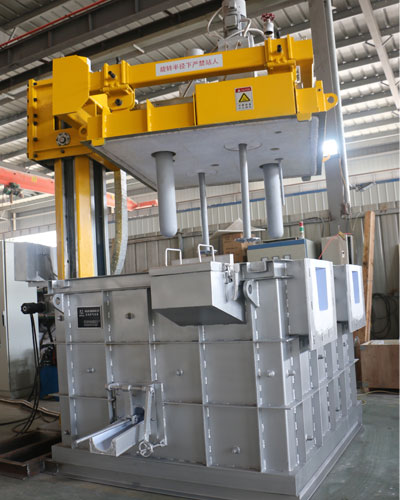
The flotation degassing method removes dissolved hydrogen from molten aluminum by introducing fine inert-gas bubbles into the melt. As the bubbles rise through the aluminum, dissolved hydrogen transfers into the gas phase and is carried out of the melt. In industrial aluminum casting, nitrogen or argon is commonly used as the carrier gas, while rotary degassing equipment improves bubble dispersion and melt circulation.
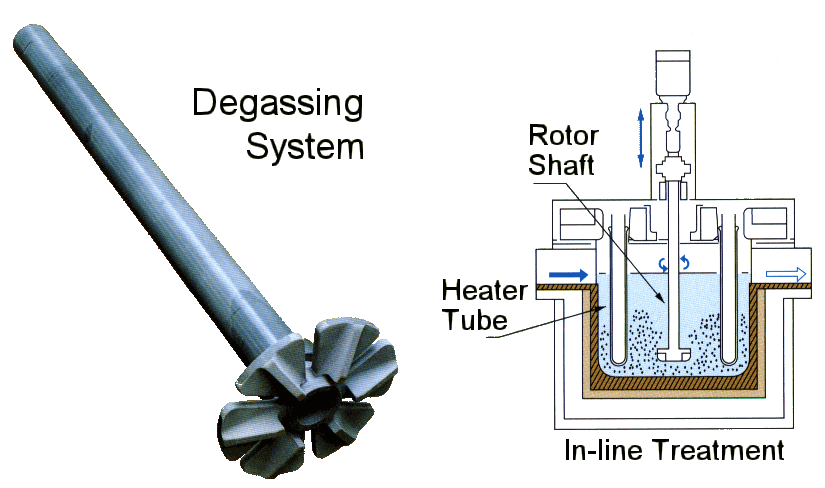
How Does Flotation Degassing Work?
The basic principle is simple:
Inert gas injection → Fine bubble formation → Hydrogen transfer → Bubble flotation → Gas escape
Dissolved hydrogen moves from the molten aluminum toward the gas-liquid interface. It then transfers into the inert-gas bubbles and rises toward the surface.
As the bubbles travel through the melt, their residence time and available surface area affect hydrogen removal. The larger the effective gas-liquid contact area, the greater the opportunity for hydrogen to transfer from the aluminum into the gas phase.
What Gas Is Used for Flotation Degassing?
Nitrogen and argon are the most commonly used gases for aluminum melt degassing.
The gas does not need to react chemically with hydrogen. Instead, it provides a gas phase into which dissolved hydrogen can transfer.
The choice between nitrogen and argon depends on the alloy, process requirements, gas purity, equipment, and plant operating conditions.
Why Are Fine Bubbles Important?
Fine, well-dispersed bubbles provide a greater total gas-liquid interfacial area than large bubbles for the same gas volume.
This helps improve hydrogen mass transfer.
However, bubble size is not controlled by gas pressure alone. It is also affected by:
- Rotor or diffuser design
- معدل تدفق الغاز
- سرعة الدوار
- Melt properties
- Gas dispersion
- Treatment depth
- درجة حرارة الانصهار
Excessive gas flow can promote larger bubbles and unstable surface turbulence, while insufficient gas flow may reduce treatment capacity. The operating point should therefore be optimized for the specific degassing system.
How Deep Should the Gas Be Introduced?
The injection point should be sufficiently deep in the molten aluminum to give the bubbles enough travel distance and residence time.
For lance-based degassing, the lower end of the injection tube is normally positioned well below the melt surface. However, the exact depth should be determined by bath depth, equipment design, gas flow, and the need to avoid disturbing settled dross or inclusions at the furnace bottom.
For rotary on-line degassing, the rotor position and immersion depth are designed together with the treatment chamber to achieve effective bubble dispersion without excessive turbulence.
A fixed value such as 100–150 mm should not be treated as a universal requirement for every aluminum melt-treatment system.
How Does a Rotary Degassing Unit Improve Flotation Degassing?
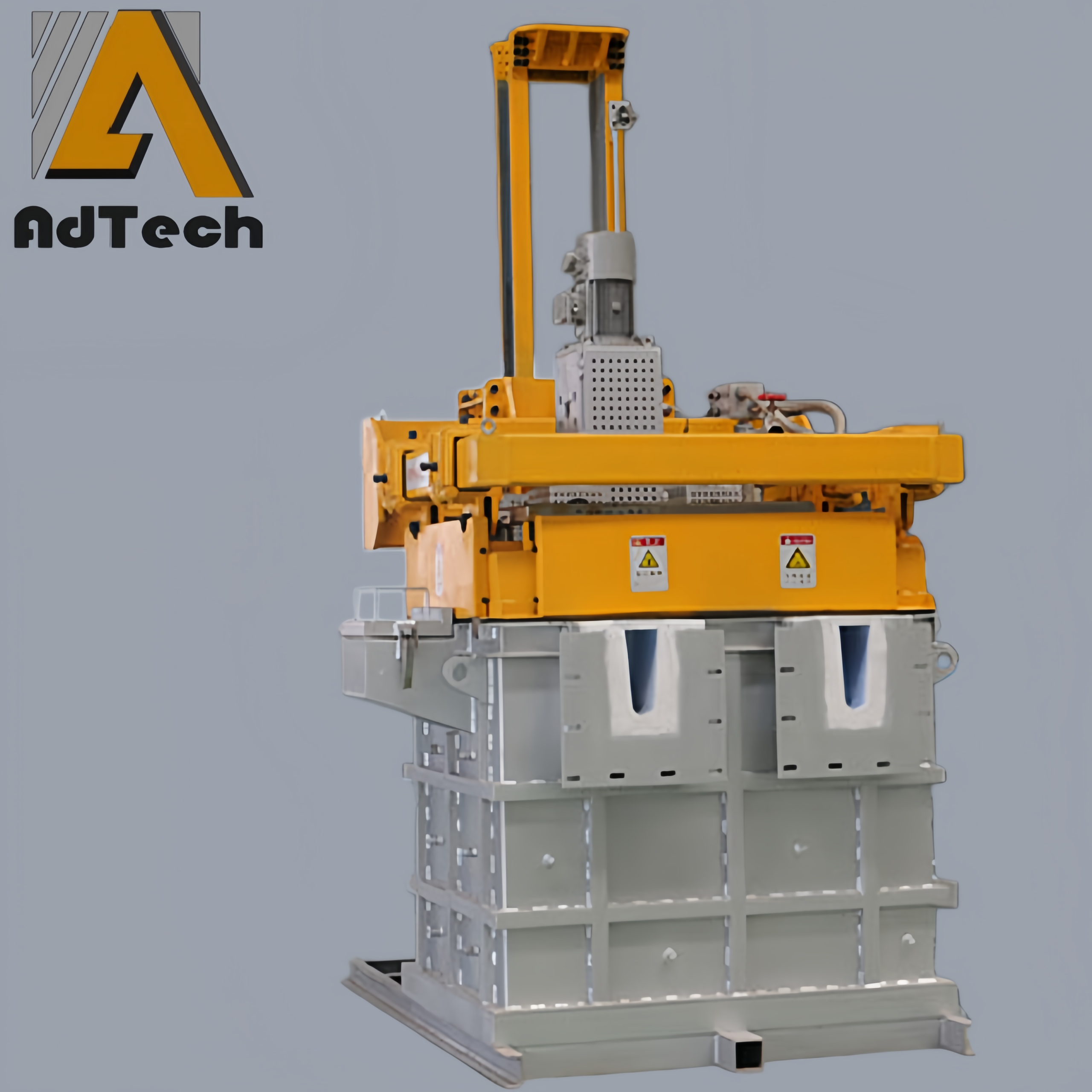
In a rotary degassing unit, inert gas is introduced through a rotating rotor. The rotor breaks the incoming gas into fine bubbles and distributes them throughout the molten aluminum.
This provides several advantages:
- More uniform gas dispersion
- Greater gas-liquid contact area
- Better melt circulation
- Longer bubble residence time
- More consistent hydrogen removal
- Reduced dependence on manual gas-lance movement
For continuous aluminum casting, an on-line rotary degassing unit can be installed directly upstream of filtration and casting.
A typical process is:
Holding Furnace → On-Line Rotary Degassing → Filtration → Launder → Casting
Why Is Melt Temperature Important?
Degassing temperature needs to remain within the appropriate process window.
If the temperature is too low, molten aluminum becomes more viscous, which can affect melt flow and bubble dispersion.
If the temperature is unnecessarily high, hydrogen solubility in the liquid metal remains higher, while oxidation, energy consumption, and refractory wear can also increase.
Therefore, the objective is not simply to use the highest or lowest possible temperature, but to maintain a suitable temperature for the alloy and casting process.
Can Flotation Degassing Also Remove Inclusions?
Flotation degassing primarily targets dissolved hydrogen.
Fine gas bubbles can also interact with some non-metallic inclusions and promote their flotation, particularly when melt circulation is well controlled. However, gas bubbling should not be considered a replacement for filtration.
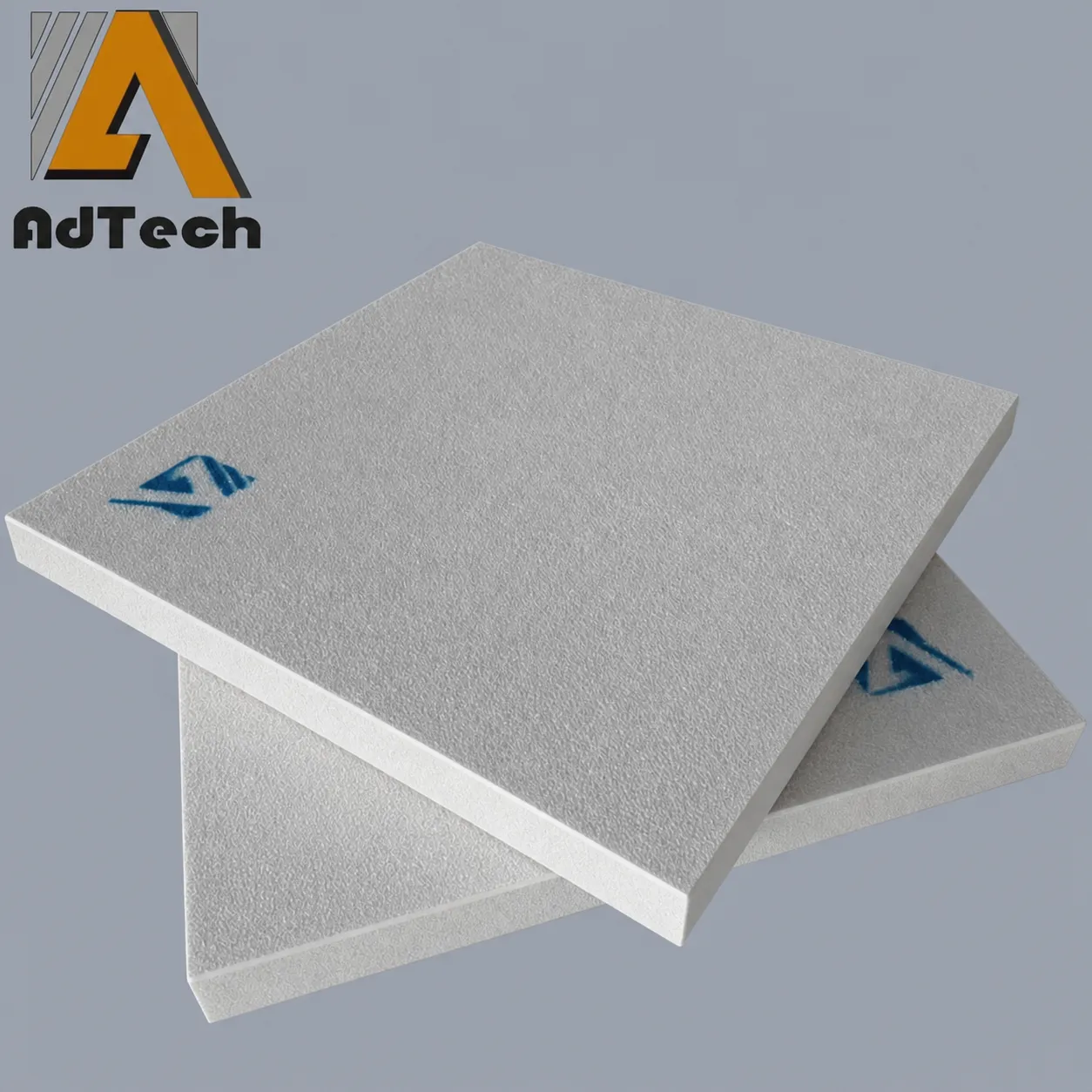
For consistent inclusion removal, the melt is typically passed through a ceramic foam filter, plate-type filter, cartridge filter, or another suitable filtration system after degassing.
What Affects Flotation Degassing Efficiency?
The final hydrogen level depends on the complete treatment process rather than on gas injection alone.
ومن بين العوامل المهمة ما يلي:
| العامل | Effect |
|---|---|
| Initial hydrogen level | Determines the required treatment intensity |
| معدل تدفق الغاز | Affects bubble generation and dispersion |
| Bubble size | Affects gas-liquid interfacial area |
| سرعة الدوار | Influences mixing and bubble breakup |
| Rotor design | Determines gas dispersion |
| مدة العلاج | Determines hydrogen-removal opportunity |
| درجة حرارة الانصهار | Affects hydrogen solubility and melt flow |
| Immersion depth | Affects bubble travel and residence time |
| Melt condition | Influences overall treatment performance |
Good degassing also requires control of hydrogen sources such as moisture in charge materials, tools, refractories, and the surrounding atmosphere.
Flotation Degassing vs. Filtration
These two processes have different primary functions:
| Process | Main Target | Typical Equipment |
|---|---|---|
| Flotation degassing | الهيدروجين المذاب | وحدة إزالة الغازات الدوارة |
| الترشيح | الشوائب غير المعدنية | Ceramic foam filter, plate filter, cartridge filter |
Using both processes provides more comprehensive molten aluminum treatment before casting.
الأسئلة الشائعة
1. What is the flotation degassing method?
Flotation degassing removes dissolved hydrogen by dispersing fine inert-gas bubbles through molten aluminum and allowing the hydrogen-rich bubbles to rise and escape.
2. What gas is used for aluminum flotation degassing?
Nitrogen and argon are commonly used as inert carrier gases for aluminum melt degassing.
3. How does a rotary degassing unit remove hydrogen?
A rotating rotor disperses inert gas into fine bubbles. Dissolved hydrogen transfers into the bubbles, which then rise through the melt and escape at the surface.
4. Why are small bubbles preferred?
Small bubbles provide a larger total gas-liquid interfacial area, which can improve hydrogen transfer from the molten aluminum.
5. Does higher gas pressure improve degassing?
Not necessarily. Excessive gas flow or pressure can produce larger bubbles and unnecessary turbulence. Gas flow should be optimized for the specific equipment and melt conditions.
6. How deep should a degassing rotor be immersed?
The correct immersion depth depends on the treatment chamber, melt depth, rotor design, and process parameters. It should provide effective bubble dispersion without excessive disturbance of the melt.
7. Does degassing remove aluminum inclusions?
Degassing mainly removes dissolved hydrogen. Filtration is the primary method for removing suspended non-metallic inclusions.
8. Does melt temperature affect degassing?
Yes. Temperature affects hydrogen solubility, melt viscosity, bubble behavior, and overall treatment performance. The degassing temperature should remain within the validated process range for the alloy.
9. Can flotation degassing be used for continuous casting?
Yes. Rotary on-line degassing is commonly integrated into continuous aluminum casting lines before filtration and casting.
10. What is the difference between manual and rotary degassing?
Manual degassing generally relies on batch treatment and greater operator involvement, while rotary degassing uses a controlled rotor to disperse inert gas and can be integrated into a continuous melt-treatment line.
مقالات ذات صلة:
 إزالة الغازات من الألومنيوم عبر الإنترنت
 طرق إزالة الغازات في مصانع الصب
 معدات إزالة الغازات من الألومنيوم عبر الإنترنت
 طريقة إزالة الغازات بالدوران
 وحدة إزالة الغازات من الألومنيوم المنصهر
 عملية تكرير سبائك الألومنيوم
 استخدامات وحدة إزالة الغازات
 إزالة غازات الهيدروجين
 إزالة الغازات في مجال صناعة السبك
 إزالة الغازات من الألومنيوم المنصهر
 تكرير الغاز الخامل
 أنظمة التكرير وإزالة الغازات عبر الإنترنت