
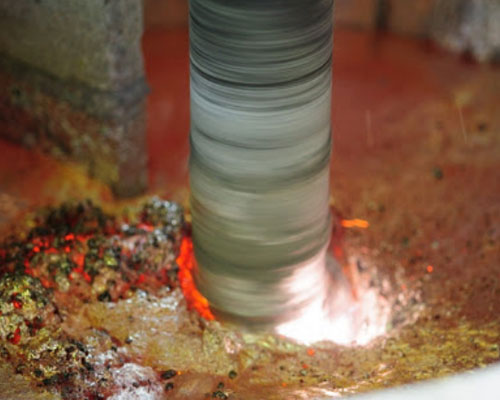
Aluminum is degassed by injecting an inert gas, such as nitrogen or argon, into molten aluminum through a rotating graphite rotor. The rotor breaks the gas into fine bubbles, which absorb dissolved hydrogen from the melt and carry it to the surface. This rotary degassing process is widely used before casting to reduce hydrogen-related defects and improve molten aluminum quality.
In industrial aluminum production, degassing is usually combined with filtration and other melt treatment processes to achieve stable casting performance.
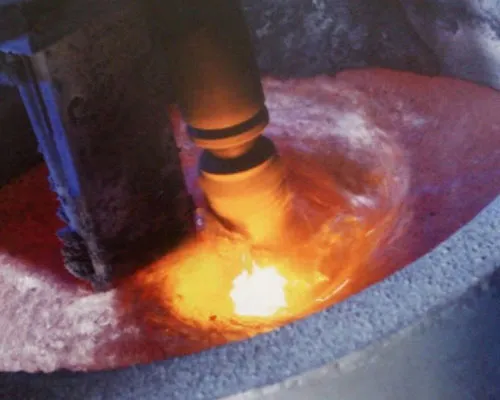
What Is Aluminum Degassing?
Aluminum degassing is a melt treatment process used to remove dissolved hydrogen from molten aluminum before casting.
During melting and holding, liquid aluminum can absorb hydrogen from moisture in the atmosphere, wet tools, furnace conditions, or contaminated charge materials. Unlike solid impurities, dissolved hydrogen cannot be removed by filtration because it exists inside the molten metal.
When aluminum solidifies, hydrogen solubility decreases significantly. Excess hydrogen may form gas pores inside the casting, affecting:
- الخصائص الميكانيكية
- Internal quality
- Surface performance
- Extrusion and rolling results
For this reason, aluminum producers use degassing systems to control hydrogen levels before the metal enters the casting process.
Why Is Hydrogen Removal Important in Aluminum Casting?
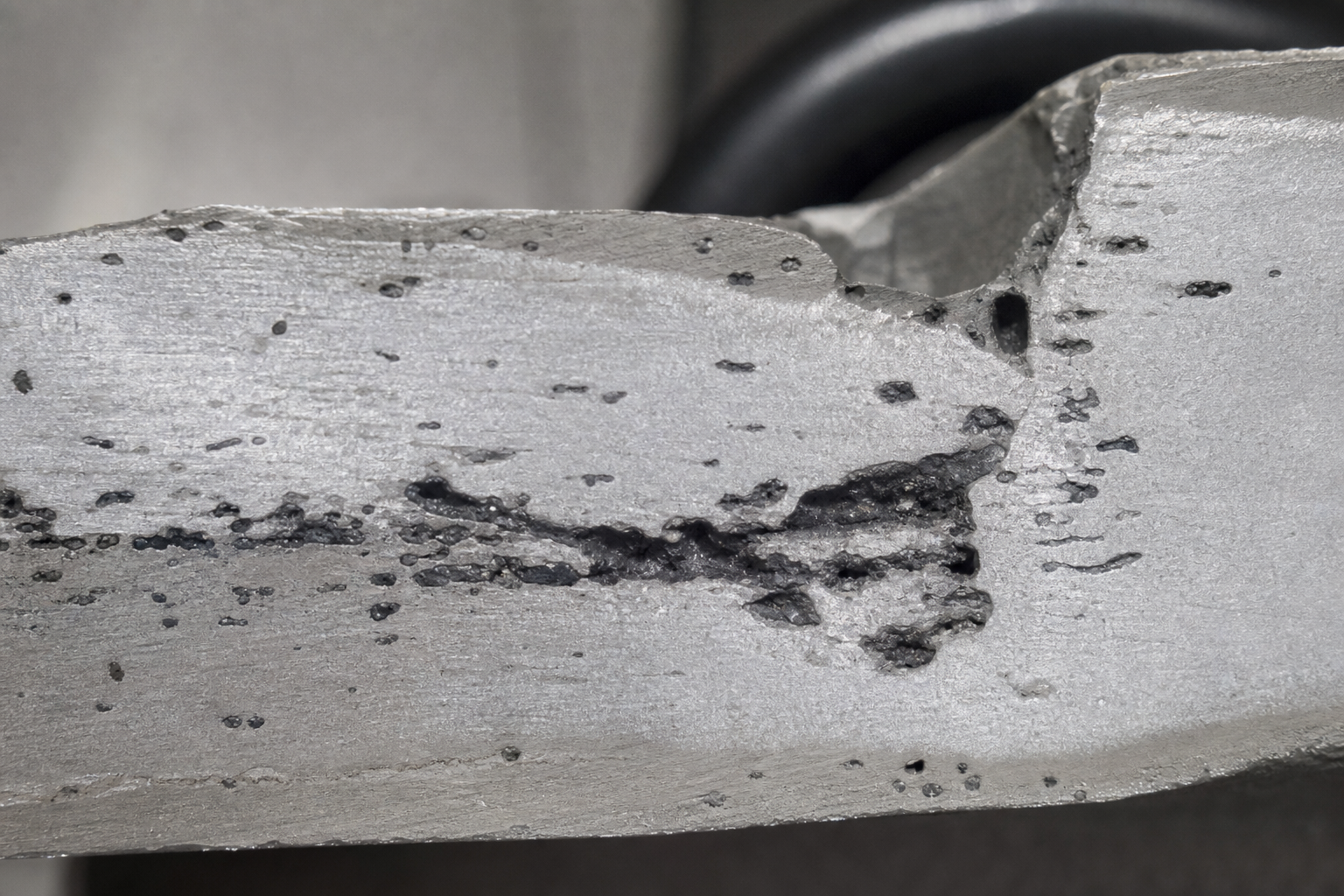
Hydrogen is one of the main causes of porosity defects in aluminum castings.
During solidification, dissolved hydrogen attempts to escape from the aluminum matrix. If the hydrogen content is too high, gas bubbles may become trapped inside the casting and form porosity.
Common consequences include:
- Reduced strength and ductility
- Internal defects after machining
- Poor surface quality
- Problems in downstream processes such as extrusion or rolling
A stable aluminum degassing process helps reduce these risks by lowering dissolved hydrogen before casting.
However, hydrogen removal is only one part of molten aluminum purification. Aluminum melt may also contain oxide inclusions, dross particles, and other non-metallic impurities. These are normally controlled through filtration systems such as ceramic foam filters.
Contact us for solutions to aluminum casting defects
How Does the Aluminum Degassing Process Work?
The most common industrial method is إزالة الغازات بالطريقة الدوارة, also known as impeller degassing.
The process includes several steps:
- A graphite rotor is immersed into the molten aluminum.
- Nitrogen or argon gas enters through the hollow shaft.
- The rotating impeller disperses the gas into small bubbles.
- The bubbles circulate through the melt and absorb dissolved hydrogen.
- Hydrogen is removed as the bubbles rise to the surface.
The efficiency of degassing depends on the interaction between gas bubbles and molten aluminum. Smaller and more evenly distributed bubbles provide a larger contact area, allowing hydrogen to transfer more effectively from the melt into the gas phase.
Compared with simple gas injection methods, rotary degassing provides better gas dispersion and more consistent treatment results.
Why Is Rotary Degassing Widely Used for Molten Aluminum Treatment?
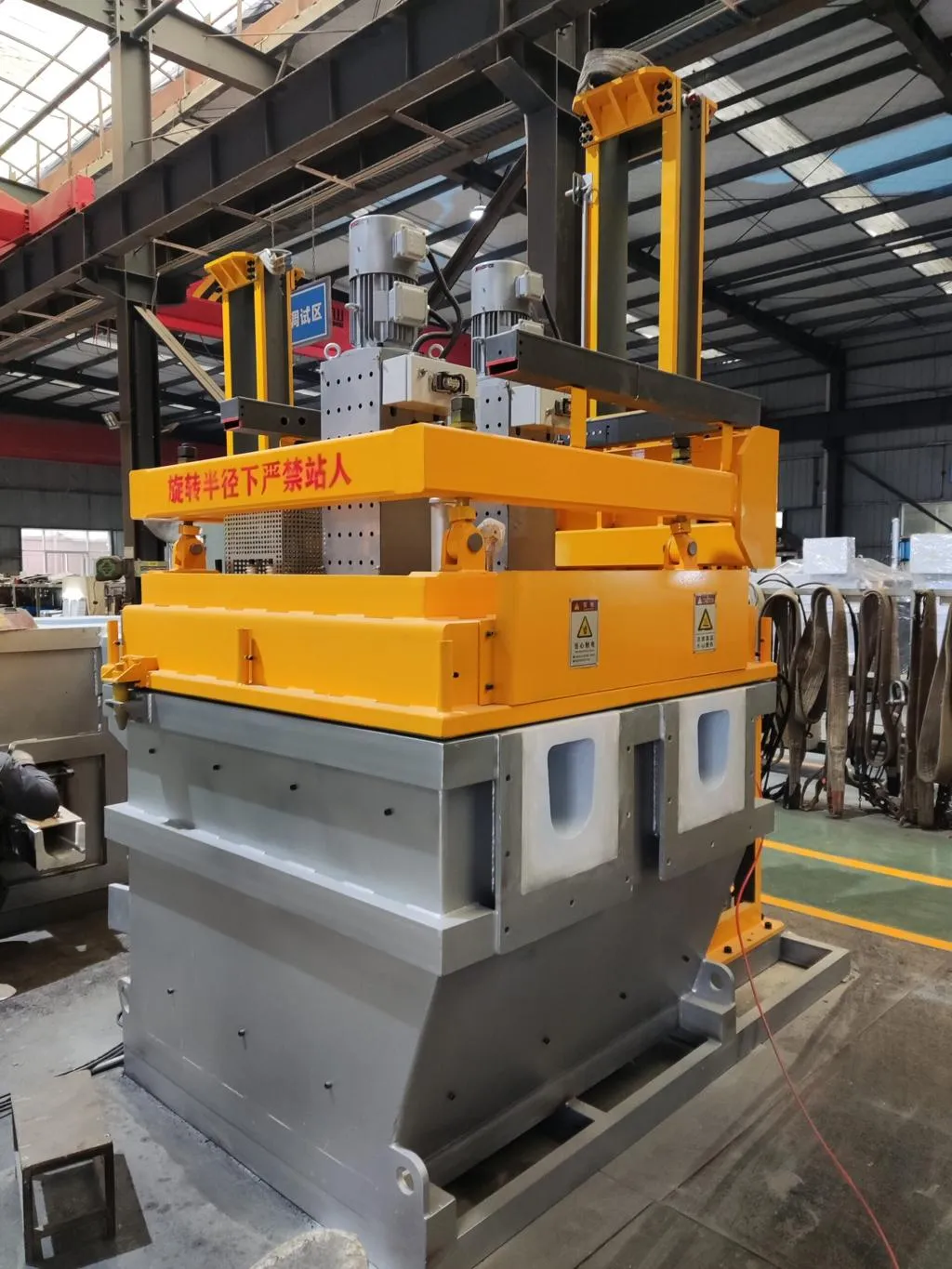
Rotary degassing has become a standard technology in many aluminum casting plants because it provides stable and efficient melt treatment.
The main advantages include:
Better Gas Dispersion
The rotating rotor breaks the incoming gas into fine bubbles instead of allowing large bubbles to escape quickly from the melt.
More Effective Hydrogen Removal
Fine bubbles create greater contact area with molten aluminum, improving hydrogen absorption efficiency.
More Uniform Melt Treatment
The rotation of the impeller creates circulation inside the melt, helping distribute the treatment gas more evenly.
Suitable for Continuous Production
Rotary degassing equipment can be installed between the holding furnace and casting line, making it suitable for modern aluminum production systems.
In practice, degassing performance is influenced not only by gas consumption but also by rotor design, operating parameters, melt temperature, and equipment condition.
Explore Our Online Degassing Equipment
What Factors Affect Aluminum Degassing Efficiency?
A successful aluminum degassing process depends on several operating factors.
Rotor Design
The graphite rotor is one of the most important components in a degassing system. Its design affects:
- Bubble size
- Gas distribution
- Melt circulation
- Treatment efficiency
Different rotor designs may be selected depending on melt volume and production requirements.
Gas Flow Rate
The gas flow rate needs to be controlled carefully.
Too low:
- Insufficient hydrogen removal
Too high:
- Increased turbulence
- Possible oxide formation
- Reduced treatment efficiency
The goal is stable bubble dispersion rather than simply increasing gas consumption.
Treatment Time
The required treatment time depends on:
- Initial hydrogen content
- درجة حرارة الانصهار
- Aluminum volume
- Rotor condition
- معدل تدفق الغاز
Longer treatment does not always mean better results. Proper process control is more important.
حالة الذوبان
Heavy oxide contamination, excessive turbulence, or poor furnace management can affect degassing results. For this reason, degassing is usually part of a complete molten aluminum treatment process.
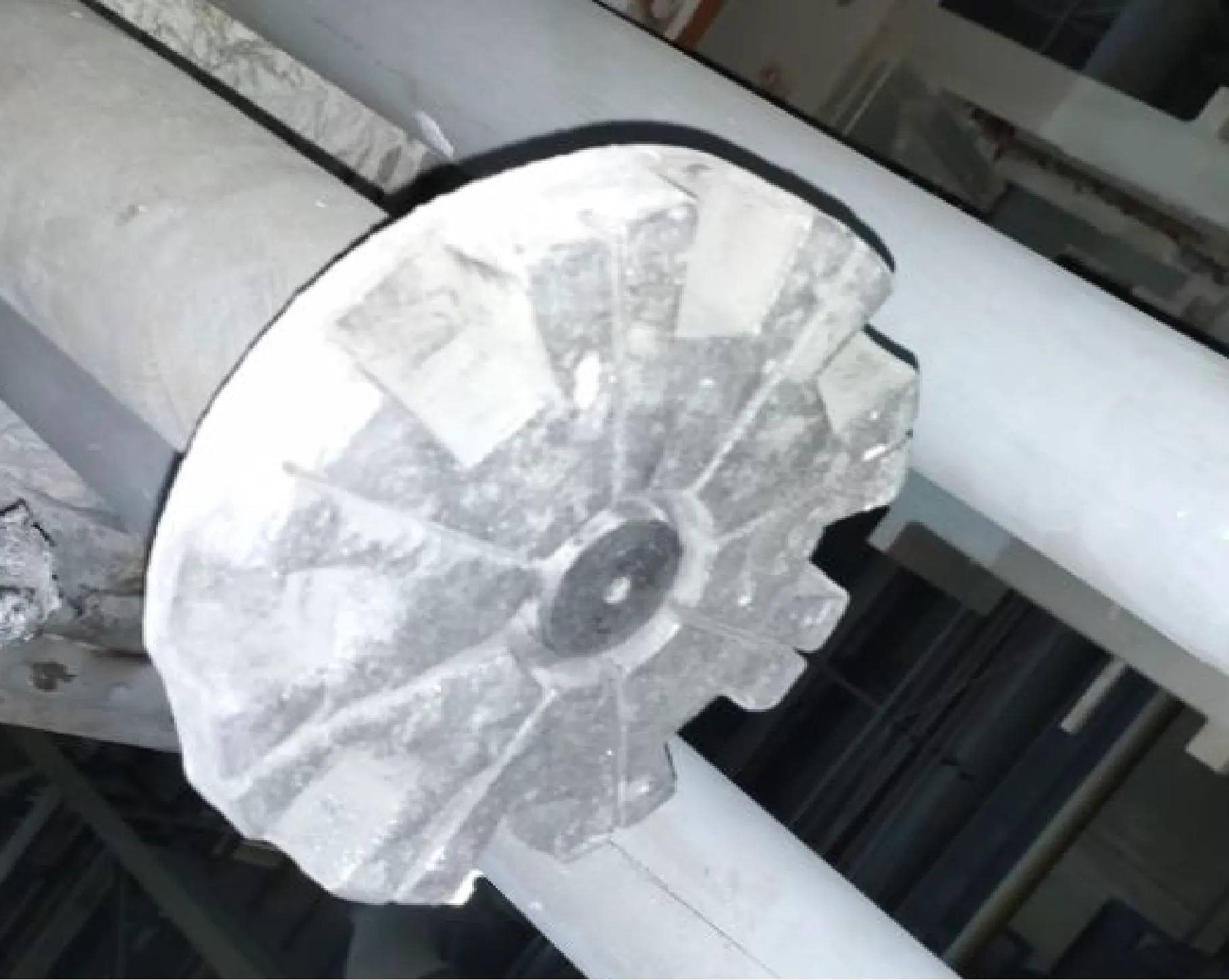
Graphite Rotor and Shaft: Key Components in Degassing Systems
The rotor and shaft are directly exposed to molten aluminum, so their material performance is critical.
Graphite is commonly used because it provides:
- مقاومة درجات الحرارة العالية
- Good thermal stability
- Resistance to molten aluminum corrosion
- Reliable performance during repeated operation
During production, rotor wear should be monitored regularly. A damaged rotor may affect bubble distribution and reduce degassing efficiency.
Proper maintenance and replacement of graphite components help maintain consistent treatment results.
Why Should Degassing Be Combined With Filtration?
Degassing and filtration solve different problems in molten aluminum treatment.
Degassing removes:
- الهيدروجين المذاب
Filtration removes:
- Oxide inclusions
- Non-metallic particles
- Dross-related impurities
For high-quality aluminum casting, these processes are often used together:
Melting → Degassing → Filtration → Casting
For example, a rotary degassing system can reduce hydrogen content, while a ceramic foam filter helps remove solid inclusions before the aluminum enters the casting stage.
Combining both technologies provides better control of molten aluminum cleanliness and helps reduce casting defects.
How to Choose the Right Aluminum Degassing Equipment?
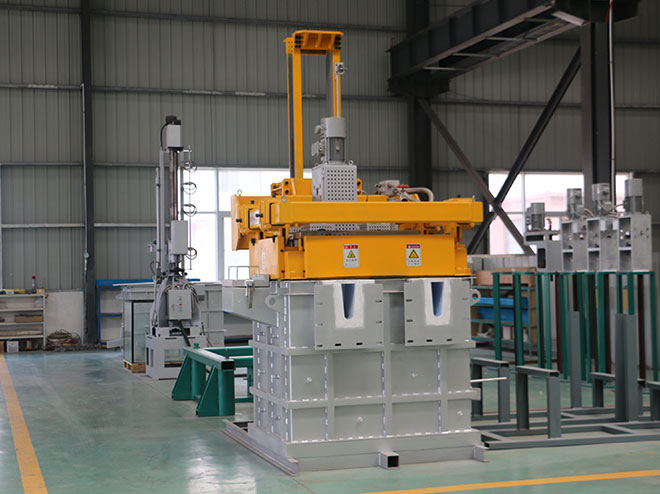
Selecting aluminum degassing equipment depends on the actual production conditions, including:
- Furnace or ladle capacity
- Aluminum alloy type
- Required treatment volume
- سرعة الصب
- Target hydrogen level
- Integration with filtration equipment
For high-throughput aluminum production, automated rotary degassing units provide more stable and repeatable treatment compared with manual gas injection methods.
AdTech provides aluminum melt treatment solutions, including rotary degassing equipment, graphite rotor systems, and filtration solutions designed for aluminum casting applications.
A reliable aluminum degassing process is not only about removing hydrogen. It requires proper equipment selection, stable operation, and integration with the overall melt treatment process to achieve consistent aluminum quality.
الأسئلة الشائعة
1. Why is degassing necessary for molten aluminum?
Degassing is necessary because molten aluminum can absorb hydrogen during melting and holding. Excess hydrogen may form porosity during solidification, reducing casting quality and mechanical properties. Aluminum degassing removes dissolved hydrogen before casting to improve melt cleanliness and reduce hydrogen-related defects.
2. How does aluminum degassing work?
Aluminum degassing works by injecting inert gas, usually nitrogen or argon, into molten aluminum through a rotating graphite rotor. The rotor creates fine gas bubbles that absorb dissolved hydrogen from the melt. The hydrogen is then removed when the bubbles rise to the surface.
3. What gas is used for aluminum degassing?
Nitrogen and argon are the most commonly used gases for aluminum degassing. Nitrogen is widely applied in general casting operations, while argon is preferred for some applications requiring higher melt quality control. The choice depends on alloy type, production requirements, and degassing system design.
4. What defects can aluminum degassing prevent?
Aluminum degassing mainly helps prevent hydrogen-related porosity defects. High hydrogen content in molten aluminum can cause internal pores, reduced mechanical strength, poor surface quality, and problems during processes such as extrusion, rolling, and machining.
5. What is the difference between aluminum degassing and filtration?
Aluminum degassing removes dissolved hydrogen from molten aluminum, while filtration removes solid impurities such as oxide inclusions and non-metallic particles. In aluminum casting, degassing and ceramic foam filtration are often combined to improve overall melt cleanliness and casting quality.
6. Why is a graphite rotor used in aluminum degassing?
Graphite rotors are commonly used in aluminum degassing systems because they can withstand high temperatures and resist corrosion from molten aluminum. The rotor design directly affects bubble size, gas distribution, and hydrogen removal efficiency during the degassing process.
7. What affects aluminum degassing efficiency?
The efficiency of aluminum degassing depends on several factors, including rotor design, gas flow rate, bubble size, treatment time, melt temperature, and aluminum cleanliness. Stable fine bubble distribution and proper operating parameters are key to achieving effective hydrogen removal.
8. How long does the aluminum degassing process take?
The degassing time depends on molten aluminum volume, initial hydrogen level, alloy type, gas flow rate, and equipment design. Industrial aluminum plants usually optimize treatment time according to the required hydrogen level instead of using a fixed processing time.
9. Can aluminum degassing remove oxide inclusions?
No. Aluminum degassing does not remove oxide inclusions because it targets dissolved hydrogen rather than solid particles. Oxide inclusions are normally removed through aluminum filtration systems, such as ceramic foam filters, installed before casting.
10. How do I choose an aluminum degassing system?
Choosing an aluminum degassing system depends on furnace capacity, casting output, alloy requirements, target hydrogen level, and production process. For continuous aluminum casting, rotary degassing equipment with reliable graphite rotor performance provides more stable and consistent melt treatment results.
مقالات ذات صلة:
 معدات إزالة الغازات الدوارة
 معدات إزالة الغازات من الألومنيوم
 جهاز إزالة الغازات الدوار
 إزالة الغازات من الألومنيوم المنصهر
 إزالة غازات الهيدروجين
 تكرير الغاز الخامل
 أجهزة إزالة غازات الهيدروجين
 وحدة إزالة الغازات الدوارة عبر الإنترنت
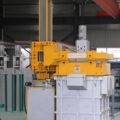 معدات إزالة الغازات من AdTech
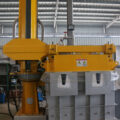 جهاز إزالة الغازات من المعادن المنصهرة
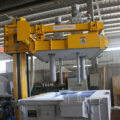 صندوق إزالة الغازات الدوار
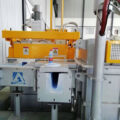 إزالة الغازات من سبائك الألومنيوم