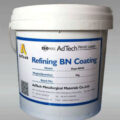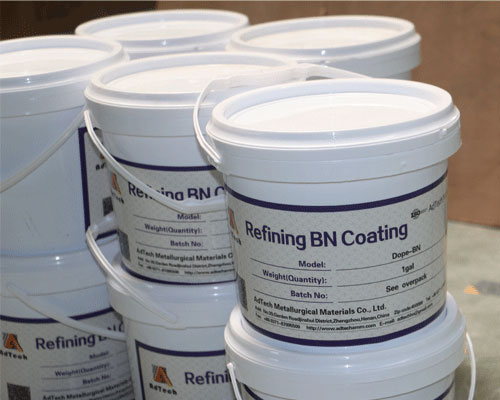
Refractory coating plays an important role in metal mold casting, particularly for aluminum alloy castings. Unlike sand molds, metal molds extract heat from molten aluminum much faster. This rapid heat transfer affects metal flow, solidification, surface quality, and ultimately the quality of the finished casting.
A properly selected and applied revêtement de moule creates a controlled interface between the molten metal and the mold. It can protect the mold surface, improve release, and adjust the rate at which heat leaves the casting.
What Does Refractory Coating Do in Metal Mold Casting?
A refractory coating on a metal mold can serve several functions:
- Protect the mold from direct contact with molten aluminum
- Reduce mold wear and thermal damage
- Make casting removal easier
- Improve casting surface quality
- Help control molten metal flow and solidification
- Adjust heat transfer between the casting and mold wall
The exact function depends on the coating formulation and the requirements of the casting process. A coating designed primarily for thermal insulation will behave differently from one designed for lubrication or heat transfer.
For aluminum alloy casting, one of the most important functions is controlling heat transfer at the mold–metal interface.
Why Is Thermal Control Important in Metal Mold Casting?
Molten aluminum loses heat rapidly when it contacts a metal mold. If heat is extracted too quickly or unevenly, different areas of the casting may solidify at different rates.
This can affect:
- Metal flow and filling
- Solidification behavior
- Surface appearance
- Cohérence dimensionnelle
- Local defects caused by uneven solidification
The refractory coating acts as a thin thermal barrier between the molten aluminum and the mold. By changing this interface, the coating can slow and regulate heat transfer rather than allowing the bare metal mold to extract heat directly from the melt.
Cependant, more insulation is not necessarily better. The coating must provide the appropriate thermal resistance for the alloy, mold material, casting geometry, and production conditions.
Learn More About Our Refractory Coating
What Determines the Thermal Insulation of a Mold Coating?
The thermal behavior of a refractory coating is mainly influenced by three factors:
- Coating composition
- Épaisseur du revêtement
- Coating porosity and structure
These factors work together. Changing the coating material or application method can therefore change how quickly heat is transferred through the coating.
1. Coating Composition
A typical refractory mold coating contains a liquid carrier, binder, and refractory or functional solids.
The formulation depends on what the coating is expected to do.
Insulating coatings may contain low-thermal-conductivity mineral materials such as talc, mica, diatomaceous earth, alumina, or other refractory fillers. Their purpose is to increase thermal resistance between the molten metal and mold.
Graphite-based coatings are commonly used where lubrication and release are important. Because graphite has relatively high thermal conductivity compared with many insulating fillers, graphite-rich coatings are not simply interchangeable with thermal-insulating coatings.
Other formulations are designed to provide a balance between:
- Thermal insulation
- Mold release
- Surface protection
- Chemical resistance
- Heat transfer
For aluminum casting, the coating should also be compatible with molten aluminum and the operating temperature of the mold.
2. Coating Thickness
Coating thickness directly affects the thermal resistance of the mold interface. A thicker layer generally provides greater thermal resistance, but excessive thickness can create other problems, including poor adhesion, cracking, peeling, or changes in casting dimensions.
A coating thickness of approximately 150–250 μm may be used in some applications, but this should not be treated as a universal specification. The appropriate thickness depends on the coating formulation, application method, mold design, and required heat-transfer characteristics.
In production, consistency is often more important than simply applying a thicker coating.
3. Coating Porosity
Porosity also influences the thermal properties of the coating.
A coating containing a controlled pore structure can provide greater thermal resistance because the pores interrupt heat transfer through the solid coating material. However, excessive or uncontrolled porosity can reduce mechanical strength and adhesion.
Porosity is affected by several factors, including:
- Coating composition
- Solid content
- Carrier evaporation
- Drying conditions
- Spray parameters
- Surface preparation
- Number of coating layers
This is why the same coating material can perform differently when applied under different production conditions.
How Is Refractory Coating Applied to a Metal Mold?
Pulvérisation is one of the most common application methods because it allows the coating thickness to be controlled over relatively large mold surfaces.
Depending on the mold design and area being coated, other methods such as brushing may also be used. Brushing can be practical for smaller areas, complex geometries, or specific parts of the gating and riser system.
Regardless of the application method, the mold surface should be properly prepared before coating. Oil, loose oxides, old coating residues, and other contaminants can affect adhesion and coating performance.
The coating should then be dried or cured according to the requirements of the specific formulation.
How Should a Refractory Coating Be Selected?
There is no single mold coating that is suitable for every casting process.
Selection should consider:
- Composition d'un alliage d'aluminium
- Mold material
- Casting geometry
- Mold temperature
- Required cooling rate
- Desired surface finish
- Demolding requirements
- Casting cycle time
- Application method
- Coating thickness and drying conditions
For example, a casting that requires strong thermal insulation may need a different coating formulation from one where rapid heat extraction is important.
The objective is not simply to maximize insulation. The objective is to establish the right thermal and surface conditions for stable casting production.
Why Does Mold Coating Quality Matter?
A refractory coating is only effective when its formulation, thickness, adhesion, and application are properly controlled.
An unsuitable or poorly applied coating can lead to:
- Uneven heat transfer
- Coating peeling or cracking
- Poor casting release
- Défauts de surface
- Inconsistent casting conditions
- Shorter mold service life
For this reason, mold coating should be treated as part of the casting process rather than simply as a protective layer.
Refractory Coating for Aluminum Casting
In aluminum alloy casting, refractory coatings are particularly useful for managing the interaction between the molten aluminum and the metal mold.
A suitable coating can help protect the mold, improve release, control heat extraction, and provide more consistent casting conditions. The final result depends not only on the coating itself, but also on mold temperature, pouring conditions, alloy composition, and the overall casting process.
For applications involving molten aluminum, coating selection should therefore be based on the actual operating conditions rather than a general temperature or thickness specification.
FAQ
1. What is refractory coating used for in metal casting?
It protects the mold, improves casting release and surface quality, and controls heat transfer between molten metal and the mold.
2. Why is mold coating important for aluminum casting?
Metal molds extract heat from molten aluminum rapidly. A suitable coating helps regulate this heat transfer and can improve casting consistency.
3. What materials are used in refractory mold coatings?
Depending on the application, formulations may contain refractory fillers such as alumina, talc, mica, diatomaceous earth, graphite, and other functional materials.
4. Does a thicker mold coating provide better insulation?
Not necessarily. Increasing thickness can increase thermal resistance, but excessive thickness may cause adhesion, cracking, peeling, or dimensional problems.
5. What is a typical mold coating thickness?
Some applications use approximately 150–250 μm, but the correct thickness depends on the coating formulation and casting process.
6. How does coating porosity affect thermal insulation?
A controlled porous structure can increase thermal resistance by reducing direct heat conduction through the coating. Excessive porosity, however, can weaken the coating.
7. How is refractory coating applied?
Spraying is widely used for mold surfaces, while brushing may be suitable for smaller or more localized areas.
8. Can the same refractory coating be used for all aluminum casting processes?
No. The appropriate coating depends on the alloy, mold temperature, casting geometry, required cooling rate, and release and surface-finish requirements.
9. What happens if mold coating is applied unevenly?
Uneven coating thickness can create differences in heat transfer across the mold, potentially affecting solidification, surface quality, and casting consistency.
10. Is refractory coating the same as a ceramic coating?
Not necessarily. “Refractory coating” is a broader term covering different formulations designed for high-temperature mold protection, thermal control, release, or related functions. Ceramic-based materials may be used in some refractory coatings.