
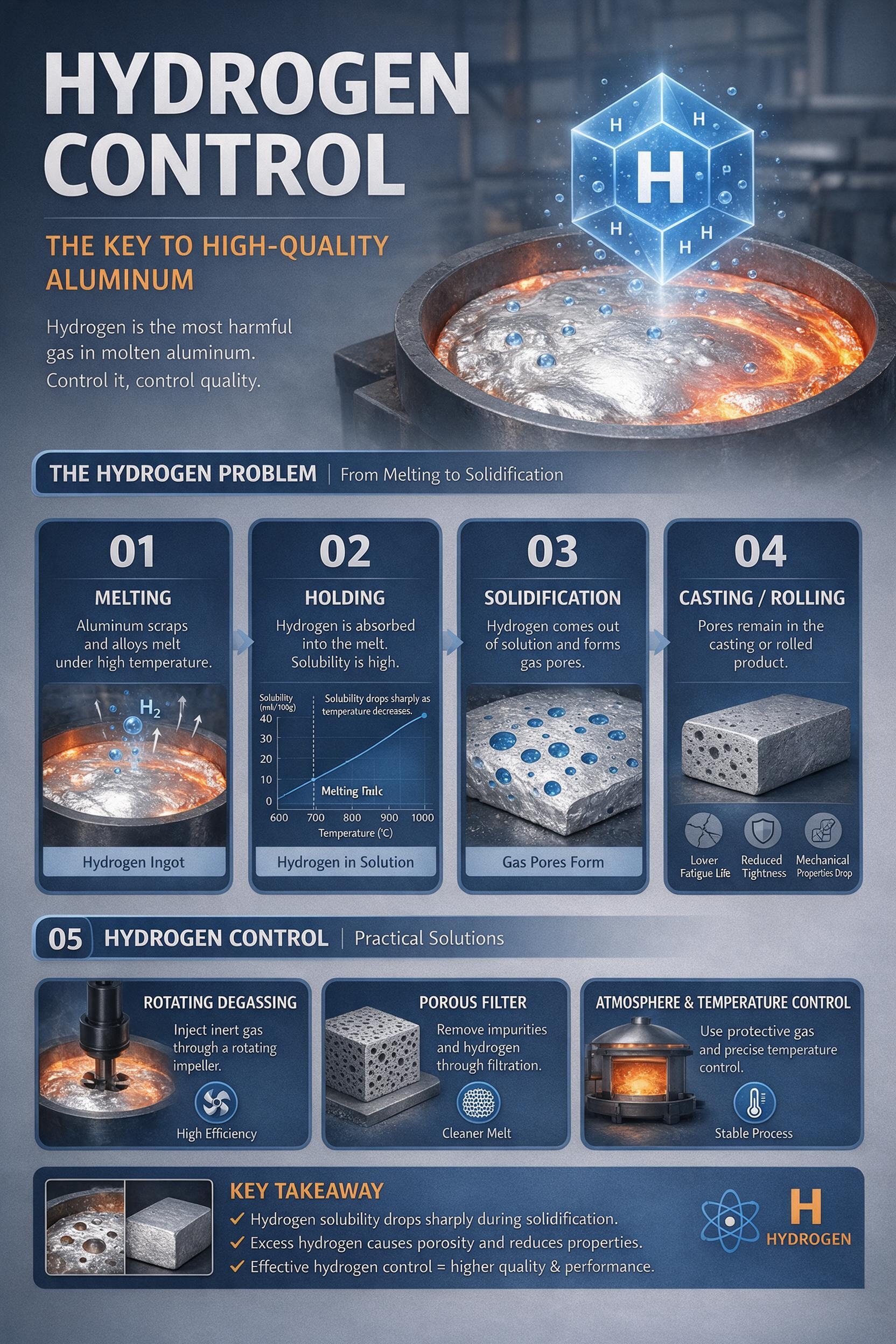
Hydrogen is the most important gas to control in molten aluminum. Aluminum can absorb hydrogen during melting and holding, but the solubility of hydrogen drops sharply as the metal solidifies. If excess dissolved hydrogen remains in the melt, it can come out of solution during solidification and form gas pores in castings and rolled products.
Comprendre hydrogen solubility in pure aluminum helps explain why moisture control, melt treatment, and degassing are essential parts of aluminum casting.
Why Does Molten Aluminum Absorb Hydrogen?
During melting and holding, molten aluminum can pick up hydrogen from several sources. The most common source is moisture.
Water vapor can react at the surface of molten aluminum and generate hydrogen, which can then dissolve into the melt. Other potential sources include:
- Wet or contaminated charge materials
- Moisture in furnace refractories or tools
- Humid furnace atmosphere
- Hydrocarbon contamination
- Improperly dried fluxes, additives, or materials introduced into the melt
This is why keeping the charge, tools, refractory surfaces, and furnace environment dry is an important first step in controlling hydrogen.
Hydrogen can also be introduced continuously during melting and holding if moisture enters the process. Degassing at one point in the process therefore cannot replace good moisture control upstream.
How Soluble Is Hydrogen in Pure Aluminum?
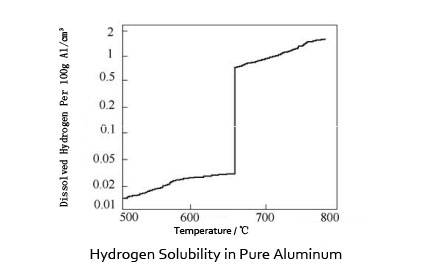
Hydrogen behaves differently from most other gases in aluminum. It is the only gas that has significant solubility in liquid aluminum under normal melting conditions.
The solubility of hydrogen in liquid aluminum is much higher than in solid aluminum. As the metal cools and solidifies, its ability to retain dissolved hydrogen decreases substantially.
This difference is important because the hydrogen that was dissolved in the molten metal has to go somewhere when the solidification front advances.
Liquid vs. Solid Aluminum
Published data commonly show a large difference between the hydrogen solubility of liquid and solid aluminum. Values of approximately 0.65 cm³ H₂ per 100 g of liquid aluminum et 0.034 cm³ H₂ per 100 g of solid aluminum are often cited under specific reference conditions.
The exact values depend on temperature, pressure, alloy composition, and measurement conditions, so they should not be treated as universal operating limits.
The important point for casting is the large decrease in hydrogen solubility during solidification.
What Happens to Hydrogen During Solidification?
When molten aluminum begins to solidify, hydrogen becomes less soluble in the newly formed solid metal.
If the melt contains more hydrogen than the solid can retain, the excess hydrogen is rejected from the solidifying metal. It can diffuse into the remaining liquid or gather into gas bubbles.
If these bubbles cannot escape before the metal becomes solid, they remain inside the casting as pores.
This is one of the main reasons hydrogen control is closely associated with gas porosity in aluminum castings.
Hydrogen-related porosity can affect:
- Internal casting integrity
- Propriétés mécaniques
- Leak tightness
- Fatigue performance
- Surface quality after machining
- Quality of rolled or continuously cast products
The actual defect also depends on solidification conditions, shrinkage, inclusions, cooling rate, and other process variables. Not every pore found in an aluminum casting is caused by hydrogen.
Why Is Hydrogen a Problem for Aluminum Casting?
A high hydrogen level does not necessarily produce visible defects immediately after melting. The problem often becomes apparent during solidification.
A melt may look clean at the furnace or holding stage but still contain dissolved hydrogen. Once the metal enters the mold and starts to solidify, the lower hydrogen solubility can lead to pore formation.
For this reason, molten aluminum cleanliness is not only about removing visible oxide or slag. Dissolved hydrogen must also be controlled.
This requires two different treatment functions:
- Dégazage reduces dissolved hydrogen.
- Filtration removes suspended non-metallic inclusions.
Neither process completely replaces the other.
How Is Hydrogen Removed from Molten Aluminum?
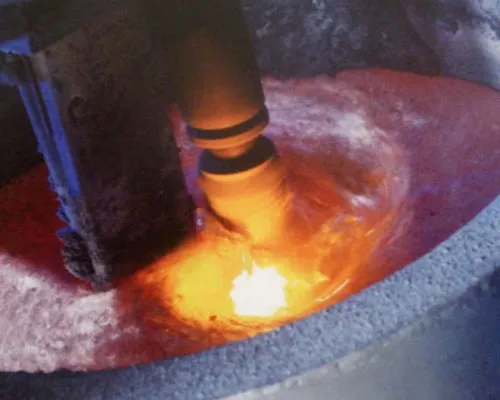
The most common industrial approach is inert gas degassing.
Argon or nitrogen is introduced into the molten aluminum through a submerged rotor, impeller, lance, or another gas-dispersion system. The treatment creates a large number of gas bubbles within the melt.
Because the hydrogen concentration in the bubbles is initially very low, dissolved hydrogen transfers from the aluminum into the bubbles. The bubbles then rise to the surface and carry the hydrogen out of the melt.
The key mechanism is therefore mass transfer of dissolved hydrogen into dispersed inert-gas bubbles, rather than a chemical reaction between hydrogen and the purge gas.
How Does Rotary Degassing Remove Hydrogen?
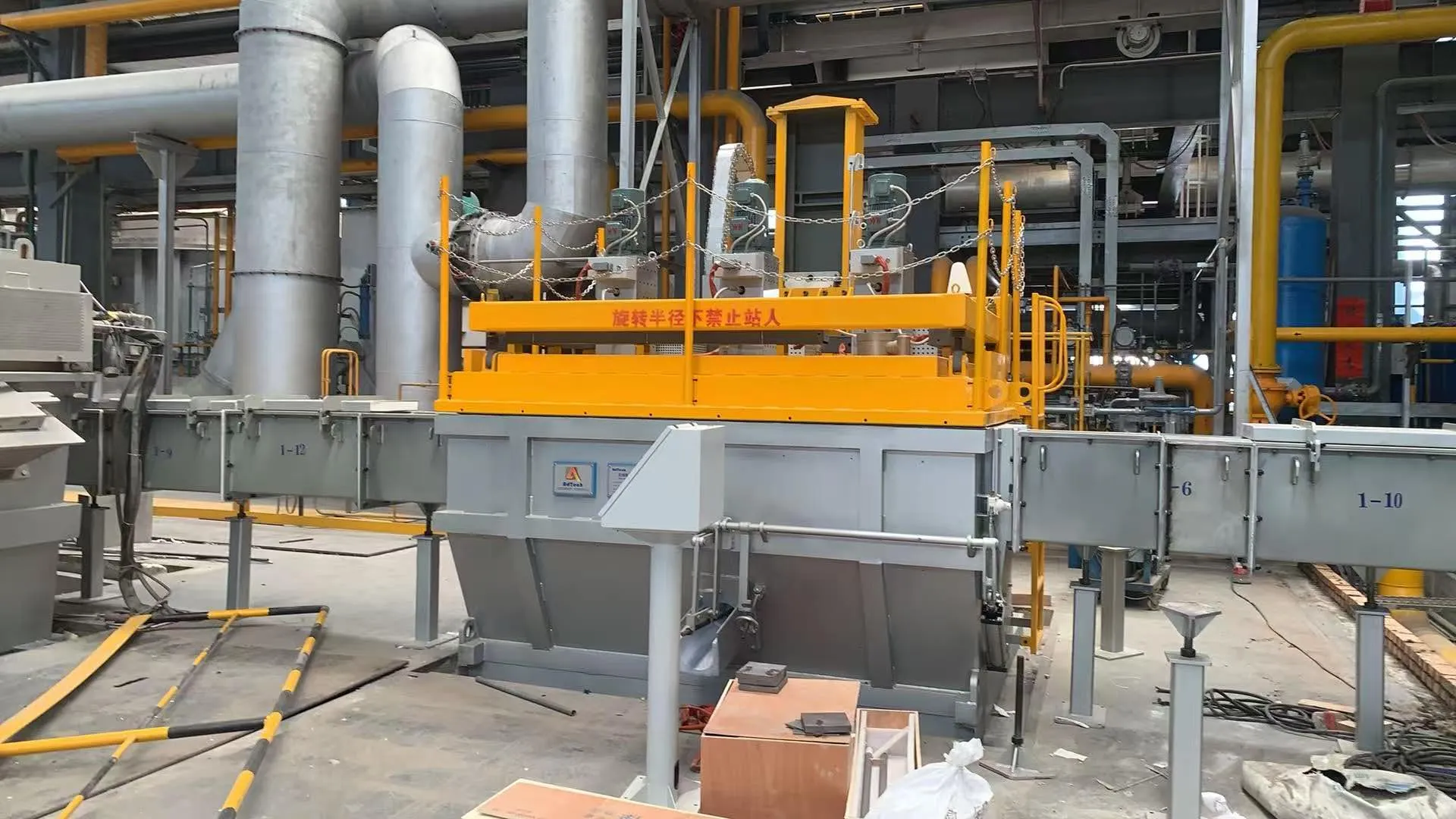
Rotary degassing improves gas dispersion by rotating an immersed rotor or impeller.
Instead of introducing a few large bubbles, the rotor breaks the purge gas into smaller and more widely distributed bubbles. This increases the gas–metal contact area and gives dissolved hydrogen more opportunity to transfer into the gas phase.
The effectiveness of rotary degassing depends on factors such as:
- Température de fusion
- Durée du traitement
- Débit de gaz
- Vitesse du rotor
- Rotor design
- Bubble dispersion
- Melt depth
- Aluminum throughput
- Initial hydrogen concentration
- Furnace and transfer conditions
There is no single combination of these parameters that is optimal for every aluminum alloy or casting line.
Learn More About Our Deagssing Unit
Argon or Nitrogen: Which Gas Is Used for Aluminum Degassing?
Both argon and nitrogen can be used as purge gases for molten aluminum treatment.
The choice depends on the alloy, equipment, process requirements, gas quality, and operating cost. In either case, the gas should be sufficiently dry and suitable for the application.
The purpose of the purge gas is to provide bubbles into which dissolved hydrogen can transfer. The effectiveness of treatment depends not simply on which gas is selected, but on how effectively the equipment disperses and distributes that gas through the melt.
What Is an Aluminum Degassing Unit?
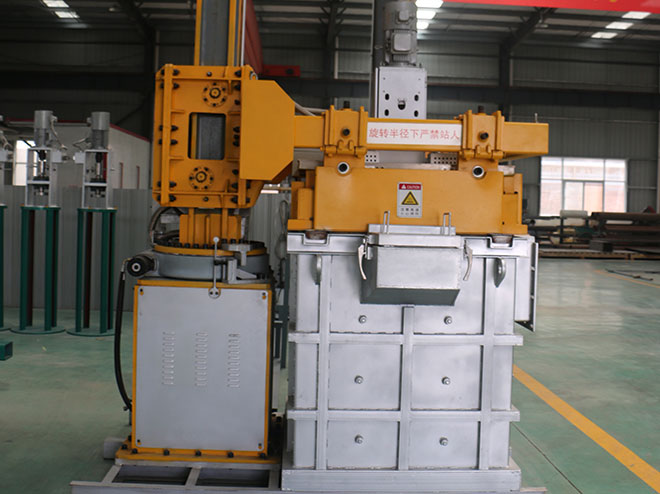
An unité de dégazage de l'aluminium is equipment designed to treat molten aluminum by introducing and dispersing an inert gas through the melt.
A rotary degassing unit typically includes a treatment chamber or vessel, gas supply system, rotating rotor or impeller, drive mechanism, and refractory lining or components that come into contact with molten aluminum.
For industrial applications, equipment design also needs to account for:
- Required melt capacity and throughput
- Treatment temperature
- Continuous or batch operation
- Rotor configuration
- Distribution de gaz
- Refractory durability
- Aluminum wetting and buildup
- Maintenance requirements
For aluminum casting operations that require consistent melt treatment, equipment stability is just as important as the basic principle of gas bubbling.
How Can a Degassing Unit Improve Aluminum Melt Quality?
A properly operated degassing unit can reduce dissolved hydrogen before the metal enters the casting stage.
For applications where hydrogen control is critical, the degassing system should be integrated into the overall melt-treatment process rather than treated as an isolated piece of equipment.
AdTech’s unité de dégazage is designed for molten aluminum treatment, with a high-silicon refractory lining intended for high-temperature contact with aluminum. The lining provides resistance to the operating environment, while its non-wetting characteristics help reduce aluminum adhesion.
The equipment can be selected according to the required melt treatment conditions, including melt volume, treatment process, and casting application.
Does Degassing Remove Oxide Inclusions?
Degassing and inclusion removal should be considered separately.
Rotary treatment can promote the flotation of some particles and oxide films under suitable conditions, but filtration is the primary method for removing non-metallic inclusions from molten aluminum.
Ceramic foam filters and other filtration systems physically retain suspended inclusions as the melt passes through the filter.
A typical melt-treatment sequence may therefore combine:
Fusion → Dégazage → Filtration → Coulée
The exact arrangement depends on the casting process and equipment layout.
For applications requiring both hydrogen control and high melt cleanliness, degassing and filtration work together rather than competing with each other.
How Can Hydrogen Be Controlled Before Degassing?
Degassing is more effective when hydrogen pickup is minimized before treatment.
Practical measures include:
- Keep charge materials dry
- Preheat tools and equipment that contact molten aluminum
- Avoid wet refractories
- Control furnace atmosphere and moisture
- Store fluxes and additives properly
- Minimize unnecessary melt exposure
- Avoid excessive holding time
- Reduce turbulence that can expose fresh melt surface to humid air
These measures reduce the amount of hydrogen that the degassing system has to remove.
How Do You Know Whether Degassing Is Working?
Hydrogen content should be verified rather than judged only by appearance.
Depending on the production requirements, aluminum producers may use methods such as:
- Reduced Pressure Test (RPT)
- Density Index measurements
- Direct hydrogen analysis
- Metallographic examination
- Final casting quality inspection
The appropriate method depends on the alloy, product requirements, and quality-control system.
The important principle is simple: measure the melt condition before and after treatment whenever process control requires it.
Hydrogen Removal Is Only One Part of Melt Treatment
Good aluminum casting quality requires control of both dissolved gases and solid contaminants.
Hydrogen is primarily controlled through degassing, while oxide films, dross, and other non-metallic inclusions are controlled through melt handling and filtration.
A complete melt-treatment strategy may therefore include:
- Preventing hydrogen pickup
- Removing dissolved hydrogen through degassing
- Removing non-metallic inclusions through filtration
- Controlling melt temperature during transfer
- Minimizing recontamination before casting
- Verifying melt quality before or during casting
The right combination depends on the alloy, casting method, product quality requirements, and production rate.
Conclusion
The high difference between hydrogen solubility in liquid and solid aluminum explains why hydrogen is such an important concern in aluminum casting. Molten aluminum can absorb hydrogen during melting and holding, while its ability to retain hydrogen decreases sharply during solidification. Excess hydrogen can therefore contribute to gas porosity and other quality problems.
Controlling moisture is the first step. Rotary degassing with an inert gas is then used to reduce dissolved hydrogen before casting, while filtration is used to control non-metallic inclusions.
For aluminum producers, understanding this relationship between hydrogen solubility, solidification, degassing, and filtration provides a practical basis for improving molten aluminum quality.