An electric heated aluminum transfer launder is designed to maintain suitable molten metal conditions between process stations while accommodating the layout and operating requirements of an aluminum casting line. AdTech’s electric heated launder combines a steel support shell, an insulated refractory lining, silicon carbide rod heating, and temperature control. Its modular configuration can be adapted to different transfer distances, channel dimensions, and production layouts, making it suitable for aluminum casting operations where temperature stability, maintenance access, and equipment integration matter.
What Makes a Modular Aluminum Launder Suitable for Different Casting Lines?
An aluminum casting plant rarely has the same transfer layout as another. Furnace outlet heights, casting machine positions, available floor space, metal throughput, and the location of treatment equipment all influence the launder configuration.
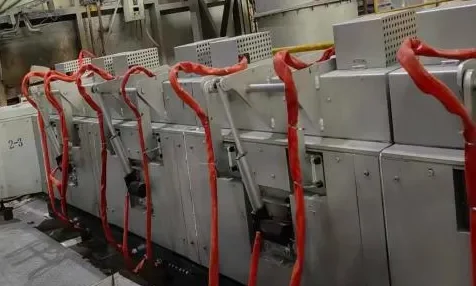
A modular electric heated launder allows the transfer route to be assembled from sections rather than treated as one fixed-length channel. Length, cross-section, connection geometry, and cover arrangement can be specified according to the production line.
This approach is particularly useful when equipment must be installed in an existing plant, where the available space and connection points may limit the design.
| Design variable | Customization consideration | Operational importance |
|---|---|---|
| Launder length | Adapted to the actual transfer distance | Influences heat loss and layout |
| Channel cross-section | Matched to the required metal flow | Supports stable metal delivery |
| Section arrangement | Straight sections, bends, and connections | Accommodates the plant layout |
| Cover configuration | Fixed or independently opening sections, depending on design | Provides access for inspection and cleaning |
| Support structure | Adjustable dimensions where specified | Helps align the launder with adjacent equipment |
| Heating zones | Arranged according to the system design | Supports temperature management along the transfer route |
The purpose of customization is not simply to make the launder fit the available space. Channel geometry, heating arrangement, refractory construction, and equipment interfaces must work together under the intended operating conditions.
For projects involving a replacement launder, the existing installation drawing and actual connection dimensions should be reviewed before manufacturing. This helps reduce the risk of field modifications after delivery.
How Does Electric Heating Improve Temperature Management During Production?
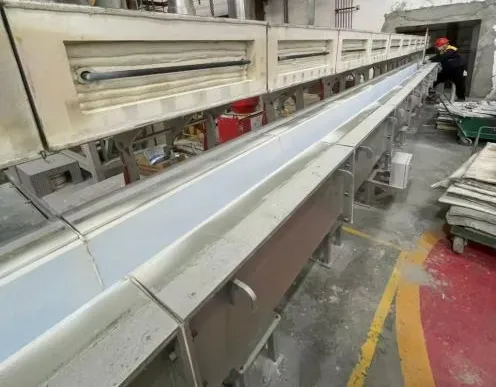
A conventional insulated launder reduces heat loss, but insulation alone does not actively replace the heat lost during metal transfer. When transfer distances are long, production is continuous, or operating conditions vary, supplementary heating may be needed.
AdTech’s electric heated launder uses silicon carbide rods to supply radiant heat. The system can preheat the channel before casting and provide additional heat during production according to its temperature-control settings.
A typical operating sequence involves three stages:
- Startup preparation: The installed launder is inspected and preheated according to the specified procedure before molten aluminum is introduced.
- Production operation: The heating system compensates for heat loss as required, while temperature sensors monitor the designated control points.
- Abnormal-condition response: Temperature alarms and protective functions respond to conditions outside the configured operating limits.
The performance of this arrangement depends on the heater layout, insulation quality, transfer distance, metal flow, and environmental conditions.
| Operating stage | Control priority | What should be verified |
|---|---|---|
| Before casting | Uniform preheating | Lining temperature and heating procedure |
| During continuous production | Stable temperature along the transfer route | Sensor readings and heater response |
| During reduced flow or interruptions | Avoiding unsuitable temperature conditions | Control settings and production restart procedure |
| Before maintenance | Safe equipment condition | Electrical isolation and temperature status |
The allowable temperature drop should be established in the approved technical specification, with defined measurement points and operating conditions. A performance figure measured under one flow rate or installation arrangement should not automatically be applied to every launder configuration.
Why Is Section-by-Section Access Important for Launder Maintenance?
A molten aluminum transfer channel must remain clean, structurally sound, and correctly aligned throughout operation. Accumulated dross, damaged refractory surfaces, and deteriorated joints can interfere with metal flow and increase maintenance requirements.
The ability to access individual sections can therefore be an important consideration when specifying an electric heated launder.
AdTech’s product configuration can incorporate a pneumatic cover-opening arrangement, with individual sections opened for inspection and cleaning where specified. This allows maintenance access to be considered as part of the original equipment design rather than addressed only after installation.
| Maintenance task | Design feature to consider | Objetivo |
|---|---|---|
| Inspecting the working surface | Accessible cover sections | Check for visible lining deterioration |
| Removing accumulated dross | Suitable opening and cleaning access | Simplify routine maintenance |
| Checking section joints | Accessible connections | Inspect alignment and possible damage |
| Servicing heating components | Appropriate access to electrical components | Support inspection and replacement |
| Reassembling the transfer route | Defined locating and connection points | Help restore the specified geometry |
Maintenance access should be balanced with thermal insulation and operational safety. A cover that is easy to open must also return to its intended position and maintain the required closure during production.
Before specifying a pneumatic cover system, confirm the required opening sequence, available compressed-air supply, maintenance clearances, and the extent of independent section control.
What Safety Features Should an Electric Heated Launder Have?
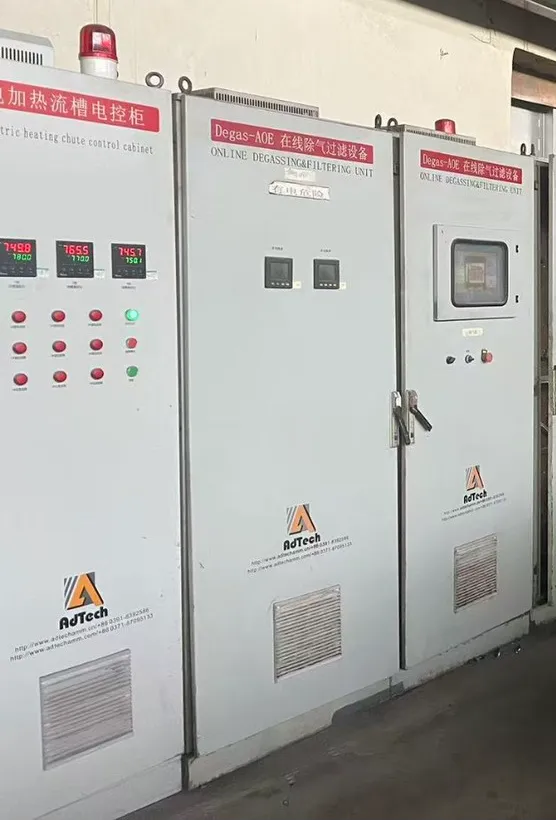
Electric heating removes the need for a fuel-gas supply line at the launder, but it does not eliminate the need for engineered safety controls. Electrical equipment operates near high-temperature molten metal, so electrical protection, temperature monitoring, mechanical integrity, and leakage prevention all remain important.
AdTech’s supplied product description includes electrical leakage protection, overtemperature alarms or protective functions, and temperature monitoring. The exact protection configuration should be confirmed in the electrical drawings and equipment specification.
| Safety consideration | Relevant design measure | What buyers should confirm |
|---|---|---|
| Electrical faults | Suitable leakage and electrical protection | Protection devices and isolation arrangements |
| Excessive temperature | Sensors, alarms, and overtemperature protection | Setpoints and response logic |
| Molten metal leakage | Sound lining, joints, and connections | Inspection procedure and acceptance criteria |
| Cover operation | Controlled opening and closing | Interlocks and safe maintenance access |
| Unexpected shutdown | Defined restart procedure | Required cooling, inspection, and reheating steps |
A covered launder can also reduce direct exposure of the molten metal to the surrounding atmosphere. However, cover design alone does not guarantee the elimination of oxide formation or entrained inclusions. Melt handling, transfer geometry, and operating practices continue to influence metal cleanliness.
For procurement, safety features should be listed as specific functions rather than described only as “fully safe” or “maintenance-free.” The supplier and plant engineering team should establish the required protections and how they will be verified during commissioning.
Which Aluminum Casting Processes Can Use an Electric Heated Launder?
Electric heated launders can be configured for different aluminum casting operations where molten metal must be transferred while maintaining suitable thermal conditions. The required design depends on the process layout and the quality requirements of the product being cast.
| Solicitud | Transfer requirement | Configuration consideration |
|---|---|---|
| Aluminum casting and rolling | Maintain appropriate metal conditions before the rolling or casting stage | Transfer route and temperature-control requirements |
| Slab casting | Deliver metal to the designated casting equipment | Connection geometry and flow stability |
| Round billet casting | Feed the casting distribution system | Required throughput and channel dimensions |
| Aluminum wire rod production | Support continuous metal delivery | Operating continuity and temperature monitoring |
| Aluminum foil stock production | Maintain controlled conditions before casting and melt treatment | Coordination with upstream filtration and degassing |
| Lithographic plate and high-quality sheet stock | Support stable casting conditions | Compatibility with the full production line |
These applications do not require identical systems. A line with a short transfer route may have different heating needs from a long, continuous casting operation. Likewise, a launder used with high-value sheet stock may require particular attention to lining condition, metal handling, and connection design.
The correct configuration should be established from the intended application, metal flow, transfer distance, operating temperature, and available installation space.
How Should an Electric Heated Launder Be Evaluated Over Its Service Life?
The purchase decision should consider not only the equipment’s initial cost but also its operating requirements and maintainability.
A suitable launder needs a refractory lining compatible with the intended molten aluminum service, insulation appropriate to the thermal requirements, heating components that can be maintained, and a structure that allows inspection without unnecessary disruption to production.
Service life depends on factors including alloy chemistry, operating temperature, thermal cycling, installation quality, cleaning practices, and the condition of the lining during use. For this reason, a manufacturer’s stated service-life figure should be tied to its defined operating conditions and acceptance criteria.
When comparing different configurations, evaluate the scope of supply, heating controls, cover arrangement, lining specification, maintenance access, and any agreed performance tests together. Comparing equipment on purchase price alone may overlook differences that affect installation and long-term operation.
Electric Heated Launder Solutions from AdTech
AdTech’s electric heated launder combines temperature-controlled heating, refractory lining, insulation, and a supporting steel structure for molten aluminum transfer. Modular sections and optional cover arrangements can be specified according to the layout and operating needs of an aluminum casting line.
For projects requiring a custom configuration, the key is to establish the transfer route, required metal flow, thermal requirements, access for maintenance, and connection points before finalizing the design. These details help the equipment fit the production process and provide a clear basis for evaluating its operating performance.
A well-specified electric heated launder is not merely a heated channel. It is a coordinated transfer component whose geometry, thermal controls, lining, and maintenance features must suit the casting line as a whole.
Preguntas frecuentes
1. What is an electric heated aluminum launder used for?
It transfers molten aluminum between furnaces, degassing equipment, filtration units, and casting machines while compensating for heat loss during transfer.
2. Can an electric heated aluminum launder be customized?
Yes. AdTech can customize launder length, cross-section, section arrangement, connections, and heating configuration according to the production line layout and metal flow requirements.
3. How does a modular aluminum launder design benefit casting plants?
Modular sections help accommodate different transfer routes and installation constraints. They can also simplify equipment layout planning and provide more flexibility for replacement and maintenance.
4. What heating elements does AdTech use in its electric heated launder?
The system uses silicon carbide (SiC) rod radiant heating to preheat the launder and compensate for heat loss during production.
5. Can the launder’s temperature be monitored and controlled automatically?
Yes. The system can incorporate temperature sensors, an intelligent temperature controller, and PLC control according to the specified configuration.
6. Can individual launder sections be opened for inspection and cleaning?
A pneumatic cover-opening arrangement with independently accessible sections can be specified, depending on the equipment configuration. This helps facilitate lining inspection and dross removal.
7. What safety features should an electric heated launder include?
Relevant features include electrical protection, overtemperature alarms or protective functions, temperature monitoring, and reliable lining and joint construction. The exact configuration should be confirmed in the technical specification.
8. Can an electric heated launder connect to degassing and filtration equipment?
Yes. It can be designed to connect with online degassing units, filter boxes, and casting machines, provided the dimensions, elevations, and flow requirements are coordinated.
9. What factors affect the service life of an aluminum launder lining?
Service life depends on refractory composition, alloy chemistry, operating temperature, thermal cycling, installation quality, cleaning practices, and maintenance.
10. What information is needed to configure a custom electric heated launder?
Provide the required metal flow rate, transfer distance, operating temperature, channel dimensions, plant layout, electrical supply, and connections to existing equipment. These details help establish the appropriate design and heating requirements.