
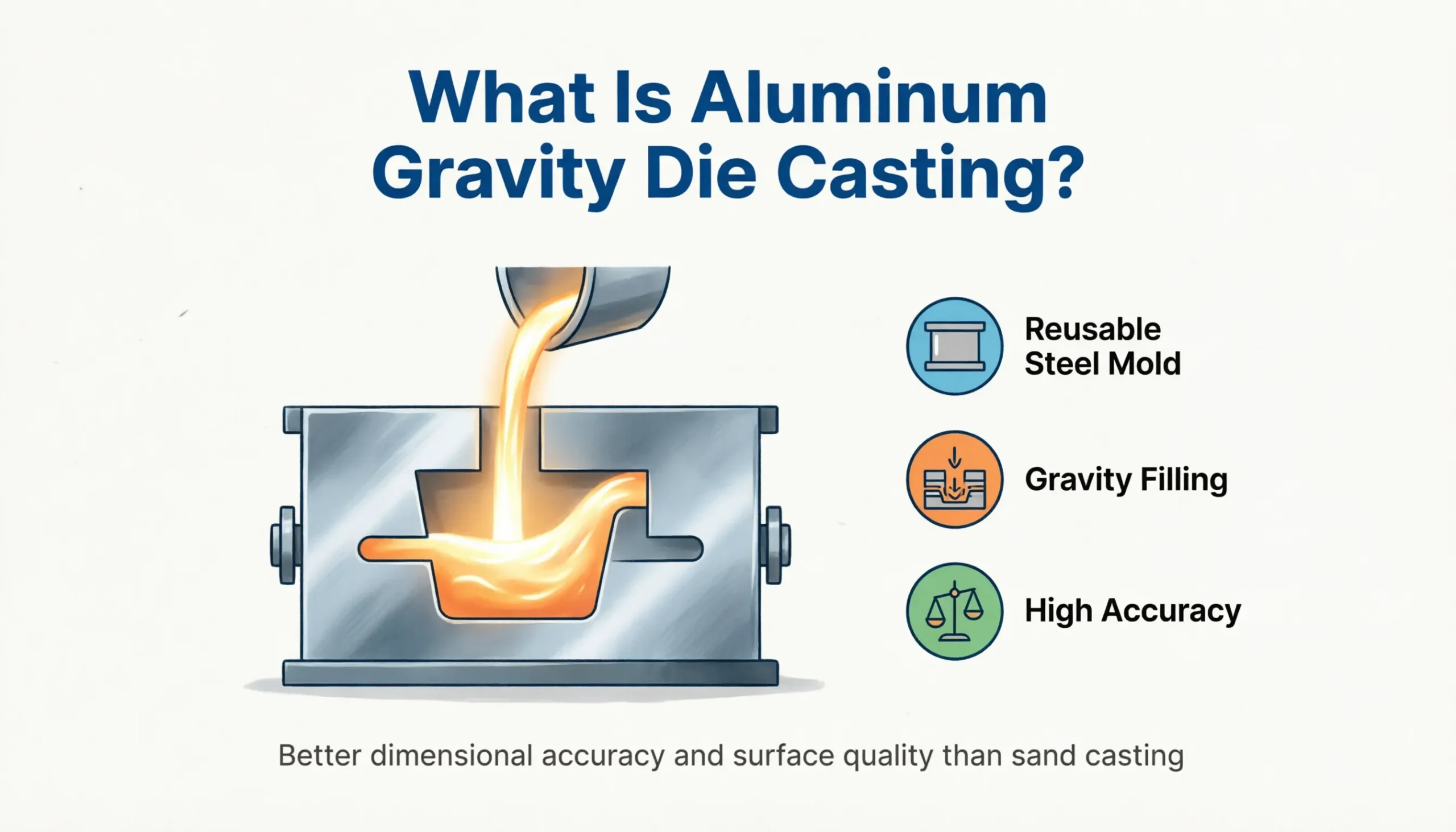
Qu'est-ce que le moulage par gravité de l'aluminium ?
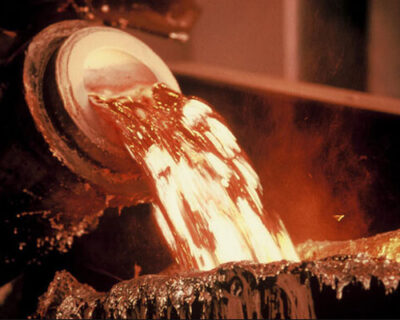
Le moulage sous pression par gravité de l'aluminium est un procédé de moulage des métaux dans lequel L'aluminium en fusion remplit un moule réutilisable sous l'effet de la gravité. plutôt que d'être injecté sous haute pression.
Contrairement au moulage sous pression, ce procédé ne repose pas sur un système d'injection à grande vitesse. L'aluminium fondu est plutôt versé avec précaution dans un moule métallique préchauffé, où il remplit la cavité, refroidit et se solidifie pour prendre la forme souhaitée.
Au sens large, le moulage par gravité peut englober plusieurs procédés, tels que le moulage au sable, le moulage en moule permanent et le moulage par mousse perdue. Toutefois, dans l'industrie de l'aluminium, Le moulage par gravité désigne généralement le moulage en moule permanent à l'aide de moules en acier..
Le moule est généralement fabriqué en acier allié résistant à la chaleur, ce qui permet une utilisation répétée et offre une meilleure précision dimensionnelle et une meilleure qualité de surface par rapport au moulage au sable traditionnel.
Comment fonctionne le procédé de moulage par gravité de l'aluminium ?
Le procédé de moulage sous pression par gravité de l'aluminium comprend généralement les étapes suivantes :
1. Fusion de l'aluminium et préparation du bain de fusion
Avant la coulée, la qualité de l'aluminium fondu joue un rôle déterminant dans les performances finales de la pièce moulée. Pendant la fusion et le maintien en température, de l'hydrogène gazeux et des inclusions d'oxyde peuvent être absorbés dans la masse fondue, ce qui entraîne des défauts courants de coulée tels que :
- Porosité
- Inclusions non métalliques
- Propriétés mécaniques réduites
- Mauvaise qualité de surface
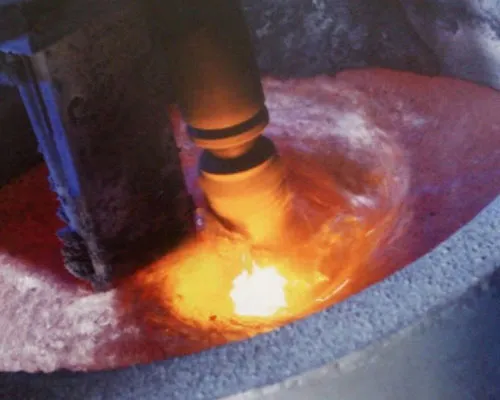
Afin d'améliorer la pureté du métal et la fiabilité de la coulée, de nombreuses fonderies mettent en œuvre des procédés efficaces de traitement de la masse fondue avant la coulée. Systèmes de dégazage de l'aluminium fondu contribuent à éliminer l'hydrogène dissous de l'aluminium fondu, tandis que les systèmes de filtration permettent de retenir les inclusions d'oxyde et d'autres impuretés.
Dans le cadre des applications de moulage sous pression et de moulage par gravité de l'aluminium, un traitement adéquat du métal en fusion est essentiel pour garantir des performances de moulage stables, réduire les taux de défauts et produire des composants en aluminium de haute qualité.
2. Préparation du moule
Le moule métallique est préchauffé et enduit d'un agent de démoulage avant la coulée.
Une bonne préparation du moule permet :
- Améliorer la stabilité de remplissage
- Empêcher l'aluminium d'adhérer au moule
- Contrôler la vitesse de solidification
- Prolonger la durée de vie des moules
3. Coulée et remplissage des moules
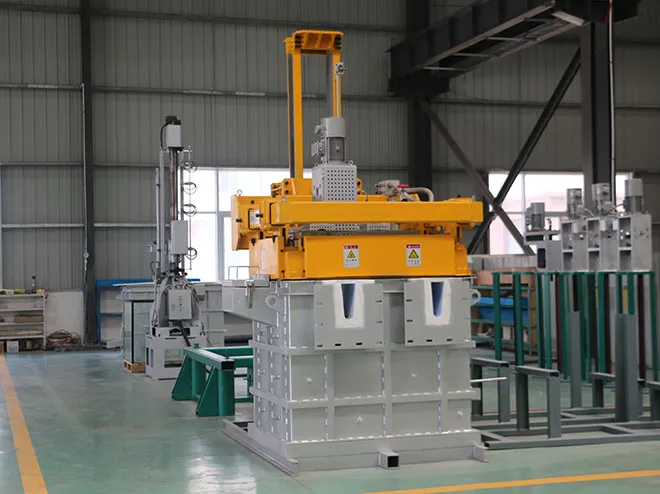
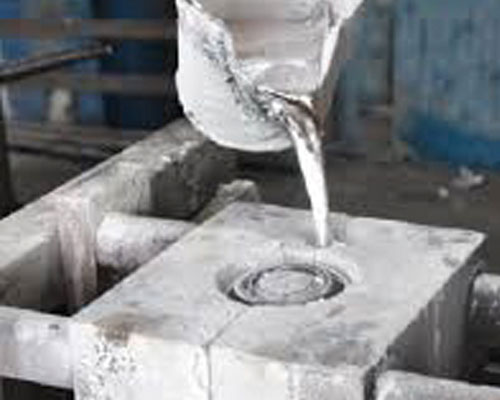
Lors du moulage par gravité, l'aluminium fondu est coulé dans le moule manuellement ou à l'aide d'un système automatisé.
Le remplissage s'effectuant par gravité, le processus est généralement plus lent que le moulage sous pression. Cependant, cette vitesse de remplissage plus faible permet de réduire les turbulences et de limiter au maximum la formation de poches d'air.
4. Refroidissement et solidification
Une fois versé, l'aluminium fondu refroidit et se solidifie à l'intérieur du moule métallique.
La conductivité thermique élevée des moules en acier permet un refroidissement plus rapide que celui des moules en sable, ce qui peut améliorer :
- Structure granulaire
- Stabilité dimensionnelle
- Propriétés mécaniques
5. Ouverture du moule et post-traitement
Une fois solidifiée, la pièce moulée est démoulée et fait l'objet d'opérations supplémentaires telles que :
- Découpe
- Traitement thermique
- Usinage
- Finition des surfaces
Moulage par gravité vs moulage sous pression
Bien que ces deux procédés soient largement utilisés pour les composants en aluminium, ils conviennent à des applications différentes.
| Fonctionnalité | Moulage par gravité | Moulage sous pression |
|---|---|---|
| Méthode de remplissage | Gravité | Injection à haute pression |
| Type de moule | Moule métallique permanent | Matrice à haute résistance |
| Vitesse de production | Inférieur | Plus élevé |
| Pièces compatibles | Composants à paroi épaisse | Composants à parois minces |
| Porosity risk | Inférieur | Higher due to turbulence |
| Traitement thermique | Usually possible | Limited for many alloys |
Gravity die casting is often selected when manufacturers need thicker sections, better ductility, and the ability to perform heat treatment.
Why Choose Gravity Die Casting for Thick-Wall Aluminum Parts?
One important advantage of gravity die casting is its suitability for components with relatively thick walls.
In pressure die casting, high-speed filling may introduce air into the molten metal. For thick sections, trapped gas can increase the risk of internal porosity.
Gravity die casting provides:
- More stable filling
- Lower turbulence
- Reduced gas entrapment
- Better internal quality
For this reason, it is commonly used for:
- Automotive components
- Machine housings
- Pump bodies
- Structural aluminum parts
Advantages of Aluminum Gravity Die Casting
1. Better Internal Quality
Compared with some high-pressure casting methods, gravity die casting can produce castings with fewer internal pores.
This makes many gravity die castings suitable for heat treatment processes, improving strength and durability.
2. Reusable Mold and Lower Tooling Cost
Because permanent molds can be reused many times, gravity die casting offers lower tooling costs compared with some other metal forming methods.
It is suitable for medium-volume production where both quality and cost need to be balanced.
3. Good Mechanical Performance
The relatively controlled solidification process helps achieve:
- Meilleur allongement
- Improved structural integrity
- Stable mechanical properties
Limitations of Gravity Die Casting
Despite its advantages, gravity die casting also has some limitations.
Lower Production Efficiency
Because filling and cooling rely mainly on gravity and natural solidification, production cycles are usually longer than pressure die casting.
Not Ideal for Thin-Wall Parts
Due to slower filling speed, very thin sections may have difficulty achieving complete filling.
Surface Finish May Require Additional Processing
Compared with pressure die casting, gravity die castings may have a rougher surface and may require additional finishing operations.
How to Improve Aluminum Gravity Die Casting Quality?
The quality of gravity die casting depends not only on mold design and casting parameters but also on molten aluminum cleanliness.
Important factors include:
1. Effective Melt Degassing
Removing dissolved hydrogen before casting helps reduce gas-related defects.
2. Aluminum Melt Filtration
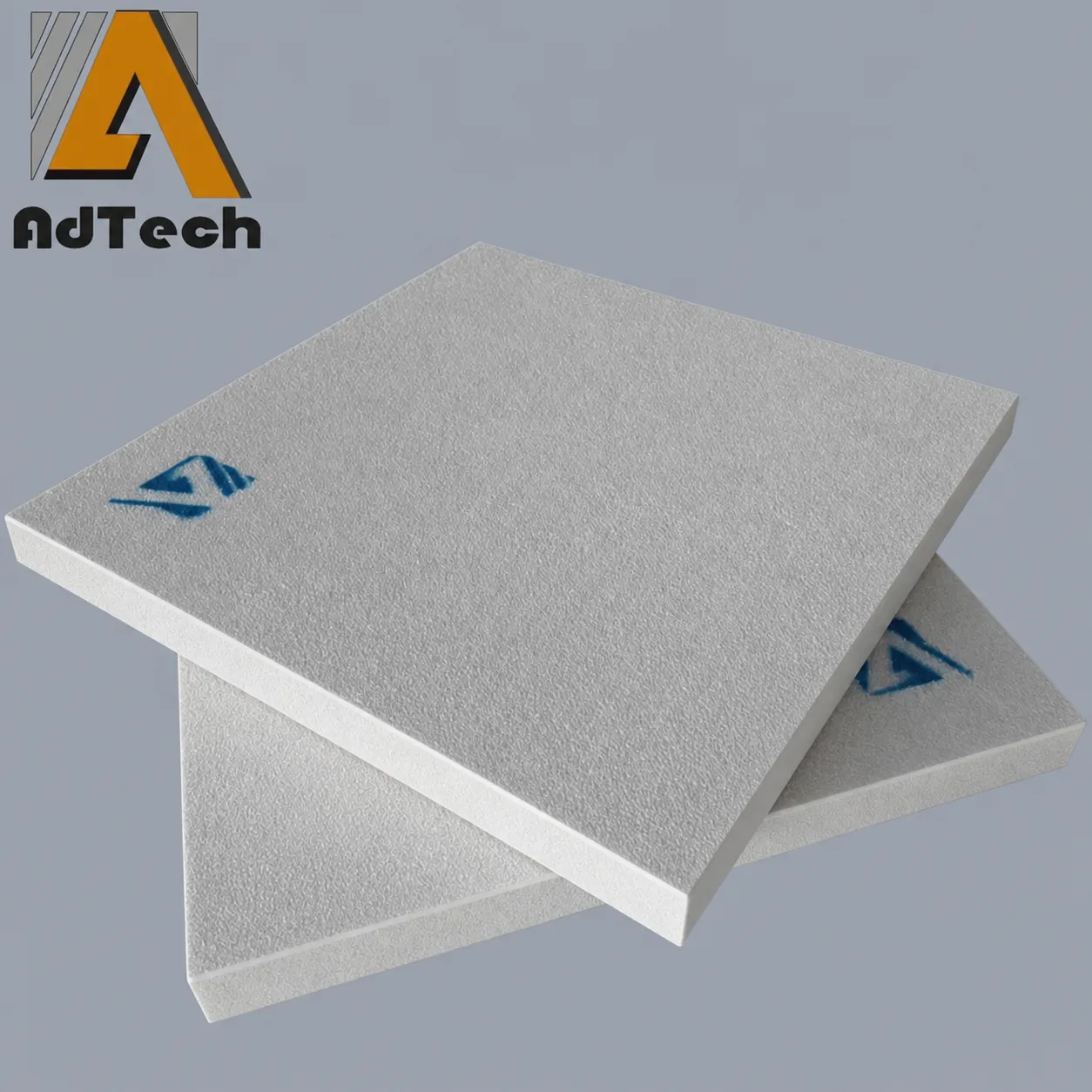
Filtration sur mousse céramique can help remove oxide inclusions and improve melt cleanliness before molten aluminum enters the mold.
3. Stable Metal Flow Control
Proper pouring and flow control reduce turbulence and improve casting consistency.
Contactez-nous pour obtenir des conseils techniques
Conclusion
Aluminum gravity die casting is a reliable casting method for producing high-quality, thick-wall aluminum components.
Its advantages include lower porosity risk, reusable molds, good mechanical properties, and compatibility with heat treatment. However, compared with pressure die casting, it has lower production efficiency and is less suitable for thin-wall parts.
To achieve consistent casting quality, foundries should pay attention not only to mold design but also to molten aluminum treatment, including degassing, filtration, and flow control before casting.
Ping :Aluminum Die Casting,Gravity Die Casting,Pressure Die Casting
Ping :Aluminum Die Casting – 站点标题