
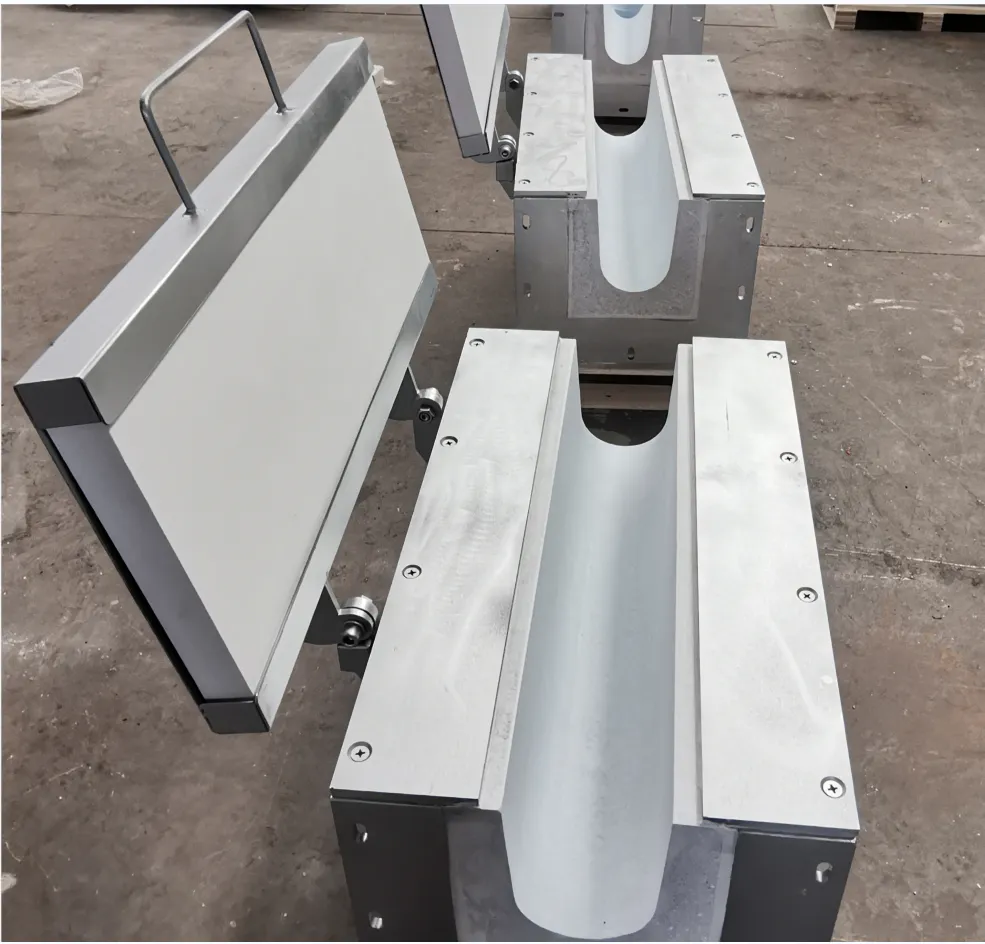
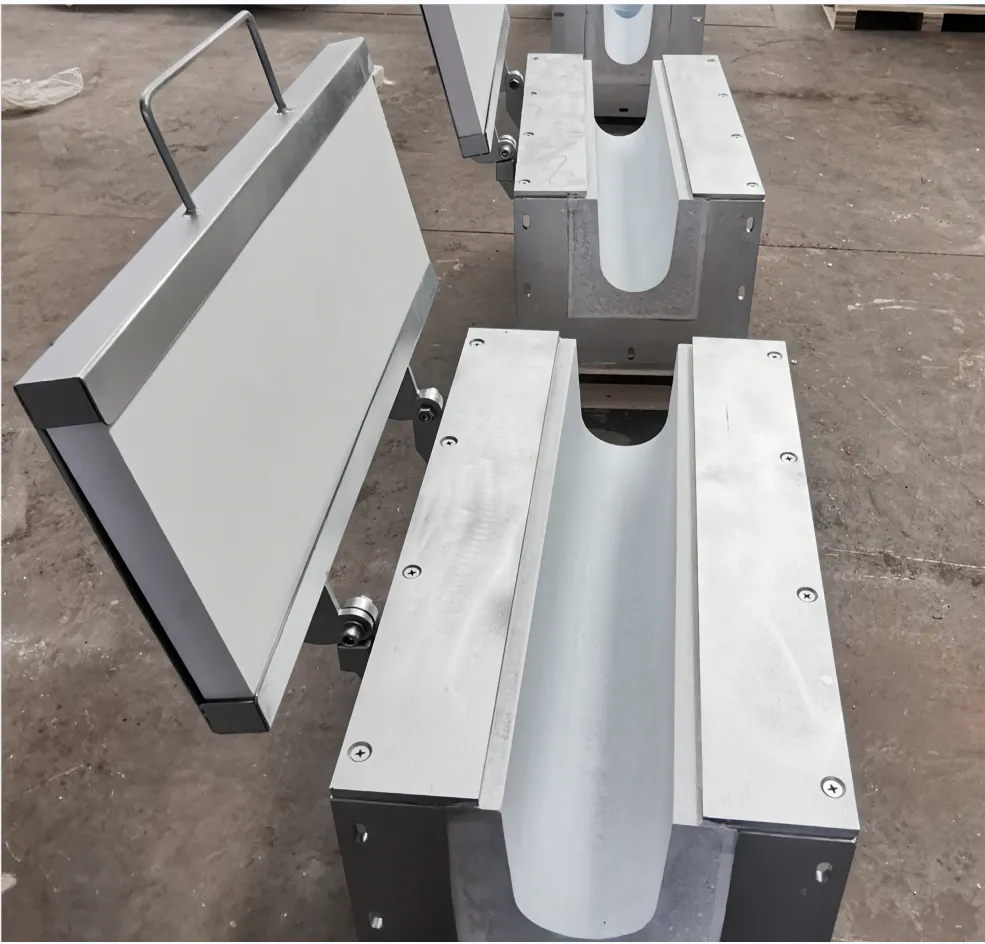
AdTech Troughs and Launders are used to transfer molten aluminum between the melting furnace, holding or purification furnace, degassing unit, filtration system, and casting machine. Their main functions are molten metal transfer and heat retention.
Made with high-silicon refractory material and a smooth, low-wettability inner surface, AdTech launders are designed to reduce aluminum sticking, resist molten-metal erosion, and maintain a stable flow path. Proper launder design and insulation also help reduce temperature loss during molten aluminum transfer.
Where Are Troughs and Launders Used?
In an aluminum casting line, the launder connects different stages of molten metal processing. Depending on the plant layout, it can be installed between:
- Melting furnace and holding/purification furnace
- Holding furnace and degassing unit
- Degassing unit and filtration equipment
- Filtration system and casting machine
- Furnace or holding furnace and casting platform
- Different sections of a continuous casting or casting line
A complete launder system can include straight sections, elbows, branches, covers, transition sections, dams, and other customized components according to the casting line layout.
How Do Aluminum Launders Improve Molten Metal Transfer?
A launder has two basic functions: conveying molten aluminum and limiting heat loss during transfer.
The refractory lining is directly exposed to molten aluminum, so its surface quality and resistance to wetting are important. A smooth, low-wettability surface helps reduce aluminum adhesion and makes the flow path easier to maintain.
The refractory structure also provides thermal insulation around the molten metal. Lower heat loss helps maintain the required metal temperature as molten aluminum moves from one process stage to another.
For longer transfer distances, proper launder insulation and system design become particularly important because excessive temperature loss can affect downstream processing and casting stability.
Contactez-nous pour obtenir des conseils techniques
AdTech Troughs and Launders Features
| Fonctionnalité | Benefit in Aluminum Casting |
|---|---|
| High-silicon refractory material | Provides high-temperature resistance and chemical stability |
| Smooth inner surface | Helps reduce molten aluminum sticking |
| Low wettability | Limits aluminum adhesion and buildup |
| High erosion resistance | Improves resistance to continuous molten-metal flow |
| Low thermal diffusivity | Helps reduce heat transfer through the launder wall |
| Low heat storage | Supports faster heating and thermal response |
| Haute résistance à la compression | Provides mechanical stability during operation |
| Résistance aux chocs thermiques | Helps withstand repeated heating and cooling |
| Integral/seamless lining | Reduces potential leakage points caused by joints |
| Customized structure | Fits different furnace and casting-line layouts |

AdTech Troughs and Launders Advantages
1. Stable Molten Aluminum Transfer
AdTech launders are designed to provide a continuous and controlled flow path between major stages of the aluminum casting process.
Their dimensions and internal configuration can be customized according to the required flow direction, connection position, and casting-line layout.
2. Smooth, Low-Wettability Surface
Molten aluminum can adhere to refractory surfaces and gradually form buildup. AdTech launders use a high-quality refractory lining with low wettability to molten aluminum, helping reduce metal sticking and maintain a cleaner flow path.
This can also make routine cleaning and maintenance easier.
3. Resistance to Erosion and Thermal Shock
The launder is exposed to molten aluminum at high temperatures and may experience repeated heating and cooling during production and shutdown.
AdTech launder materials provide resistance to:
- Molten-metal erosion
- High-temperature exposure
- Thermal shock
- Mechanical stress
These properties contribute to longer service life under suitable operating conditions.
4. Reduced Temperature Loss
The launder system provides both molten-metal transfer and thermal insulation.
Under specified operating conditions, AdTech launders can limit molten aluminum temperature loss to approximately 2°C per meter. Actual temperature loss depends on launder length, metal temperature, flow rate, ambient conditions, insulation structure, and operating conditions.
5. High Dimensional Accuracy
AdTech troughs and launders are integrally molded using high-quality refractory material, allowing accurate control of the internal flow path and overall dimensions.
This is particularly important when the launder needs to connect with equipment such as degassing units, filter boxes, or casting machines.
Learn More About Our Launders for Molten-Aluminum
Troughs and Launders for Aluminum Casting Lines
AdTech launders can be integrated with different molten aluminum treatment and casting configurations.
A typical process may be:
Melting → Holding/Purification → Degassing → Filtration → Casting
The launder system connects these stages while helping maintain molten aluminum temperature and flow stability.
For example, a launder installed after degassing can transfer treated molten aluminum to a filtration unit, while another launder can connect the filtration system with the casting machine.
For continuous casting and casting-rolling lines, the launder design can also be adapted to the required flow direction, transfer distance, and equipment arrangement.

How to Select an Aluminum Launder System?
The launder should be designed according to the actual casting-line conditions rather than selected only by standard dimensions.
Important factors include:
Molten Aluminum Conditions
- Type d'alliage
- Température de fonctionnement
- Débit
- Transfer distance
- Expected production rate
Equipment Layout
- Furnace outlet position
- Degassing unit location
- Filter box position
- Casting machine inlet
- Height difference between equipment
- Required flow direction
Launder Design
- Cross-sectional dimensions
- Longueur
- Bends and branches
- Connection structures
- Cover requirements
- Heating or insulation requirements
Providing a drawing or layout of the existing casting line can help determine a suitable launder configuration.
Installation and Preheating Instructions
Before operation, make sure the installed launder system follows the required drawing and that the complete flow path is clean, undamaged, and properly sealed.
The installed launder should be uniformly preheated at a controlled heating rate. For AdTech’s specified installation procedure, the preheating process may take approximately 6–8 hours, depending on the system and operating conditions.
The purpose of preheating is to remove moisture and adsorbed water from the refractory material and bring the launder close to the required operating temperature before molten aluminum enters the system.
The surface temperature should be checked during preheating according to the operating procedure. When the refractory surface reaches the specified temperature, the launder can be prepared for safe operation.
Actual preheating temperature, heating rate, and holding time should follow the AdTech installation instructions supplied for the specific launder system.
Why Is Launder Design Important in Molten Aluminum Processing?
A launder is more than a channel for moving molten aluminum.
Poorly designed or poorly insulated launders can contribute to:
- Excessive temperature loss
- Unstable molten-metal flow
- Aluminum buildup on the refractory surface
- Increased refractory erosion
- Difficult cleaning and maintenance
- Shorter service life
A properly designed launder system helps maintain a stable connection between melting, melt treatment, filtration, and casting operations.
For this reason, launder selection should consider the entire molten aluminum transfer system, rather than the launder dimensions alone.
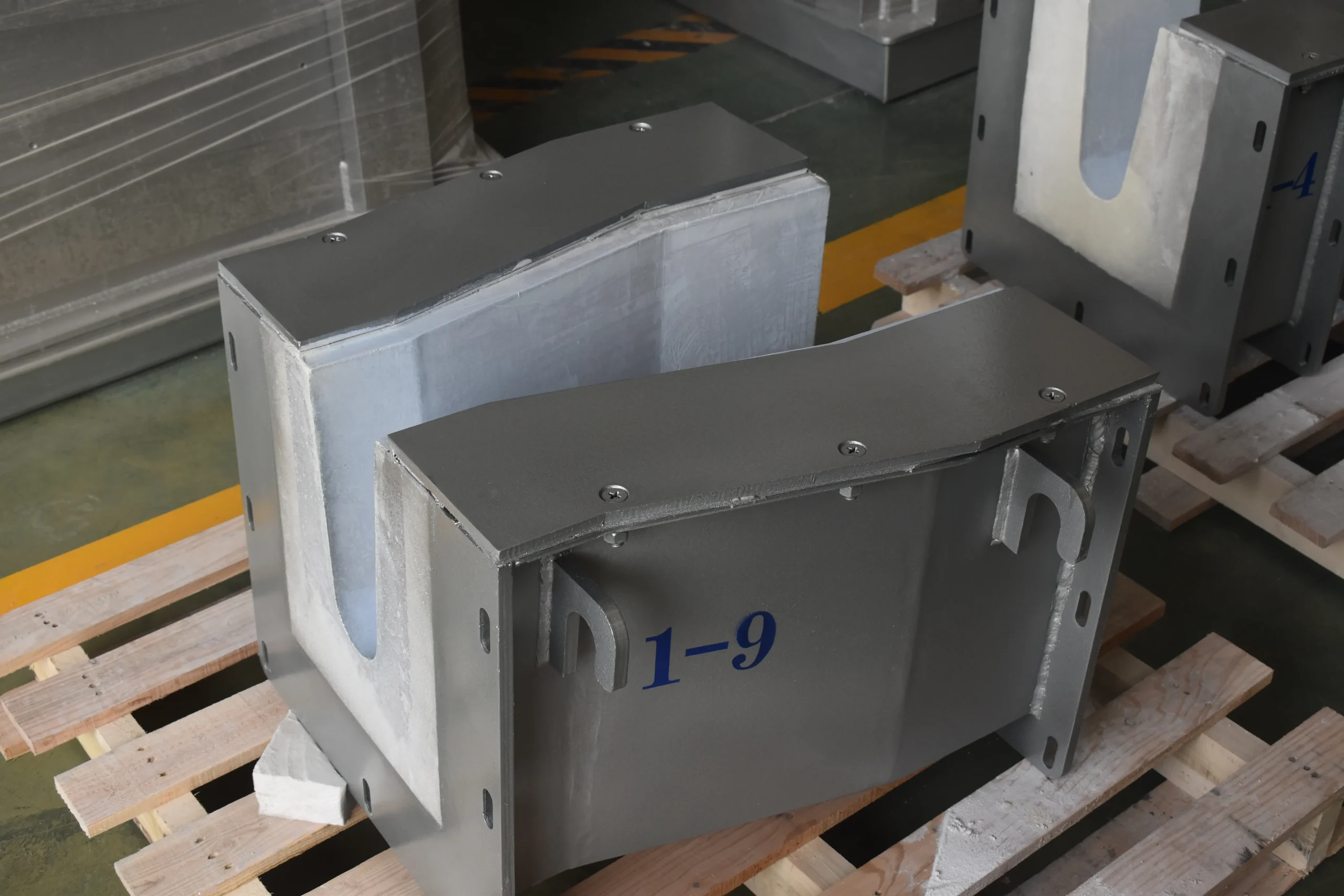
AdTech Aluminum Troughs and Launders
AdTech provides customized troughs and launders for aluminum melting, melt treatment, filtration, and casting applications.
The system can be designed according to the customer’s equipment layout, molten aluminum flow requirements, transfer distance, operating temperature, and connection dimensions.
For a suitable configuration, provide your casting-line layout, launder drawing, required dimensions, alloy type, and approximate molten aluminum flow rate. Our technical team can recommend the appropriate launder structure and refractory configuration.
FAQ
1. What is a launder in aluminum casting?
A launder is a refractory-lined channel used to transfer molten aluminum between equipment such as furnaces, degassing units, filtration systems, and casting machines.
2. What is the difference between a trough and a launder?
The terms are often used interchangeably in molten-metal handling. Depending on the equipment design, a trough may refer to a specific open channel or section, while a launder generally describes the complete molten-metal transfer path.
3. What is an aluminum launder made of?
Aluminum launders are normally constructed with refractory materials designed for high-temperature molten aluminum service. AdTech uses high-silicon refractory material for its launder systems.
4. Why does molten aluminum stick to a launder?
Aluminum can wet and react with refractory surfaces, causing metal buildup over time. A smooth, low-wettability refractory surface helps reduce aluminum adhesion.
5. Does a launder reduce molten aluminum temperature?
Yes. A properly insulated launder reduces heat loss during molten aluminum transfer. The actual temperature drop depends on the launder design and operating conditions.
6. How much temperature does molten aluminum lose in a launder?
Under specified AdTech operating conditions, temperature loss can be approximately 2°C per meter. Actual results vary with metal temperature, flow rate, insulation, ambient temperature, and transfer distance.
7. Can AdTech customize the launder size?
Yes. Launders can be designed according to the customer’s equipment layout, dimensions, flow direction, connection requirements, and operating conditions.
8. Can launders be used with aluminum degassing and filtration equipment?
Yes. AdTech launders can be integrated with molten aluminum degassing units, filter boxes, cartridge filtration systems, and casting machines.
9. How should an aluminum launder be preheated?
The launder should be heated gradually and uniformly according to the supplied installation procedure. Proper preheating removes moisture from the refractory and reduces thermal shock when molten aluminum enters the system.
10. What information is needed to select an aluminum launder?
The most useful information includes the equipment layout, launder dimensions, transfer distance, alloy type, molten aluminum temperature, approximate flow rate, and connection positions.
Articles similaires :
 Canal de coulée en matériau réfractaire
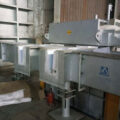 Canal de coulée pour métal en fusion
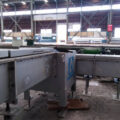 Système de goulottes en céramique
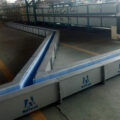 Cuve pour métal en fusion
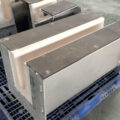 Goulotte en fibre céramique
 Moulage de l'aluminium
 Système de transport de métaux
 Convoyeur à goulotte
 Système de transfert de linge
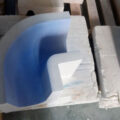 Goulotte de transfert en aluminium
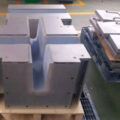 Canal isolé
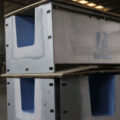 AdTech : des filets de haute qualité