
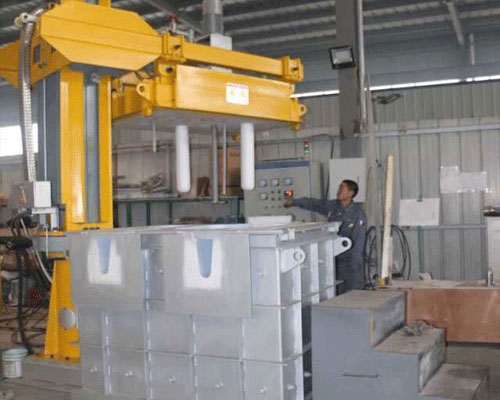
Rotary degassing method is one of the most widely used aluminum melt purification technologies for removing dissolved hydrogen from molten aluminum. This technology is commonly applied in aluminum online degassing equipment, where a rotating rotor disperses inert gas into fine bubbles to improve hydrogen removal efficiency before filtration and casting.
In aluminum casting, hydrogen is the main gas that dissolves in molten aluminum. During solidification, excessive hydrogen may form porosity defects, affecting mechanical properties, surface quality, and the performance of final aluminum products. Therefore, effective degassing is an important step in producing high-quality aluminum alloys.
Traditional aluminum refining methods mainly rely on fluxes or chemical agents to remove gases and impurities. With the development of modern aluminum production technology, the concept of melt purification has expanded beyond traditional refining. Today, technologies such as rotary degassing, flux treatment, and ceramic foam filtration are widely used together to improve molten aluminum cleanliness.
How Does Rotary Degassing Method Work?
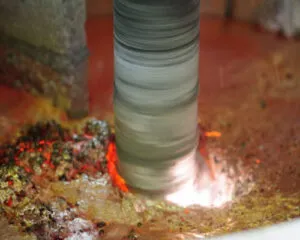
In the rotary degassing process, inert gas, usually argon or nitrogen, is introduced into molten aluminum through a rotating shaft and rotor.
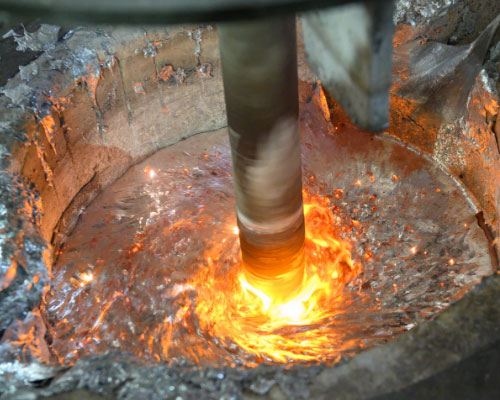
The rotating impeller breaks the gas into thousands of fine bubbles and distributes them throughout the aluminum melt. These small bubbles create a large gas-liquid contact area, allowing dissolved hydrogen to diffuse from the molten aluminum into the gas bubbles.
The hydrogen-containing bubbles then rise to the surface and escape from the melt, reducing the hydrogen content before casting.
The main steps of rotary degassing include:
- Inert gas injection
Argon or nitrogen enters the molten aluminum through the rotating rotor. - Fine bubble generation
The rotor breaks the gas stream into small and evenly distributed bubbles. - Hydrogen removal
Dissolved hydrogen transfers from the aluminum melt into the gas bubbles and is removed from the liquid metal.
The smaller and more evenly distributed the bubbles are, the higher the gas-metal contact efficiency and hydrogen removal performance.
Application of Rotary Degassing in Online Degassing Equipment
In modern aluminum casting lines, rotary degassing technology is commonly integrated into aluminum online degassing equipment.
Unlike furnace degassing, which treats molten aluminum in a melting or holding furnace, an online degassing system continuously treats molten aluminum during metal transfer before filtration and casting.
A typical online degassing equipment system includes:
- Degassing chamber;
- Rotating shaft and rotor;
- Inert gas supply system;
- Heating and temperature control system;
- Control unit.
During operation, molten aluminum flows through the degassing chamber while the rotating rotor introduces inert gas into the melt. This continuous treatment helps maintain stable hydrogen levels and improves melt quality throughout the casting process.
Learn More About Our Molten Aluminum Treatment
Why Is Rotary Degassing Used for Aluminum Melt Treatment?
Rotary degassing is widely used because it provides more stable and controllable hydrogen removal compared with simple gas bubbling or manual refining methods.
Main advantages include:
Efficient Hydrogen Removal
The rotating rotor generates fine bubbles with a high surface-area-to-volume ratio, improving the contact between inert gas and molten aluminum.
Stable Treatment Results
Gas flow rate, rotor speed, and treatment time can be controlled according to production requirements, helping maintain consistent aluminum quality.
Cleaner Processing Method
Rotary degassing mainly uses argon or nitrogen instead of chlorine-containing refining gases, reducing environmental and operational concerns.
Suitable for Continuous Production
When installed as part of online degassing equipment, rotary degassing can provide continuous melt treatment without interrupting the casting process.
Ponte en contacto con nosotros para recibir asesoramiento técnico
Rotary Degassing Method vs Flux Refining
Rotary degassing and flux refining are both used for aluminum melt purification, but they work through different mechanisms.
| Método | Función principal | Principio de funcionamiento |
|---|---|---|
| Desgasificación rotativa | Mainly removes dissolved hydrogen | Uses inert gas bubbles to extract hydrogen from molten aluminum |
| Refinado por fundente | Removes gases, oxides, and some impurities | Uses chemical reactions between flux and impurities |
Compared with traditional flux-based degassing methods, rotary degassing provides a more controllable way to reduce hydrogen content without relying on chlorine or fluorine-containing salts.
However, these two methods are not always alternatives. In many aluminum plants, rotary degassing and flux treatment are combined to achieve better molten metal quality.
Can Rotary Degassing Equipment Inject Flux?
Some advanced rotary degassing equipment can also combine degassing and flux introduction functions.
In this process, granular flux is carried into molten aluminum through the inert gas stream. The rotor improves the mixing between flux particles and molten aluminum, increasing treatment efficiency.
This method is known as flux injection.
Advantages of Flux Injection:
- Better mixing between flux and molten aluminum;
- Higher flux utilization efficiency;
- Shorter treatment time;
- More accurate and controllable flux addition;
- Reduced manual operation.
How to Improve Rotary Degassing Efficiency?
The performance of a rotary degassing system depends on several factors:
Rotor Design
The rotor design affects bubble size and gas distribution. A properly designed impeller can generate smaller and more uniform bubbles.
Gas Flow Rate
The gas flow must be optimized. Excessive gas flow may increase turbulence and oxidation, while insufficient gas flow reduces hydrogen removal efficiency.
Rotor Speed
The rotation speed influences bubble dispersion and melt circulation inside the degassing chamber.
Treatment Time
Longer treatment time generally improves hydrogen removal, but it should be balanced with production efficiency.
Melt Temperature and Cleanliness
Stable temperature control and proper filtration help maintain consistent aluminum melt quality.
Conclusión
Rotary degassing method is an essential aluminum melt purification technology for reducing dissolved hydrogen before casting. By using a rotating rotor to generate fine inert gas bubbles, this process improves hydrogen removal efficiency and provides more stable molten aluminum quality.
In modern aluminum casting lines, rotary degassing technology is widely applied in equipos de desgasificación en línea and is often combined with ceramic foam filtration to remove both dissolved hydrogen and non-metallic inclusions.
For aluminum producers requiring cleaner melt quality and reliable casting performance, rotary degassing provides an effective solution for continuous aluminum melt treatment.
Preguntas frecuentes
1. What is rotary degassing in aluminum?
Rotary degassing is a molten aluminum purification process that uses a rotating rotor to disperse inert gas bubbles and remove dissolved hydrogen from aluminum melt.
2. How does rotary degassing remove hydrogen from aluminum?
The rotor creates fine argon or nitrogen bubbles. Dissolved hydrogen diffuses into these bubbles and is removed when they rise to the melt surface.
3. What gas is used for rotary degassing of aluminum?
Argon and nitrogen are the most commonly used inert gases for rotary degassing of molten aluminum.
4. What is the purpose of aluminum online degassing equipment?
Aluminum online degassing equipment continuously removes dissolved hydrogen from molten aluminum during metal transfer before filtration and casting.
5. What is the difference between rotary degassing and flux refining?
Rotary degassing mainly removes dissolved hydrogen through inert gas bubbles, while flux refining uses chemical reactions to remove hydrogen, oxides, and other impurities.
6. Can rotary degassing remove aluminum inclusions?
Rotary degassing mainly removes dissolved hydrogen. Non-metallic inclusions are usually removed through ceramic foam filters or other filtration systems.
7. Where is rotary degassing equipment installed in an aluminum casting line?
Rotary degassing equipment is usually installed between the holding furnace and casting machine, often before the filtration unit.
8. How long does aluminum rotary degassing take?
The treatment time depends on melt volume, hydrogen level, gas flow rate, rotor design, and required aluminum quality.
9. Why is rotary degassing better than simple gas bubbling?
Rotary degassing produces smaller and more evenly distributed bubbles, providing better gas-metal contact and higher hydrogen removal efficiency.
10. Can rotary degassing equipment inject flux?
Yes. Some rotary degassing systems can introduce granular flux through inert gas injection, improving flux distribution and melt treatment efficiency.
Artículos relacionados:
 Unidad de desgasificación de aluminio fundido
 Proceso de refinado de aleaciones de aluminio
 Métodos de desgasificación en fundición
 Desgasificación en línea del aluminio
 Usos de la unidad de desgasificación
 Desgasificación del aluminio
 Equipos de desgasificación de aluminio en línea
 Equipos de desgasificación de aluminio
 Caja de desgasificación en línea
 Desgasificación con hidrógeno
 Sistema de desgasificación de aluminio en línea
 Desgasificación para fundición