
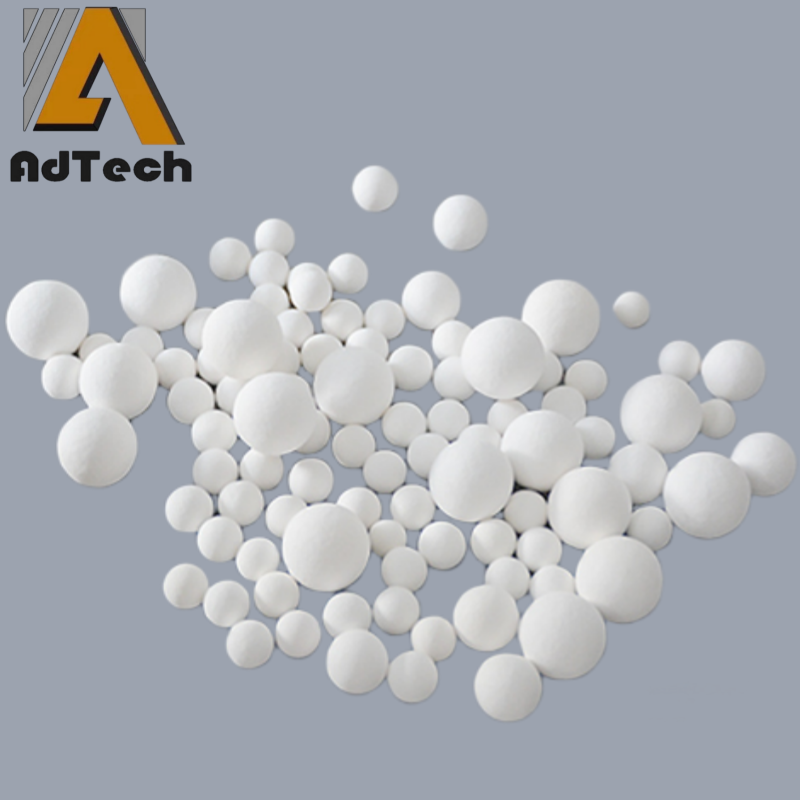
Alumina ceramic balls are widely used as filtration media in deep bed filtration systems for molten aluminum. Their primary function is not simply to support the filter bed, but to create a controlled filtration path that captures non-metallic inclusions, stabilizes metal flow, and improves overall filtration efficiency. For aluminum producers seeking lower inclusion levels, better surface quality, and longer filter life, the correct alumina ball size, purity, and bed configuration can significantly influence casting performance.
Why Are Alumina Ceramic Balls Used in Deep Bed Filtration Systems?
Unlike ceramic foam filters, which rely on a porous network to intercept inclusions, deep bed filtration works by forcing molten aluminum through multiple layers of granular media.
As the metal travels through the filter bed:
- Large inclusions become trapped between media layers.
- Smaller particles adhere to ceramic surfaces.
- Flow velocity decreases.
- Turbulence is reduced.
The result is cleaner molten aluminum entering the casting process.
This approach is particularly effective when treating large metal volumes where standard filtration alone may not provide sufficient inclusion removal.
What Types of Inclusions Can Alumina Ceramic Balls Remove?
Many aluminum casting defects originate from inclusions introduced during melting, alloying, transfer, or holding.
Common Contaminants in Molten Aluminum
| Inclusion Type | Typical Source |
|---|---|
| Oxide Films | Surface oxidation |
| Spinel Particles | Magnesium-containing alloys |
| Refractory Fragments | Furnace lining wear |
| Slag Particles | Furnace cleaning operations |
| Carbide Residues | Process contamination |
When these inclusions reach the casting stage, they may cause:
- Surface streaks
- Black lines
- Extrusion defects
- Reduced fatigue strength
- Anodizing problems
A properly designed alumina ball bed increases the probability of inclusion capture before the metal reaches the mold.
Alumina Ceramic Balls vs Ceramic Foam Filters: Which Removes More Inclusions?
This is one of the most common questions from aluminum plants.
The answer depends on the filtration objective.
Ceramic Foam Filters
Best suited for:
- Continuous casting lines
- Billet casting
- General molten aluminum purification
- Compact filtration systems
Alumina Ceramic Ball Beds
Best suited for:
- Large metal throughput
- Extended filtration paths
- High cleanliness requirements
- Deep bed filtration units
In practice, many modern casting facilities use both technologies.
A deep bed filter often serves as the primary purification stage, while ceramic foam filters for molten aluminum filtration act as a final polishing filter before casting.
This combination typically achieves better cleanliness than either method alone.
What Alumina Content Is Recommended?
Higher alumina content generally provides better resistance to molten aluminum attack.
However, more alumina is not always necessary.
Typical Selection Guidelines
| Al₂O₃ Content | Recommended Application |
| 90–93% | General industrial filtration |
| 93–98% | Most aluminum casting operations |
| 98–99.8% | High-purity aluminum and critical alloys |
For most billet and slab casters, 93–98% alumina provides an effective balance between performance and cost.
Ultra-high-purity grades are usually selected when producing:
- Aerospace alloys
- Battery foil stock
- Electronic materials
- High-end rolling products
How Does Ball Size Affect Filtration Efficiency?
Ball diameter has a major impact on filtration performance.
Many buyers focus only on alumina content while overlooking media size selection.
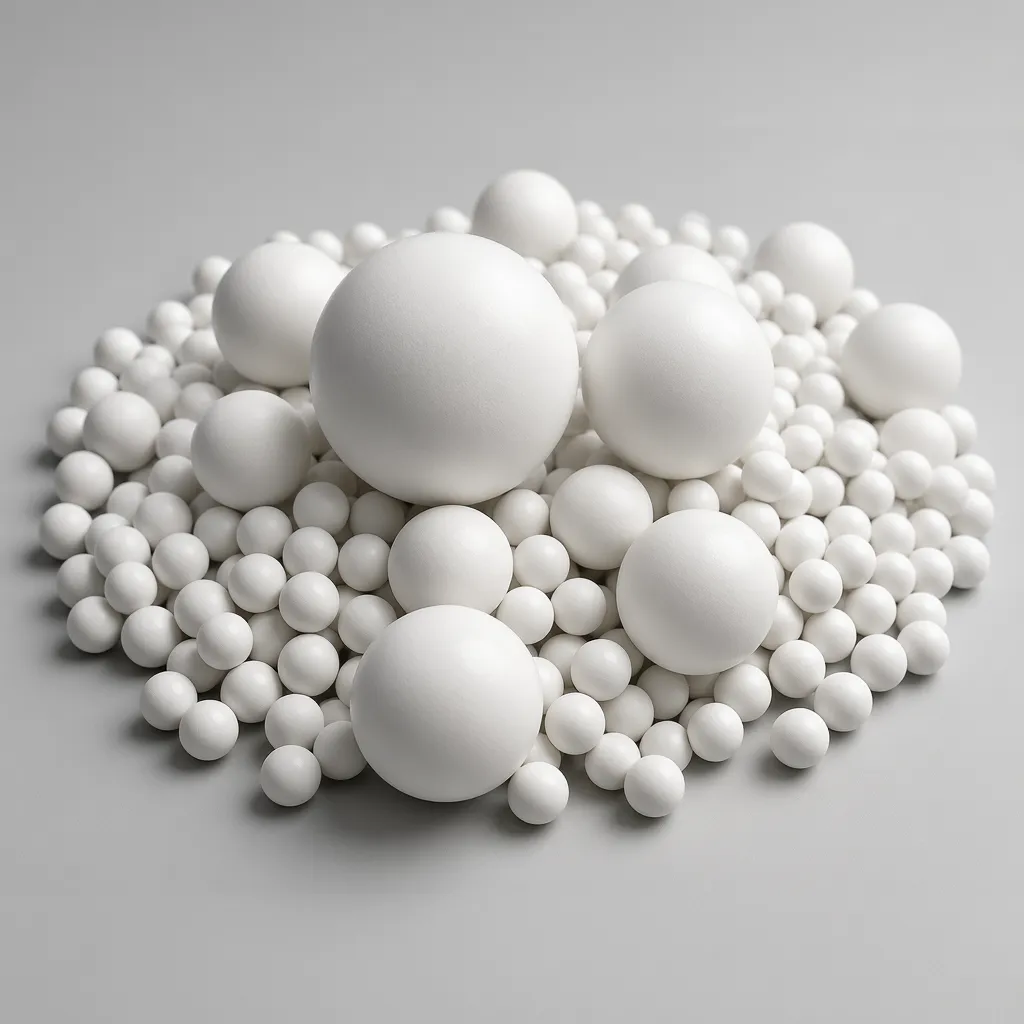
Larger Balls
Advantages:
- Lower pressure drop
- Higher flow capacity
- Reduced risk of clogging
Disadvantages:
- Lower filtration precision
Smaller Balls
Advantages:
- Higher inclusion capture efficiency
- Greater filtration surface area
Disadvantages:
- Higher flow resistance
General Selection Guide
| Media Size | Typical Use |
| Φ19 mm | High-flow systems |
| Φ13 mm | Standard filtration beds |
| 3–6 mm Gravel | Intermediate layer |
| 2–4 mm Gravel | Fine filtration layer |
Many deep bed filters use a layered structure rather than a single media size.
Why Do Some Deep Bed Filters Last Longer Than Others?
Filter life is influenced by far more than media quality.
Several operating conditions play a critical role.
Metal Cleanliness Before Filtration
If excessive dross enters the filter bed, plugging occurs much faster.
This is why many plants install online rotary degassing equipment upstream to reduce inclusion loading before filtration.
Flow Stability
Unstable metal flow can create channeling inside the bed.
When channeling develops, molten aluminum bypasses portions of the filtration media, reducing efficiency.
Properly designed refractory launder systems help maintain uniform flow distribution into the filter chamber.
Media Grading
Incorrect layering often leads to premature pressure buildup.
A properly graded bed distributes contaminants more evenly and extends service life.
Can Alumina Ceramic Balls Improve Billet Surface Quality?
Indirectly, yes.
Alumina ceramic balls do not improve surface quality by themselves.
Instead, they reduce the inclusion population entering the mold.
Lower inclusion levels generally result in:
- Cleaner billet surfaces
- Fewer streak defects
- Improved anodizing response
- Better extrusion consistency
- Reduced downstream scrap
The effect becomes even more significant when filtration is combined with hydrogen control and proper melt treatment practices.
When Should Alumina Ceramic Balls Be Replaced?
There is no universal replacement interval.
The correct timing depends on:
- Alloy type
- Production volume
- Inclusion loading
- Filtration temperature
- Flow rate
However, operators should monitor:
- Increasing pressure drop
- Reduced flow capacity
- Declining filtration efficiency
- Visible media degradation
Waiting until complete blockage occurs usually increases operating costs and may compromise casting quality.
How to Select the Right Alumina Ceramic Balls for Molten Aluminum Filtration
When evaluating filtration media, buyers should focus on four factors:
1. Filtration Objective
Is the goal:
- General purification?
- High-purity metal production?
- Critical alloy manufacturing?
2. Throughput
Higher flow rates require different bed configurations.
3. Inclusion Characteristics
Different alloys generate different contaminant profiles.
4. Existing Filtration System Design
Media selection must match the equipment geometry and operating parameters.
The best filtration results are achieved when alumina ceramic balls are selected as part of an integrated molten aluminum treatment system rather than as a standalone consumable.
FAQ
1. What are alumina ceramic balls used for in molten aluminum filtration?
Alumina ceramic balls are primarily used as filtration media in deep bed filtration systems. They help capture non-metallic inclusions, improve molten aluminum cleanliness, stabilize metal flow, and support higher casting quality.
2. What alumina content is recommended for aluminum filtration applications?
For most aluminum casting operations, alumina ceramic balls with an Al₂O₃ content between 93% and 98% provide an excellent balance of thermal stability, corrosion resistance, and cost-effectiveness. Higher-purity grades are typically used for aerospace and electronic materials.
3. How do alumina ceramic balls remove inclusions from molten aluminum?
As molten aluminum flows through the packed filtration bed, inclusions are captured through mechanical interception, sedimentation, and surface adhesion. This process helps reduce oxide films, slag particles, and refractory debris before casting.
4. What is the difference between alumina ceramic balls and ceramic foam filters?
Ceramic foam filters remove inclusions through a porous structure, while alumina ceramic balls create a deep filtration bed that increases the contact path of molten aluminum. Many aluminum plants use both technologies together to achieve higher filtration efficiency.
5. Can alumina ceramic balls remove hydrogen from molten aluminum?
No. Alumina ceramic balls are designed to remove solid inclusions rather than dissolved gases. Hydrogen removal is typically achieved using online rotary degassing equipment before the filtration stage.
6. How do I choose the correct alumina ceramic ball size?
Ball size depends on metal flow rate, filtration requirements, and equipment design. Larger balls provide lower flow resistance, while smaller balls offer higher filtration precision. Multi-layer media configurations are commonly used for optimal performance.
7. How long do alumina ceramic balls last in a deep bed filter?
Service life varies depending on alloy type, metal cleanliness, operating temperature, and production volume. Properly maintained filtration systems can often operate for extended periods before media replacement is required.
8. Can alumina ceramic balls improve billet and slab surface quality?
Yes. By reducing non-metallic inclusions entering the casting process, alumina ceramic balls help minimize surface defects, streaks, and downstream processing issues, contributing to better product quality.
9. Are alumina ceramic balls resistant to molten aluminum corrosion?
Yes. High-alumina ceramic balls are specifically designed for high-temperature environments and offer excellent resistance to molten aluminum attack, thermal shock, and mechanical wear.
10. Can alumina ceramic balls be used in recycled aluminum production?
Yes. They are widely used in recycled aluminum processing because recycled metal typically contains higher levels of inclusions. Deep bed filtration using alumina ceramic balls helps improve metal cleanliness and casting consistency.