
What Is Ceramic Fiber Board and Why Does It Matter in Foundry Insulation?
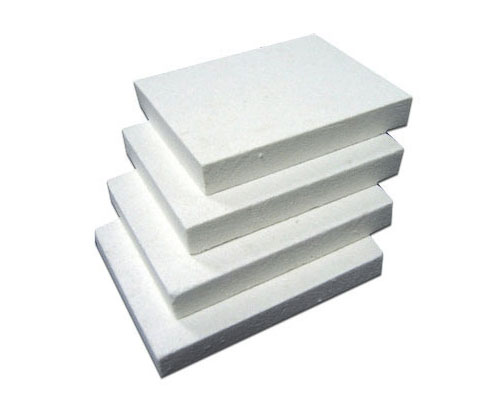
Ceramic fiber board is a rigid, lightweight insulation panel manufactured from high-purity ceramic fibers (primarily alumina and silica) bonded with inorganic binders. Unlike blanket-type insulation, ceramic fiber board holds its shape under compression and can be precision-cut to fit complex geometries — think launder covers, distribution plates, hot top rings, and furnace backup linings.
The reason ceramic fiber board matters so much in modern casting operations comes down to three things: energy savings, equipment protection, and process consistency. A well-insulated launder system using quality ceramic fiber insulation board can reduce heat loss by 30–45%, which directly translates into lower energy bills and more stable metal temperatures at the casting station.
For aluminum foundries specifically, ceramic fiber board plays a critical role in preventing premature metal solidification in transfer systems. When molten aluminum drops even 10–15°C during transfer, you start seeing quality issues — cold shuts, misruns, and inconsistent grain structure in the final billet or slab.
AdTech manufactures ceramic fiber board in multiple grades and dimensions tailored to the aluminum, copper, zinc, and steel industries. Please continue browsing our product page for more information.
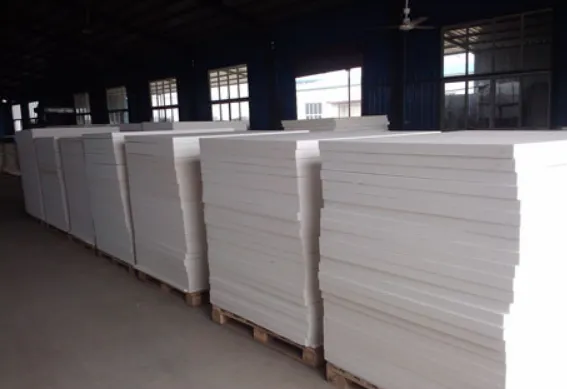
AdTech Ceramic Fiber Board – Product Specifications
Our standard ceramic fiber board is available in several classification temperatures and thicknesses. Below are the core technical parameters:
Standard Physical & Thermal Properties
| Property | Unit | Standard Grade | High-Purity Grade | HP-Z (Zirconia) Grade |
|---|---|---|---|---|
| Classification Temperature | °C | 1050 | 1260 | 1400 |
| Continuous Use Temperature | °C | 950 | 1100 | 1300 |
| Bulk Density | kg/m³ | 280–320 | 300–350 | 320–380 |
| Thermal Conductivity (at 600°C) | W/m·K | 0.12 | 0.10 | 0.09 |
| Modulus of Rupture | MPa | ≥0.3 | ≥0.4 | ≥0.5 |
| Permanent Linear Shrinkage (24h at rated temp) | % | ≤2.0 | ≤2.0 | ≤1.5 |
| Al₂O₃ Content | % | 42–44 | 50–52 | 34–36 |
| SiO₂ Content | % | 52–54 | 46–48 | 46–48 |
| ZrO₂ Content | % | — | — | 15–17 |
Data based on AdTech internal testing per ASTM C182 and ISO 2245 methodologies. Thermal conductivity values measured using the hot wire method in accordance with ASTM C1113.
Available Dimensions
| Dimension Parameter | Option A | Option B | Option C |
|---|---|---|---|
| Length (mm) | 600 | 900 | 1000 |
| Width (mm) | 300 | 600 | 600 |
| Thickness (mm) | 20 | 30 | 40 / 50 |
| Custom Thickness Range (mm) | 10–80 | 10–80 | 10–80 |
| Custom Cutting | Yes | Yes | Yes |
| Max Single-Piece Area (mm) | 1200×900 | 1200×900 | 1200×900 |
Custom dimensions available on request. Minimum order quantity applies for non-standard sizes. All boards can be CNC-machined or hand-cut to match specific equipment profiles.
How Does Ceramic Fiber Board Compare to Other Insulation Materials?
This is probably the most common question we get from engineers evaluating insulation options. Let’s put ceramic fiber board side by side with the alternatives people most often consider:
Ceramic fiber board vs. calcium silicate board: Calcium silicate is cheaper upfront but significantly heavier (typically 800–1000 kg/m³ vs. 300 kg/m³ for ceramic fiber board). It also has higher thermal conductivity — roughly 0.18–0.22 W/m·K at 600°C — meaning you need thicker sections to match the same insulation performance. In retrofit projects where weight and space are constrained, ceramic fiber board wins every time.
Ceramic fiber board vs. Ceramic fiber blanket : Blankets are flexible and easy to wrap around irregular shapes, but they compress under load, lose thickness over time, and can’t serve as structural insulation. Ceramic fiber board maintains dimensional stability and can support light mechanical loads, making it the preferred choice for launder covers, furnace doors, and any application where the insulation also needs to hold its own shape.
Ceramic fiber board vs. microporous insulation: Microporous panels offer the lowest thermal conductivity on the market (around 0.02 W/m·K), but they’re extremely fragile and cost 8–12 times more per square meter. For most foundry applications, the performance-to-cost ratio of ceramic fiber board makes it the practical choice.
| Property | Ceramic Fiber Board | Calcium Silicate | Ceramic Fiber Blanket | Microporous Panel |
|---|---|---|---|---|
| Density (kg/m³) | 280–380 | 800–1100 | 96–160 | 200–300 |
| Thermal Conductivity at 600°C (W/m·K) | 0.09–0.12 | 0.18–0.22 | 0.10–0.14 | 0.02–0.03 |
| Max Service Temp (°C) | 1050–1400 | 1000 | 1260 | 1000 |
| Machinability | Excellent | Good | N/A | Poor |
| Compression Resistance | Good | Excellent | Poor | Fair |
| Relative Cost | Medium | Low | Low–Medium | Very High |
Comparison data compiled from published manufacturer datasheets and industry references including the ASTM C892 standard for high-temperature fiber blanket insulation and internal benchmarking conducted by AdTech’s R&D team.
Where Is Ceramic Fiber Board Used in Casting and Metallurgy?
The short answer: almost everywhere that thermal management matters. Here’s how our customers actually deploy ceramic fiber board in their operations:
Launder and Trough Insulation
This is our highest-volume application. Ceramic fiber board lines the outer shell of aluminum transfer launders, sitting between the refractory working lining and the steel casing. A typical launder cross-section might use 25–40mm of ceramic fiber board as backup insulation, which keeps the casing temperature below 80°C even when the internal face is exposed to 720°C molten aluminum.
We often supply ceramic fiber insulation board pre-cut to match specific launder profiles. If you’re designing a new launder system or upgrading an existing line, our technical team can work from your drawings to deliver ready-to-install panels. Check out our aluminum casting launder solutions for more detail on complete system packages.
Furnace Backup Lining
In melting and holding furnaces, ceramic fiber board serves as the intermediate insulation layer between the hot face refractory (usually dense castable or brick) and the furnace shell. By reducing heat flow through the furnace wall, you lower shell temperatures, protect structural steel, and cut energy consumption.
For a 30-ton aluminum melting furnace, replacing outdated insulation with properly specified ceramic fiber board can reduce gas consumption by 12–18% — a figure we’ve verified across multiple customer installations.
Hot Top and Head Insulation
During DC (direct chill) casting of aluminum billets and slabs, ceramic fiber board is used in hot top assemblies to insulate the upper portion of the mold. This controlled insulation keeps the metal liquid at the top of the billet longer, promoting directional solidification and reducing piping shrinkage defects.
Gasket and Seal Applications
Because ceramic fiber board can be cut to tight tolerances, it works well as a high-temperature gasket material between flanged connections in launder systems, degassing units , and plate filtering unit assemblies. The boards compress slightly under bolt load, creating a seal that prevents metal leakage without the fragility of ceramic paper gaskets.
Kiln Furniture and Industrial Furnace Components
Beyond foundry work, our ceramic fiber board is used in kilns for ceramics manufacturing, heat treatment furnaces, glass processing equipment, and petrochemical process heaters. Any application requiring rigid, lightweight, high-temperature insulation with low thermal mass is a candidate.
What Should You Look for When Buying Ceramic Fiber Board?
Not all boards are created equal, and the differences often don’t show up until the product is in service. Here’s what we tell engineers to evaluate:
Fiber quality and shot content. “Shot” refers to unfiberized particles — essentially small beads of glass that didn’t get pulled into fibers during manufacturing. High shot content (above 15–20%) weakens the board, increases thermal conductivity, and creates dust problems during cutting. AdTech ceramic fiber board maintains shot content below 12% in standard grades and below 8% in our high-purity line.
Binder system. Organic binders burn out at relatively low temperatures (300–500°C), leaving the board weaker after first heat-up. Inorganic binder systems, like the colloidal silica-based formulation we use, maintain structural integrity through the full temperature range. Ask your supplier what binder they use — it matters more than most people realize.
Dimensional consistency. Boards that vary in thickness by ±2mm might not sound like a big deal, but when you’re fitting insulation into a launder assembly with tight clearances, those variations add up fast. Our manufacturing process holds thickness tolerance to ±1mm across the full board area.
Permanent linear shrinkage. This is the spec that predicts long-term performance. If a ceramic fiber board shrinks excessively after repeated thermal cycling, gaps open up between panels, creating thermal bridges that defeat the purpose of the insulation. Look for shrinkage values ≤2% at the rated classification temperature after 24 hours of exposure.
AdTech Real Case: Casthouse Upgrade for a Secondary Aluminum Smelter in Turkey
In early 2023, we were contacted by a secondary aluminum recycling plant located in the Kocaeli industrial zone, about 100 km east of Istanbul. They operate two rotary melting furnaces and a 40-ton tilting holding furnace feeding a horizontal DC casting line that produces 6xxx-series extrusion billets.
The problem they came to us with was straightforward but costly: their existing launder insulation — a locally sourced calcium silicate board — was degrading after 4–6 months of service. The boards were cracking, shrinking away from the launder walls, and in several sections had completely disintegrated. The consequences were real: launder casing temperatures exceeding 150°C in some spots, excessive heat loss causing the metal temperature to drop 22°C between the furnace and the casting station, and frequent production stoppages to patch or replace insulation.
Their plant manager told us they were spending nearly $18,000 per year just on replacement insulation materials and the labor to install them — not counting the production losses from unplanned downtime.
What we supplied: After reviewing their launder drawings and operating parameters, we recommended our 1260°C-rated high-purity ceramic fiber board in 30mm thickness for the full launder system (approximately 36 linear meters of trough) and 50mm boards for the holding furnace backup lining. The total order was 128 standard panels (600×900mm) plus 42 custom-cut pieces shaped to fit curved sections and transition zones.
What changed: Our applications engineer worked with their maintenance team over a two-day site visit to oversee installation, including proper joint staggering to eliminate through-gaps and the use of our ceramic fiber paper as an inter-layer gasket between board edges.
The results after 12 months of continuous operation:
- Launder casing temperatures dropped from 130–150°C to 55–70°C
- Metal temperature loss from furnace to casting station was reduced from 22°C to 9°C
- No board replacement was needed — the insulation remained dimensionally stable with no visible cracking or degradation
- The plant estimated annual energy savings of approximately 14% on their gas-fired holding furnace, which their operations director valued at roughly $27,000 per year
- Total insulation maintenance cost dropped to near zero for the first year
They placed a follow-up order in Q1 2024 for additional ceramic fiber board to re-insulate their second casting line, along with degassing equipment and ceramic foam filters for melt quality improvement. We’re now their primary supplier for all refractory and insulation consumables — a partnership built on the kind of measurable, verifiable performance that matters on the plant floor.
How to Install Ceramic Fiber Board for Maximum Service Life
Installation quality determines whether you get 6 months or 6 years out of your insulation. A few practical recommendations from our experience:
Stagger all joints. Never align vertical joints between adjacent board layers. Offset by at least 100mm to prevent heat leaking through continuous seams. This is basic practice but we still see it done wrong in about half the installations we audit.
Use ceramic fiber paper or blanket at interfaces. A thin layer (3–6mm) of ceramic fiber blanket between the board and the steel shell accommodates differential thermal expansion and eliminates metal-to-insulation air gaps that can cause convective heat loss.
Pre-dry before first service. Ceramic fiber board contains residual moisture from manufacturing (typically 1–3% by weight). Ramping temperature at 50°C per hour up to 300°C and holding for 2–4 hours drives off this moisture gradually without causing steam damage to the board structure.
Protect exposed edges. In areas where the board edge is exposed to gas flow or mechanical contact, apply a thin refractory coating or use our high-alumina rigidizer spray to harden the surface and prevent fiber erosion.
Don’t over-compress. Ceramic fiber board works best when it fits snugly but isn’t crushed. Over-compression increases density locally, which actually raises thermal conductivity in that zone — the opposite of what you want.
Is Ceramic Fiber Board Safe to Handle?
Yes, with standard industrial precautions. Ceramic fiber board can release airborne fibers during cutting and handling. The International Agency for Research on Cancer (IARC) classifies refractory ceramic fibers as “possibly carcinogenic to humans” (Group 2B), which means appropriate PPE is required:
- N95 or P100 respirator during cutting operations
- Safety glasses or goggles
- Long-sleeved clothing and gloves to prevent skin irritation
- Use wet cutting methods or vacuum-equipped tools to minimize dust generation
AdTech ceramic fiber board is manufactured in compliance with European REACH regulations and includes Safety Data Sheets (SDS) with every shipment. We also offer low-biopersistence (LBP) fiber boards for customers in the EU market where regulatory requirements are stricter for traditional RCF materials.
Why Choose AdTech as Your Ceramic Fiber Board Supplier?
We’re not a trading company reselling someone else’s product. AdTech manufactures ceramic fiber board, ceramic foam filters, degassing equipment, flux, and a complete range of aluminum casting consumables from our own production facilities. That vertical integration gives us three advantages that matter to you:
Quality control from raw fiber to finished board. We test incoming fiber for diameter distribution, shot content, and chemical composition before it enters the production line. Every batch of finished board is tested for density, thermal conductivity, and flexural strength. We don’t ship product that doesn’t meet spec — period.
Technical support that goes beyond selling boxes. Our engineering team includes metallurgists and refractory specialists who understand your process, not just our product. Whether you need help selecting the right ceramic fiber board grade for a specific furnace design, or you want a complete thermal analysis of your launder system, we can provide that support.
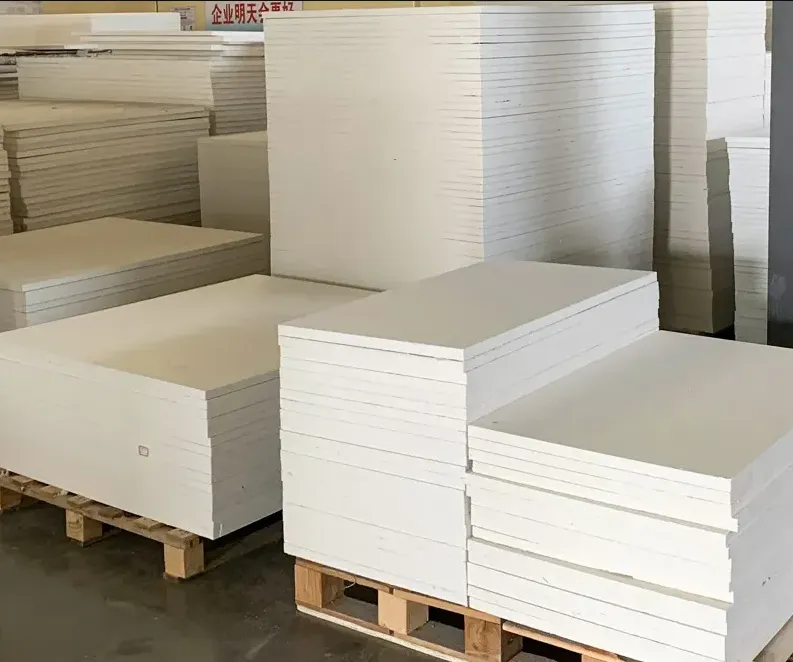
Inventory and lead times built for production realities. Standard ceramic fiber board sizes ship within 5–7 business days from order confirmation. Custom-cut boards typically ship in 10–15 business days. We maintain safety stock for our highest-volume customers to prevent any gap in their supply chain.
If your project requires the use of ceramic fiber board, you can contact us for a free quote.
FAQ
1. What is ceramic fiber board made of?
Ceramic fiber board is manufactured from high-purity alumina-silica ceramic fibers bonded with inorganic binders — typically colloidal silica. The fiber composition varies by grade: standard boards run about 42–44% Al₂O₃ and 52–54% SiO₂, while high-purity grades push alumina content above 50%. Our zirconia-enhanced grade adds 15–17% ZrO₂ for applications demanding stability above 1300°C.
2. What temperature can ceramic fiber board handle?
Standard grade is classified to 1050°C, high-purity to 1260°C, and our HP-Z zirconia grade to 1400°C. Continuous service temperatures run roughly 100–150°C below classification ratings. Always spec against your sustained operating temperature, not occasional peak spikes.
3. How thick should ceramic fiber board be for furnace insulation?
It depends on the furnace type and target shell temperature. For aluminum launder backup insulation, 25–40mm is typical. For holding furnace backup lining, 40–50mm is standard. Our engineering team can run a heat flow calculation based on your specific furnace dimensions and operating temperature to recommend the optimal thickness.
4. Can ceramic fiber board be cut to custom shapes?
Yes. Ceramic fiber board machines easily with standard woodworking tools — band saws, table saws, and even utility knives for thinner boards. We also supply CNC-cut panels shaped to match specific launder profiles, furnace door geometries, and hot top assemblies. Use a dust mask and wet-cutting methods to minimize airborne fiber.
5. How does ceramic fiber board compare to calcium silicate board?
Ceramic fiber board is roughly one-third the weight of calcium silicate (300 kg/m³ vs. 900 kg/m³), offers 30–40% lower thermal conductivity at equivalent temperatures, and handles higher service temperatures. Calcium silicate is cheaper per square meter but requires thicker sections to match the same insulation performance, which matters in retrofit projects with limited space.
6. How long does ceramic fiber board last?
In properly designed installations with temperatures within the rated range, ceramic fiber board routinely lasts 3–5 years in launder backup insulation and 5–8 years in furnace backup lining applications. The main factors that shorten service life are sustained over-temperature exposure, chemical attack from flux or metal penetration, and mechanical damage during refractory maintenance.
7. Does ceramic fiber board shrink at high temperatures?
All ceramic fiber products exhibit some permanent linear shrinkage at sustained high temperatures. Our standard and high-purity grades are tested to ≤2.0% shrinkage after 24 hours at their rated classification temperature. The zirconia grade holds tighter at ≤1.5%. Proper joint design with staggered seams and thin ceramic fiber paper gaskets between panels accommodates this shrinkage without compromising insulation performance.
8. Is ceramic fiber board safe to handle?
Yes, with appropriate PPE. Ceramic fibers are classified as Group 2B (“possibly carcinogenic to humans”) by the IARC. Wear an N95 respirator during cutting, safety glasses, gloves, and long sleeves. Wet cutting reduces airborne dust significantly. AdTech provides full Safety Data Sheets with every shipment and offers low-biopersistence alternatives for EU customers with stricter regulatory requirements.
9. Can ceramic fiber board get wet?
It shouldn’t stay wet. Ceramic fiber board will absorb water, which temporarily increases its thermal conductivity and weight. If boards get wet during storage or shipping, they can be dried and will return to normal performance — but prolonged water exposure can weaken the binder structure. Store boards indoors in dry conditions, off the ground, and wrapped in moisture-resistant packaging.
10. What is the minimum order for AdTech ceramic fiber board?
Standard sizes (600×300mm, 900×600mm, 1000×600mm) in common thicknesses ship from stock with no minimum quantity. Custom-cut panels require a minimum order depending on complexity — typically 50 pieces or equivalent area. Contact our sales team with your dimensions and quantities for a firm quote and lead time, usually within 24 hours.