
Aluminum casting is one of the most demanding processes in metal production because it involves molten aluminum, high temperatures, heavy equipment, and continuous material handling. Although modern aluminum plants use advanced automation and safety systems, improper operation, unsuitable materials, or equipment failures can still create serious hazards.
A safe aluminum casting operation is not only about protecting workers from immediate dangers. It is also about maintaining stable production, preventing equipment damage, and ensuring consistent aluminum melt quality.
Understanding the major safety challenges in aluminum melting and casting helps producers build more reliable and efficient operations.
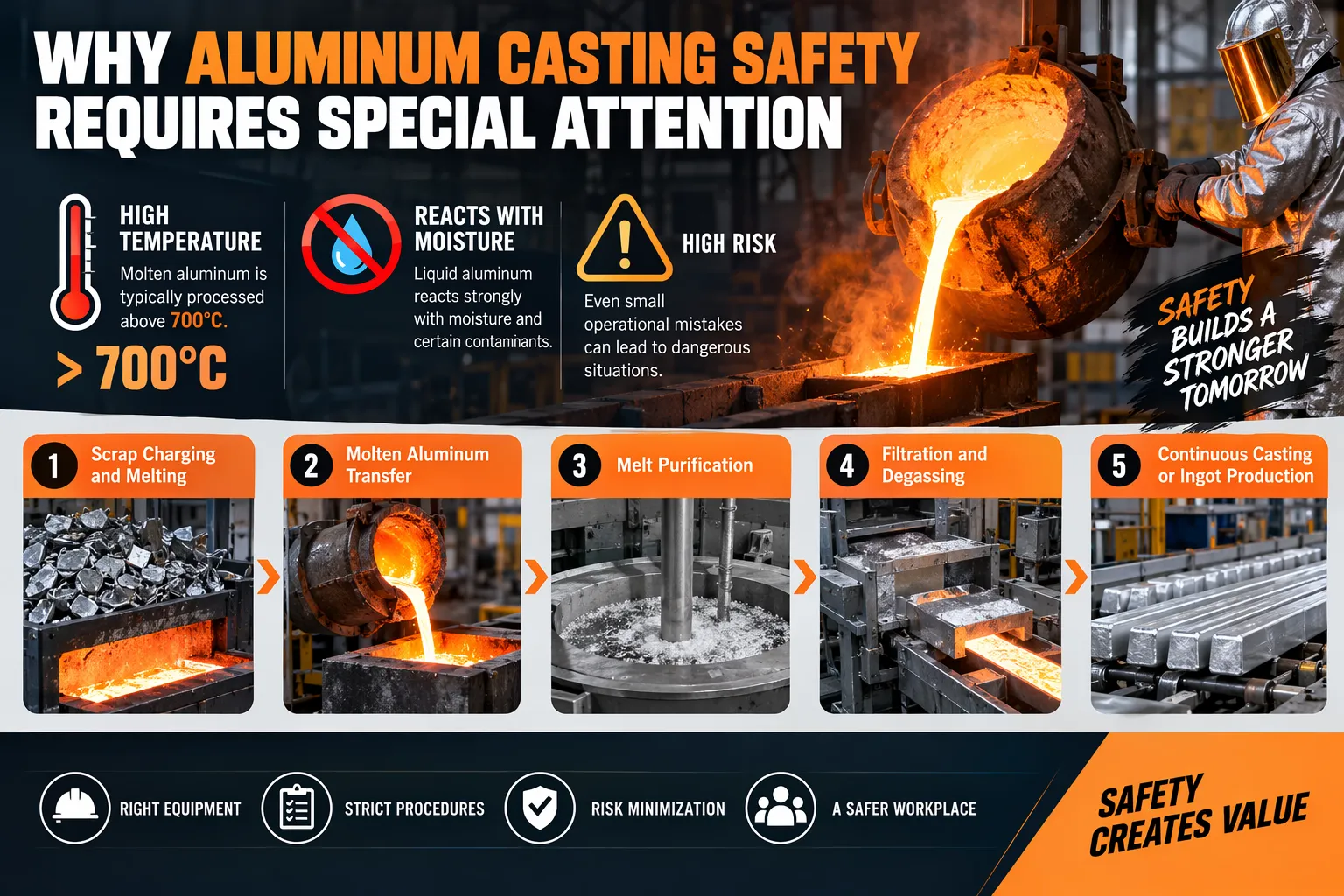
Why Aluminum Casting Safety Requires Special Attention
Molten aluminum is typically processed at temperatures above 700°C. At this temperature, even small operational mistakes can lead to dangerous situations.
Unlike many industrial materials, liquid aluminum reacts strongly with moisture and certain contaminants. In addition, casting operations involve multiple stages, including:
- Scrap charging and melting
- Molten aluminum transfer
- Melt purification
- Filtration and degassing
- Continuous casting or ingot production
Each stage requires appropriate equipment design and strict operating procedures to minimize risks.
Moisture Control: The First Priority in Molten Aluminum Safety
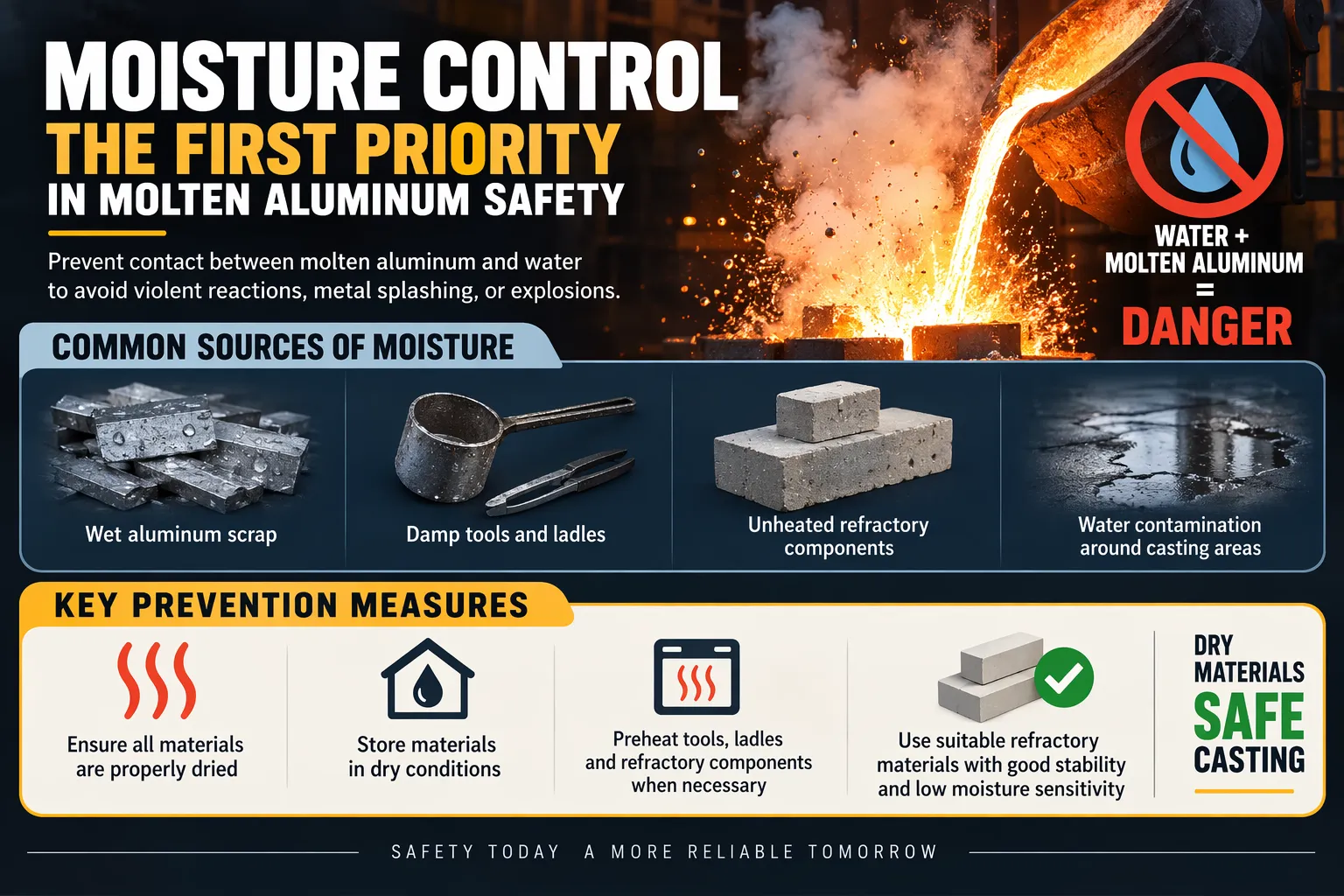
One of the most important safety rules in aluminum casting is preventing contact between molten aluminum and water.
When moisture enters molten aluminum, water can instantly transform into steam, creating rapid expansion. This may result in metal splashing, violent reactions, or even molten aluminum explosions.
Common sources of moisture include:
- Wet aluminum scrap
- Damp tools and ladles
- Unheated refractory components
- Water contamination around casting areas
To reduce these risks, aluminum producers should ensure that all materials contacting molten metal are properly dried, stored in dry conditions, and preheated when necessary.
Proper refractory selection is also important because unstable or moisture-sensitive materials may affect both safety and production reliability.
Safe Molten Aluminum Transfer Through Proper Equipment Design
Moving molten aluminum between furnaces, holding furnaces, and casting machines is one of the most critical operations in a casthouse.
During transfer, safety risks often come from:
- Excessive melt turbulence
- Aluminum oxidation and dross formation
- Leakage caused by damaged components
- Operator exposure during manual handling
A well-designed molten aluminum transfer system helps control metal flow and reduce unnecessary disturbances.
Ceramic launder systems are widely used in aluminum casting lines because they provide excellent thermal stability, corrosion resistance, and smooth molten metal transportation. Compared with traditional metal channels, ceramic launders can help reduce heat loss, minimize oxidation, and provide a safer working environment around molten aluminum transfer areas.
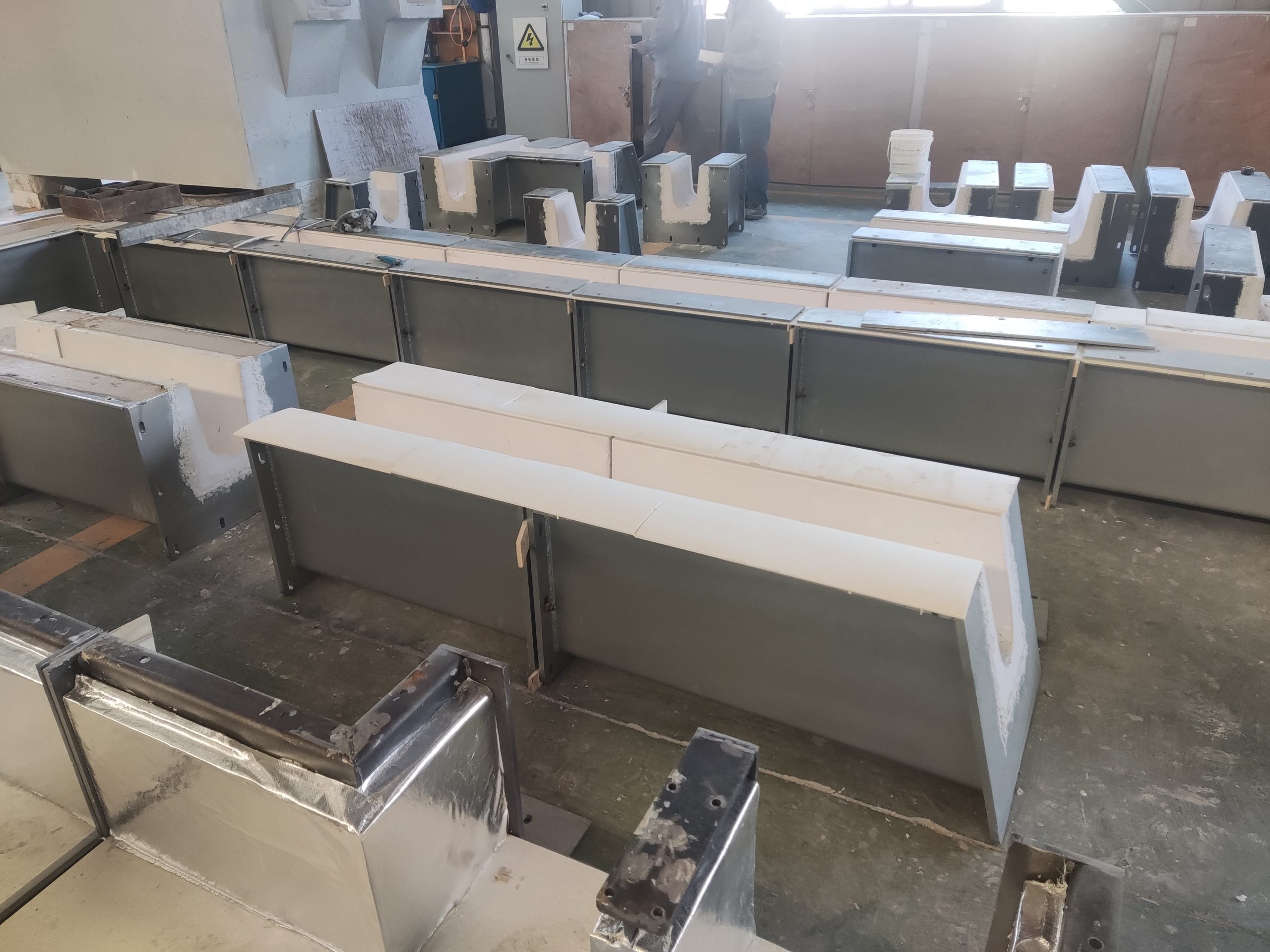
Learn About Our Safe Molten Aluminum Transfer Launder
Melt Treatment Safety: Quality Improvement Without Increasing Risk
Aluminum melt purification processes are essential for producing high-quality aluminum products. However, these operations must also consider safety and equipment reliability.
During filtration, unstable filter installation or poor sealing may cause:
- Aluminum leakage
- Reduced filtration efficiency
- Increased maintenance requirements
Ceramic foam filters are commonly installed in aluminum casting systems to remove non-metallic inclusions such as oxides and suspended particles. A reliable filtration system should provide:
- Stable performance at high temperatures
- Good thermal shock resistance
- Secure sealing between filter and filter box
For more demanding applications, such as aluminum foil stock, automotive alloys, and high-quality billets, stable filtration performance is especially important because melt cleanliness directly affects final product quality.
Reducing Hydrogen-Related Problems During Degassing
Hydrogen dissolved in molten aluminum is one of the main causes of porosity defects in cast products. Degassing treatment removes dissolved hydrogen by introducing refining gas into the melt.
However, degassing equipment must be properly designed and maintained to ensure safe operation.
A modern rotary degassing system controls:
- Gas injection
- Rotor rotation speed
- Contact between gas bubbles and molten aluminum
Compared with manual treatment methods, an automated or enclosed degassing system can reduce operator exposure to high-temperature molten metal while improving treatment consistency.
Furnace and Refractory Safety in Aluminum Plants
Furnaces and refractory components operate continuously under extreme thermal conditions. Over time, thermal cycling, chemical erosion, and mechanical stress may damage refractory materials.
Potential problems include:
- Furnace lining degradation
- Unexpected aluminum leakage
- Increased heat loss
- Reduced equipment lifespan
Using suitable refractory materials and performing regular inspections are important steps for preventing failures.
Components such as filter boxes, furnace linings, and molten metal contact parts should be selected according to operating temperature, alloy type, and production conditions.
Human Factors and Equipment Management
Even with advanced technology, operator training remains a key part of aluminum casting safety.
Common safety improvements include:
- Establishing clear operating procedures
- Regular inspection of production equipment
- Proper personal protective equipment (PPE)
- Training employees on molten aluminum handling
Mechanical systems such as cranes, forklifts, casting machines, and lifting equipment should also be maintained regularly because mechanical failures can create additional hazards in aluminum plants.
How Aluminum Producers Can Build Safer Casting Operations
Improving safety in aluminum casting requires cooperation between process control, equipment design, and daily management.
Key measures include:
- Prevent moisture from entering any area that contacts molten aluminum.
- Use reliable molten aluminum transfer systems to reduce turbulence and leakage risks.
- Maintain filtration and degassing equipment according to operating requirements.
- Select refractory materials suitable for high-temperature aluminum applications.
- Provide continuous safety training for all personnel working around molten metal.
Conclusion
Aluminum casting safety is closely connected with every part of the production process, from melting and transfer to purification and final casting.
By controlling moisture risks, improving equipment reliability, and using advanced melt treatment solutions, aluminum producers can create safer and more stable manufacturing environments.
Technologies such as ceramic foam filtration, rotary degassing systems, and ceramic launder solutions not only improve molten aluminum cleanliness but also support safer and more efficient casting operations.
FAQ
1. What are the main safety risks in aluminum casting?
The main risks include molten aluminum explosions caused by moisture, metal splashing, equipment failures, gas leakage, high-temperature burns, and improper material handling.
2. Why is moisture dangerous in molten aluminum operations?
When water contacts molten aluminum, it rapidly turns into steam and expands, which can cause violent reactions, aluminum splashing, or explosions. All tools, scrap materials, and equipment surfaces must be completely dry before contact with molten aluminum.
3. How can aluminum casting plants reduce molten metal transfer risks?
Plants can reduce risks by using properly designed transfer systems, controlling molten aluminum flow, maintaining equipment regularly, and reducing turbulence during transportation. Ceramic launder systems help provide stable and controlled molten aluminum transfer.
4. What causes explosions during aluminum melting?
Most aluminum melting explosions are related to moisture, wet scrap charging, contaminated materials, or water entering areas containing molten aluminum. Proper scrap preparation and strict moisture control are essential safety measures.
5. How does a ceramic launder improve aluminum casting safety?
A ceramic launder provides stable molten aluminum transportation with good thermal resistance and corrosion resistance. It helps reduce turbulence, oxidation, and direct operator exposure during aluminum melt transfer.
6. Are ceramic foam filters related to aluminum casting safety?
Yes. Ceramic foam filters improve molten aluminum cleanliness by removing non-metallic inclusions. A properly installed filtration system also helps maintain stable metal flow and reduces risks caused by unstable filtration conditions.
7. Why is degassing important in aluminum casting operations?
Degassing removes dissolved hydrogen from molten aluminum, helping reduce porosity defects in cast products. Modern rotary degassing systems also provide more controlled and consistent melt treatment compared with manual methods.
8. What safety precautions are needed when charging aluminum scrap?
Aluminum scrap should be inspected, cleaned, and dried before charging. Wet scrap, oil contamination, and unknown materials may cause dangerous reactions when added to molten aluminum.
9. How can aluminum plants prevent furnace and refractory failures?
Regular inspection, proper maintenance, and selecting refractory materials suitable for high-temperature aluminum applications can help prevent furnace damage, leakage, and unexpected downtime.
10. What equipment helps create a safer aluminum casting process?
Important equipment includes ceramic launder systems for molten aluminum transfer, ceramic foam filters for melt filtration, rotary degassing systems for hydrogen removal, and reliable refractory components for high-temperature protection.