
Effective molten aluminum treatment plays an important role in controlling melt quality before casting. For aluminum producers, the degassing stage needs to work reliably within the existing production process while providing stable treatment conditions.
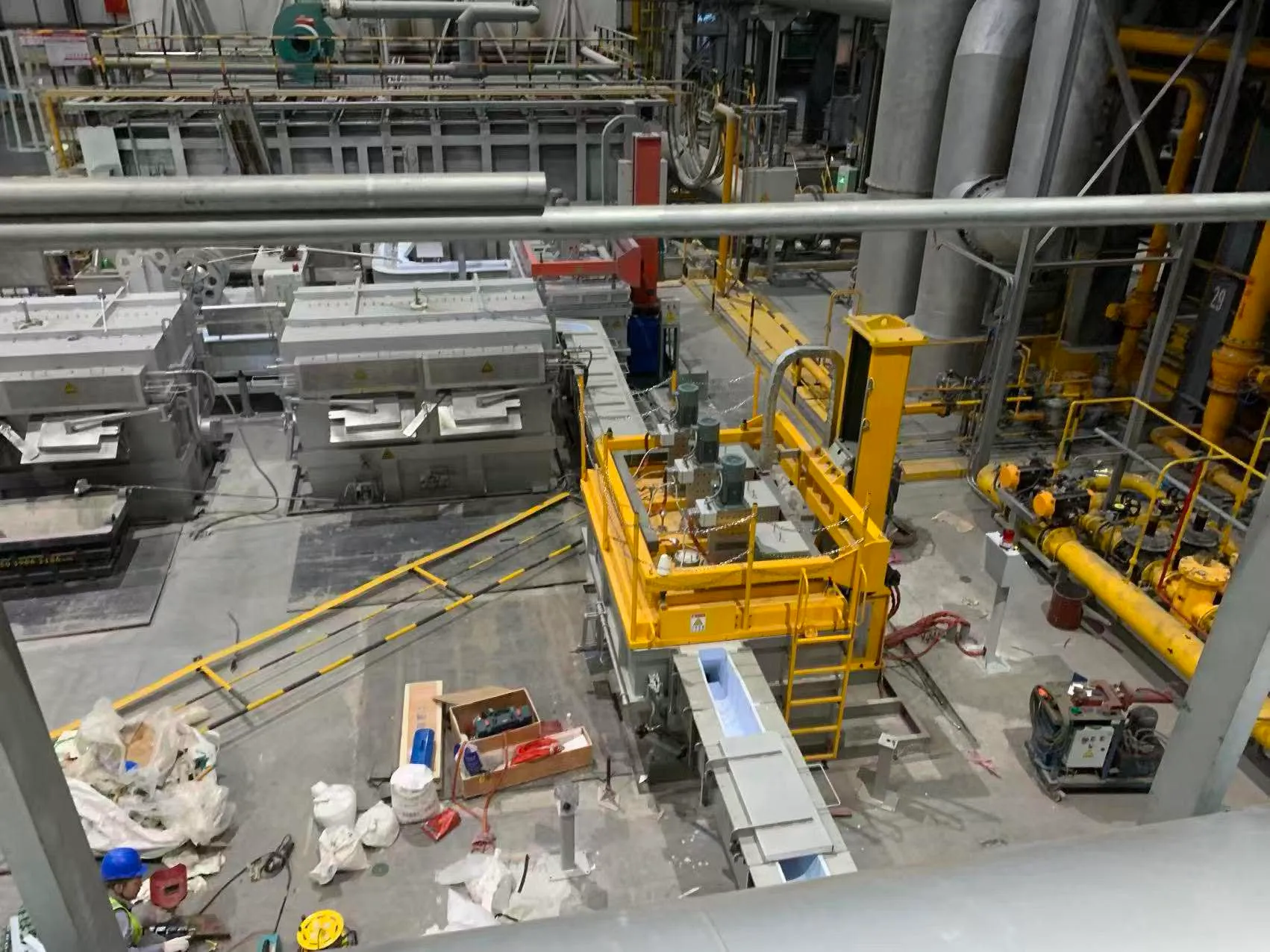
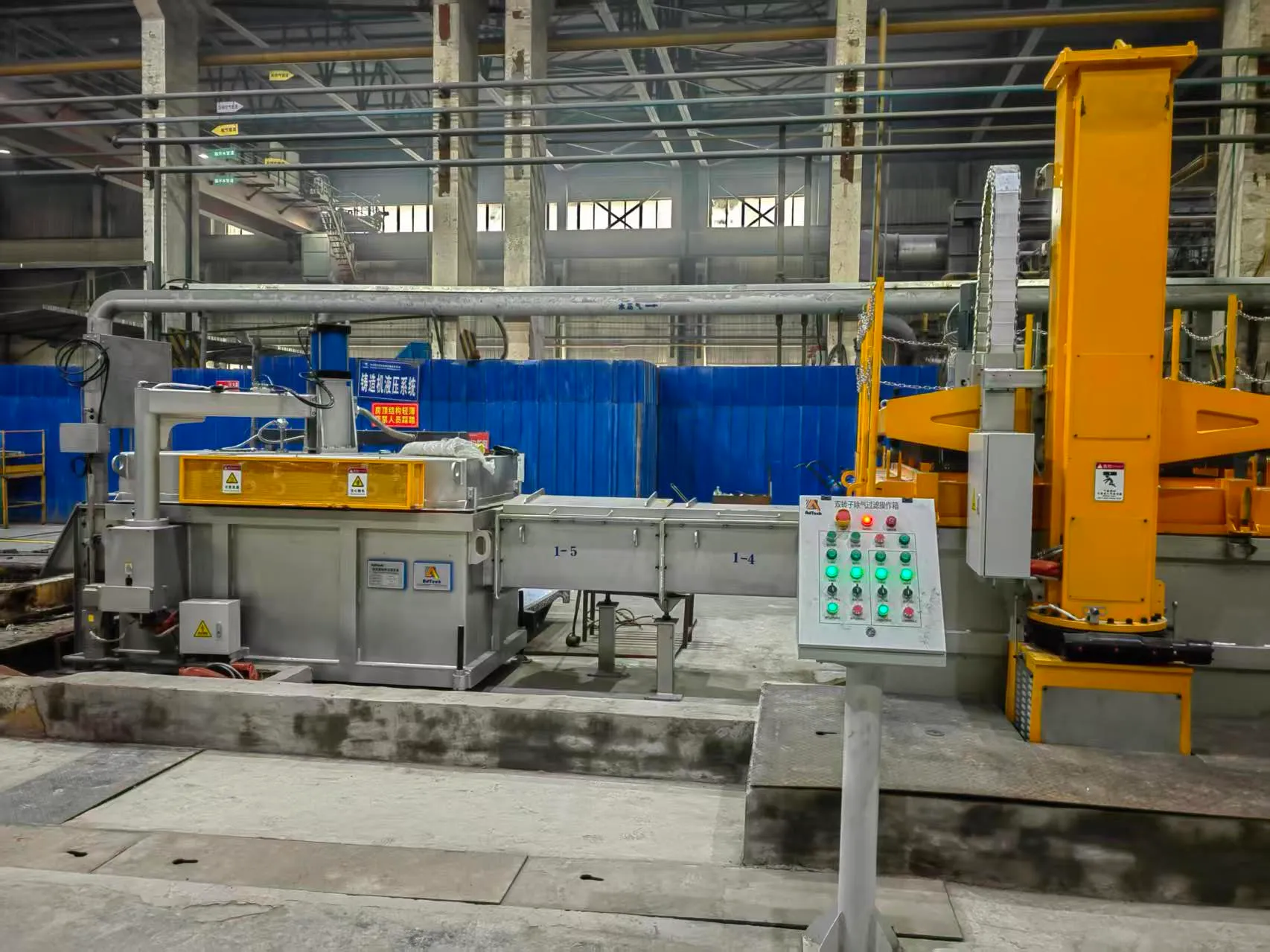
A recent project at Gansu Guangyin Aluminum Co., Ltd. demonstrates the practical application of a tilting-type aluminum degassing system in an industrial production environment. Supplied by AdTech Metallurgical Materials Co., Ltd., the equipment was installed, commissioned, and successfully put into production at the customer’s facility.
Why Is Degassing Important in Molten Aluminum Treatment?
Molten aluminum can contain dissolved hydrogen and non-metallic contaminants introduced during melting and handling. Dissolved hydrogen is particularly important because its solubility changes significantly as aluminum solidifies. If excess hydrogen remains in the melt, it can contribute to gas porosity in cast products.
For this reason, degassing is commonly used as part of an aluminum melt treatment process.
Rotary degassing introduces an inert gas into molten aluminum through a rotating rotor. The gas is dispersed into the melt, allowing dissolved hydrogen to transfer into the gas bubbles and escape from the metal.
However, successful degassing is not simply a matter of installing a machine. Treatment performance depends on factors such as melt temperature, treatment time, gas flow, rotor condition, alloy characteristics, and the operating parameters of the production line.
This makes proper equipment commissioning and process adaptation an important part of an industrial degassing project.
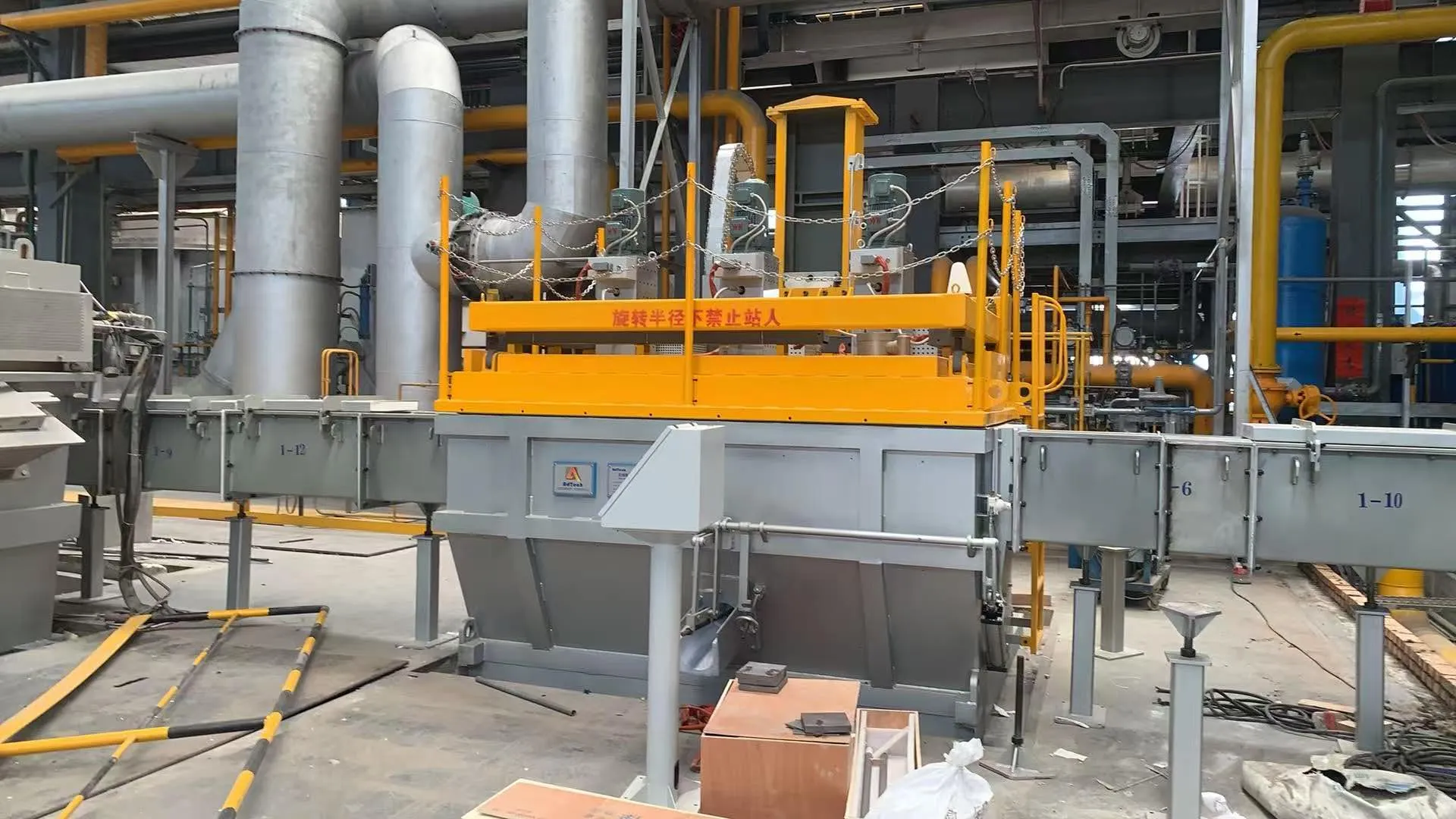
Application of Tilting Degassing Equipment at Guangyin Aluminum
For the Guangyin Aluminum project, AdTech supplied a tilting degassing system designed for integration into the customer’s aluminum melt treatment process.
After the equipment arrived at the customer’s facility, AdTech’s technical team traveled to the site to support installation and commissioning.
The project involved several stages:
| Project Stage | Main Work |
|---|---|
| Equipment installation | Positioning and installation of the degassing unit |
| System connection | Pipeline and related utility connections |
| Parameter setup | Configuration of operating parameters |
| Functional testing | Equipment and interlock testing |
| Trial operation | Initial production and operating verification |
| Operator training | Practical operation and maintenance training |
| Process adaptation | Adjustment according to site conditions |
Rather than treating commissioning as a simple equipment start-up, the technical team worked with the customer’s production and equipment personnel throughout the process.
This allowed the system to be checked under actual operating conditions before entering regular production.
How Was the Equipment Commissioned?
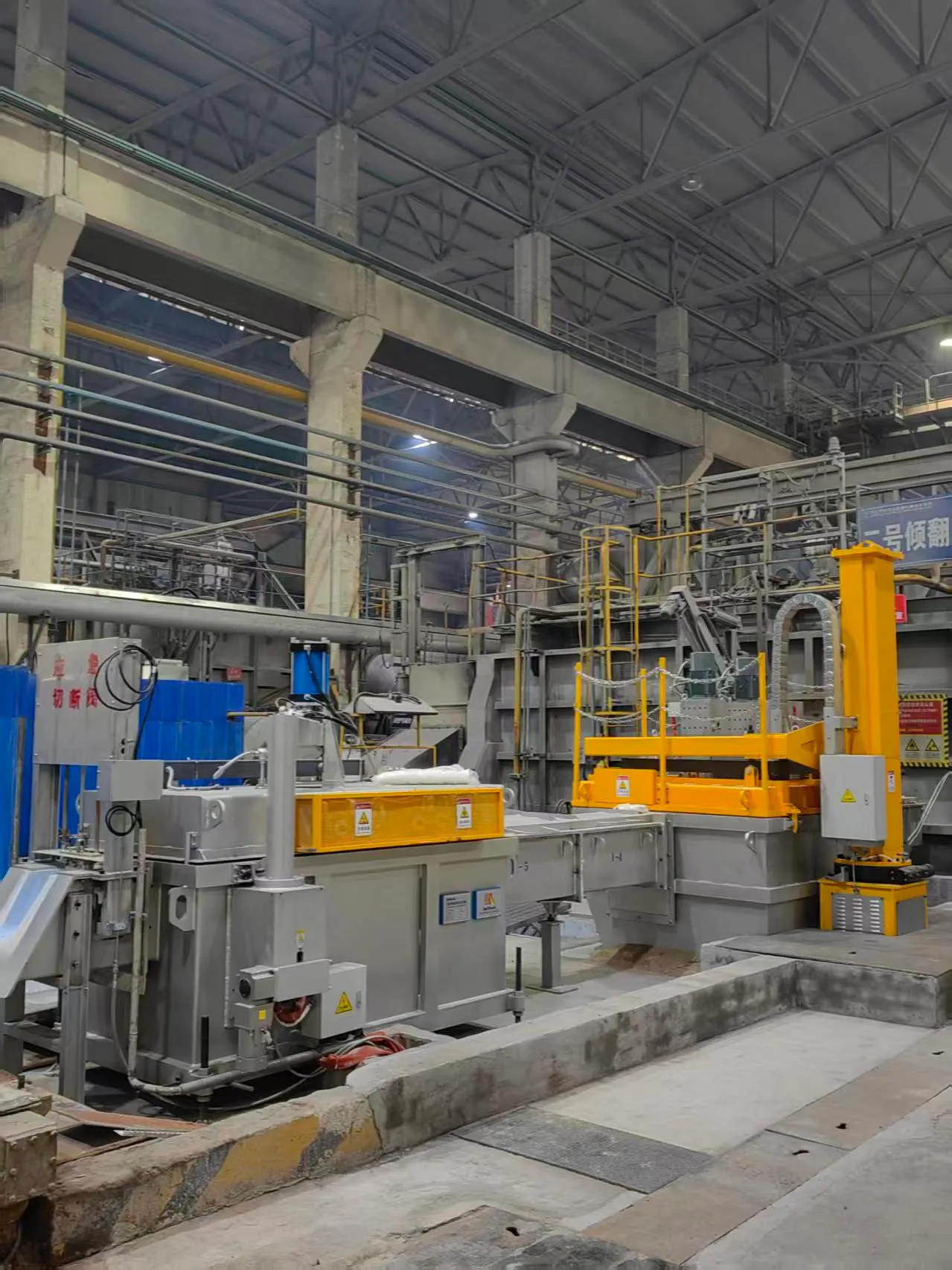
On-site commissioning began with equipment positioning and system connections. Once the necessary mechanical and utility connections were completed, the engineering team proceeded with parameter configuration and functional testing.
The team then carried out integrated testing to verify that the equipment could operate correctly as part of the customer’s production process.
One of the challenges in any aluminum melt treatment project is that actual plant conditions can differ from the conditions assumed during equipment design. Available space, existing process equipment, operating procedures, melt handling practices, and production schedules all need to be considered.
During the Guangyin Aluminum project, the AdTech team worked directly with the customer’s personnel to address site-specific requirements and complete the necessary adjustments.
Contact Us to Optimize Your Production Line.
Operator Training as Part of the Project
Equipment performance depends not only on mechanical design but also on correct operation.
For this reason, operator training was included during the commissioning process.
AdTech’s technical personnel provided practical instruction covering:
- Normal equipment operation
- Operating procedures
- Parameter adjustment
- Basic maintenance
- Daily equipment checks
- Safe operation requirements
The purpose was to enable the customer’s operators to understand the equipment and carry out routine operation and maintenance after commissioning.
For production equipment that operates as part of a continuous or repetitive casting process, this type of hands-on training can help reduce operating errors and support more consistent treatment conditions.
What Were the Results of the Trial Operation?
Following installation and commissioning, the tilting degassing equipment completed its initial trial run successfully and entered production.
During the trial operation, the equipment’s operating parameters remained stable, and its performance indicators met the requirements specified in the project contract.
The successful start-up confirmed that the equipment could operate under the customer’s actual production conditions and integrate into the existing molten aluminum treatment process.
For the customer, the purpose of the degassing system is not simply to add another piece of equipment to the production line. Its role is to provide a controlled melt treatment stage that helps manage dissolved gas and support consistent aluminum melt quality.
What Benefits Can Aluminum Producers Expect From Proper Degassing?
The exact results depend on the alloy, initial hydrogen level, treatment parameters, and casting process. Nevertheless, effective molten aluminum degassing can contribute to several important production objectives.
Reduced risk of hydrogen-related porosity
Lowering dissolved hydrogen before solidification can help reduce the risk of gas porosity associated with hydrogen in the melt.
More consistent melt treatment
A controlled degassing process provides a repeatable treatment step rather than relying entirely on manual or uncontrolled melt handling.
Improved casting quality
Better control of melt cleanliness can contribute to more consistent casting quality and help reduce quality-related losses.
More stable production
Reliable equipment operation and clearly defined operating procedures help integrate melt treatment into routine production.
It is important to note that degassing is not a replacement for filtration. Degassing primarily targets dissolved hydrogen, while ceramic foam filters and other filtration technologies are used to remove solid non-metallic inclusions.
For applications requiring higher melt cleanliness, degassing can therefore be combined with downstream filtration.
How Does Degassing Fit Into a Complete Aluminum Melt Treatment Process?
A typical aluminum melt treatment sequence may look like:
Melting → Furnace Treatment → Degassing → Inclusion Separation → Filtration → Casting
The exact sequence varies according to the alloy and casting process.
In a system using ceramic foam filtration, for example, rotary or in-line degassing can be followed by filtration to address different types of melt impurities.
The principle is straightforward:
Degassing controls dissolved gas, while filtration controls suspended solid inclusions.
This complementary approach can be particularly useful when the final product has strict requirements for internal quality and consistency.
Why Is On-Site Commissioning Important for Degassing Equipment?
A degassing system may perform differently depending on how it is integrated into a production line.
Factors such as:
- Melt temperature
- Metal depth
- Treatment time
- Gas flow
- Rotor position
- Rotor speed
- Alloy composition
- Melt volume
- Production rate
can all affect the treatment process.
For this reason, commissioning at the customer’s facility provides an opportunity to verify the equipment under real production conditions rather than relying only on factory testing.
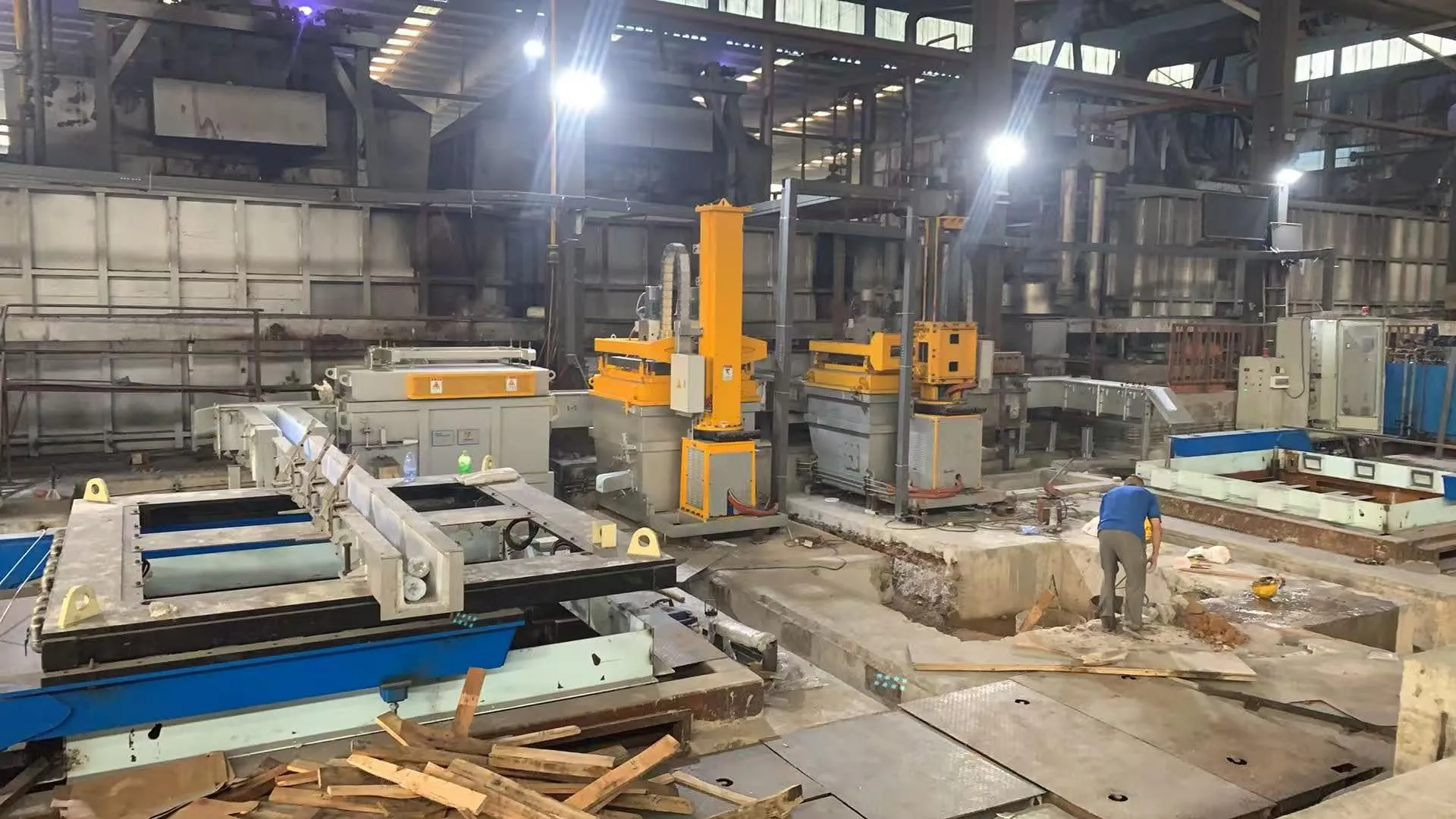
In the Guangyin Aluminum project, AdTech’s engineers worked directly at the production site, completing installation, parameter configuration, testing, process adaptation, and operator training before the equipment entered production.
A Practical Example of Aluminum Degassing Equipment in Production
The successful commissioning of the tilting degassing equipment at Gansu Guangyin Aluminum provides a practical example of how aluminum degassing equipment can be integrated into an industrial aluminum production environment.
The project also demonstrates an important point for aluminum producers evaluating melt treatment equipment: equipment selection should consider the complete production process, not only the specifications of the machine itself.
The capacity of the system, melt handling method, treatment requirements, available installation conditions, operating parameters, and downstream filtration process should all be considered when selecting a degassing solution.
For this reason, AdTech works with customers to understand their actual production conditions and provide equipment configuration and technical support based on the application.
Conclusion
The successful installation and commissioning of the tilting degassing equipment at Gansu Guangyin Aluminum marks a practical application of AdTech’s aluminum melt treatment technology.
From equipment installation and parameter configuration to trial operation and operator training, the project was completed with close cooperation between the AdTech engineering team and the customer’s production and equipment personnel.
The equipment successfully entered production with stable operating parameters and performance meeting the project’s design requirements.
For aluminum producers looking to improve molten aluminum treatment, proper degassing equipment, suitable operating parameters, and correct process integration are all essential to achieving stable results.
AdTech will continue to provide aluminum melt treatment equipment and technical support for customers seeking reliable solutions for molten aluminum degassing and casting quality control.