
In aluminum melting and casting, the difference between stable production and recurring defects often comes down to one overlooked step: refining.
Many foundries invest heavily in raw materials and equipment, yet still face porosity, inclusions, and inconsistent casting performance. In most cases, the issue is not the alloy—it is the melt condition.
Refining flux plays a central role in controlling melt cleanliness. However, its real effectiveness depends less on the product itself and more on how it is used in practice.
What Is Aluminum Refining Flux and What Does It Actually Do?
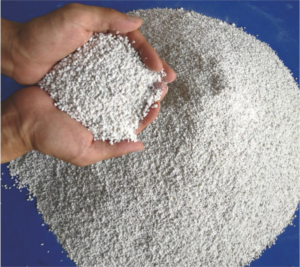
Aluminum refining flux is a compound material designed to improve melt quality by removing impurities during the melting process.
In practical production, the main targets of refining flux include:
- Dissolved hydrogen
- Oxide films and inclusions
- Non-metallic contaminants
These impurities are unavoidable during melting, especially when scrap materials are involved.
The refining flux works through a combination of chemical and physical mechanisms:
- It promotes the separation of oxide films from the melt
- It absorbs inclusions into a removable slag phase
- It assists in hydrogen removal through bubble interaction
- It forms a protective layer on the melt surface
👉 In short, refining flux is not only removing impurities—it is also stabilizing the melt environment.
Why Is Hydrogen Removal So Critical in Aluminum Melting?
How does hydrogen affect aluminum casting quality?
Hydrogen is the only gas that dissolves significantly in molten aluminum. As the metal solidifies, hydrogen solubility drops sharply, leading to:
- Porosity
- Reduced mechanical strength
- Surface defects
In many die-casting and gravity casting operations, hydrogen-related defects account for a large percentage of quality issues.
How does refining flux help reduce hydrogen?
Refining flux enhances hydrogen removal in two ways:
- It supports the formation of fine gas bubbles
- It improves the diffusion of hydrogen into these bubbles
As bubbles rise to the surface, hydrogen is carried out of the melt.
👉 This is why refining is often combined with inert gas degassing for better results.
How Does Refining Flux Remove Oxide Inclusions?
Oxide inclusions are another major source of defects.
Why are oxide films difficult to remove?
Oxide films:
- Are lightweight but sticky
- Tend to remain suspended in the melt
- Easily break into smaller particles under turbulence

How does refining flux solve this problem?
Refining flux changes the interface between aluminum and oxides:
- Reduces adhesion between metal and inclusions
- Allows inclusions to detach
- Captures them into molten flux
Once collected, these impurities float to the surface as slag and can be removed.
👉 The key is ensuring sufficient contact between flux and molten aluminum.
How to Use Aluminum Refining Flux Effectively in Real Production?
When is the best time to add refining flux?
Refining flux should be added:
- After the aluminum is fully melted
- Before casting or transfer
Adding it too early reduces efficiency because impurities continue forming afterward.

How much refining flux should be used?
| Melt Condition | Recommended Dosage |
|---|---|
| Clean aluminum | 0.2% – 0.3% |
| Mixed scrap | 0.3% – 0.5% |
| High contamination | 0.5% – 0.8% |
These values are based on typical industrial practices and field experience.
👉 More flux does not mean better refining. Excess usage may increase slag and waste.
How should refining flux be applied?
The most reliable method in production is:
- Evenly spreading flux across the melt surface
- Allowing it to melt and react naturally
- Applying light, controlled stirring if necessary
Avoid concentrating flux in one area, as this leads to uneven refining.
👉If you want a more detailed step-by-step method, you can refer to our guide on how to use aluminum flux.
How long should refining take?
- Reaction time: 5–10 minutes
- Followed by complete slag removal
👉 Leaving slag on the surface can lead to re-contamination.
What Are the Common Mistakes When Using Refining Flux?
Why does refining sometimes fail?
In many cases, poor results are caused by process issues rather than material quality.
Common mistakes include:
- Uneven flux distribution
- Excessive stirring causing turbulence
- Incorrect timing
- Skipping slag removal
Is refining flux enough on its own?
Refining flux works best when combined with:
- Degassing systems
- Filtration
👉 It is part of a complete melt treatment system.
What Is the Difference Between Refining Flux and Other Flux Types?
| Flux Type | Also Called | Main Function | Stage |
|---|---|---|---|
| Refining Flux | Degassing flux | Remove hydrogen & inclusions | After melting |
| Deslagging Flux | Drossing flux | Remove slag | Before pouring |
| Cover Flux | Tundish flux | Prevent oxidation | Holding |
| Oxide Removal Flux | Cleaning flux | Remove oxide film | Early stage |
👉 “Refining flux” is also commonly referred to as:
- aluminum refining agent
- degassing flux
- purification flux
This helps match different search habits across regions.
Real Production Insight: Why Process Matters More Than Product
In one aluminum casting plant in Eastern Europe, operators experienced:
- High porosity levels
- Unstable melt behavior
- Increasing refining cost
Initially, they assumed the refining flux was ineffective.
However, after process analysis, the issues were identified:
- Flux added before full melting
- Uneven application
- Slag not removed in time
After adjusting the process:
- Porosity defects decreased noticeably
- Melt stability improved
- Flux consumption dropped by approximately 10–15%
Client feedback:
“Before, we thought the problem was the flux itself. After adjusting how we use aluminum flux, the improvement was immediate and consistent.”
👉 This case highlights a key point:
Refining efficiency depends more on how flux is used than on the product itself
How to Maximize the Effect of Refining Flux?
| Factor | Best Practice | Result |
|---|---|---|
| Temperature | 720–760°C | Better reaction efficiency |
| Application | Even distribution | Full contact |
| Stirring | Minimal and controlled | Reduced inclusions |
| Timing | After full melting | Improved effectiveness |
These recommendations are based on real foundry operation experience.
What Do Industry Practices Tell Us About Refining?
In modern aluminum casting:
- Refining is essential for quality control
- Flux is widely used alongside degassing
- Melt cleanliness directly affects final product quality
👉 Consistent process control is the key to stable results.
Conclusion: Refining Flux Is Only as Effective as the Process Around It
Many operators focus on selecting the “best refining flux.”
But in real production:
👉 The biggest improvements come from:
- Correct timing
- Proper application
- Stable process control
Refining flux is not a standalone solution—it is part of a system.
At AdTech , we don’t just supply flux products—we work closely with each customer to understand their specific production conditions and provide tailored solutions that combine the right materials, application methods, and process optimization.
you can contact us for a free quote and technical support.
FAQ
1. What is aluminum refining flux used for?
To remove hydrogen and inclusions from molten aluminum.
2. When should refining flux be added?
After full melting and before casting.
3. How much refining flux is required?
Typically 0.2%–0.5% depending on contamination.
4. Can refining flux eliminate porosity completely?
It reduces porosity significantly but may require degassing support.
5. What happens if too much flux is used?
It can increase slag and reduce efficiency.
6. Is refining flux the same as degassing flux?
Yes, they are often used interchangeably.
7. Why is my refining result inconsistent?
Likely due to process variation or improper application.
8. Does refining flux affect alloy composition?
No significant effect under normal usage.
9. Can refining flux be used for all aluminum alloys?
Yes, but some alloys require specialized formulations.
10. How long should refining take?
Usually 5–10 minutes followed by slag removal.