
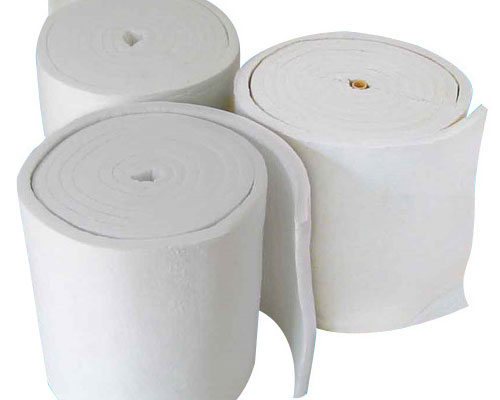
What Is Ceramic Fiber Blanket?
Ceramic fiber blanket is a lightweight, high-temperature insulation material made from alumina-silica fibers. It is widely used in industrial applications where thermal efficiency, stability, and durability are critical.
Compared with traditional insulation materials, ceramic fiber blanket offers significantly lower thermal conductivity, excellent resistance to thermal shock, and long service life under extreme temperatures.
Key Properties of Ceramic Fiber Blanket
Ceramic fiber blanket is designed to perform reliably in demanding environments. Its key properties include:
- High temperature resistance up to 1260°C–1430°C
- Low thermal conductivity for energy savings
- Excellent thermal shock resistance
- Lightweight and flexible structure
- Chemical stability in harsh environments
These properties make it a preferred insulation solution across multiple high-temperature industries.
Table 1. Performance Advantages of Ceramic Fiber Blanket
| Property | Performance Description | Practical Value |
|---|---|---|
| High Temperature Resistance | Operates up to 1260°C–1430°C | Suitable for high-temperature industrial systems |
| Low Thermal Conductivity | Minimizes heat transfer | Improves energy efficiency and reduces heat loss |
| Thermal Shock Resistance | Handles rapid temperature fluctuations | Prevents cracking and extends service life |
| Lightweight & Flexible | Low density fiber structure | Easy installation and reduced structural load |
| Chemical Stability | Resistant to harsh environments | Maintains performance in aluminum processing systems |
Data are based on typical industry values for alumina-silica fiber insulation materials.
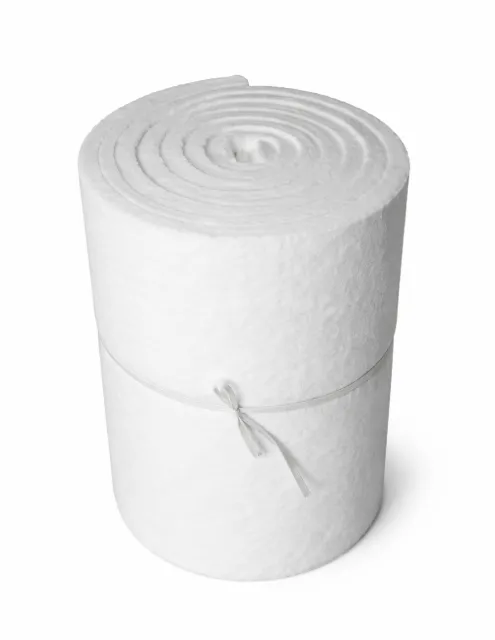
Common Applications of Ceramic Fiber Blanket
Ceramic fiber blanket is widely used in:
- Industrial furnaces and kilns
- Aluminum melting and holding furnaces
- Molten metal filtration systems
- Petrochemical processing equipment
- Heat treatment facilities
In aluminum processing, it is especially valued for its ability to maintain stable temperatures and reduce heat loss.
How to Choose the Right Ceramic Fiber Blanket?
Selecting the correct ceramic fiber blanket depends on several factors:
1. Temperature Rating
Choose a classification temperature higher than your operating conditions (e.g., 1260°C or 1430°C).
2. Density
Higher density (such as 128 kg/m³) provides better durability and longer service life.
3. Thickness
Thicker blankets improve insulation performance but must match installation constraints.
4. Application Environment
For aluminum processing, chemical stability and resistance to molten metal are essential.
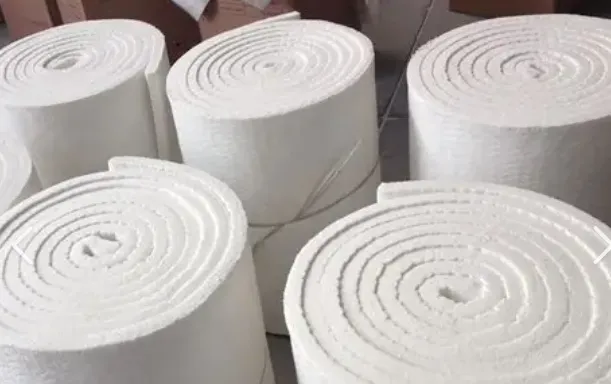
Table 2. Quick Selection Guide for Ceramic Fiber Blanket
| Factor | Options | Selection Recommendation |
|---|---|---|
| Temperature Rating | 1260°C / 1430°C | Choose a grade higher than actual operating temperature |
| Density | 96 / 128 kg/m³ | 128 kg/m³ for better strength and durability |
| Thickness | 12–50 mm | Thicker for better insulation, depending on space |
| Application Environment | General / Aluminum processing | Use stable, high-purity material for molten aluminum |
Recommendations are based on common industrial applications and operating conditions.
Why Ceramic Fiber Blanket Is Widely Used in Aluminum Industry
In aluminum processing systems, temperature stability directly affects product quality and energy efficiency.
Ceramic fiber blanket helps:
- Reduce heat loss
- Maintain consistent operating temperature
- Improve energy efficiency
- Extend equipment service life
Its compatibility with molten aluminum environments makes it an ideal insulation solution for foundries and filtration systems.
👉 Visit our website to learn more about application-specific solutions for aluminum processing.
FAQ
1. What is ceramic fiber blanket made of?
Ceramic fiber blanket is made from high-purity alumina and silica materials, processed into lightweight and flexible fibers.
2. What is ceramic fiber blanket used for?
It is used for thermal insulation in furnaces, kilns, and aluminum processing systems to reduce heat loss and improve energy efficiency.
3. Depending on the grade, it can typically withstand temperatures from 1260°C to 1430°C.
Depending on the grade, it can typically withstand temperatures from 1260°C to 1430°C.
4. Why is ceramic fiber blanket suitable for aluminum processing?
It offers excellent thermal stability and chemical resistance, making it compatible with molten aluminum environments.
5. What density should I choose for ceramic fiber blanket?
128 kg/m³ is generally recommended for better strength, durability, and long-term performance in industrial applications.
6. How thick should ceramic fiber blanket be?
Common thickness ranges from 12 mm to 50 mm, depending on insulation requirements and installation space.
7. Does ceramic fiber blanket have good thermal conductivity?
Yes, it has low thermal conductivity, which helps reduce heat loss and improve overall energy efficiency.
8. Can ceramic fiber blanket handle rapid temperature changes?
Yes, it has excellent thermal shock resistance and can withstand rapid heating and cooling cycles.
9. Is ceramic fiber blanket easy to install?
Yes, its lightweight and flexible structure allows for easy cutting, handling, and installation.
10. Where can I find detailed specifications of ceramic fiber blanket?
You can visit our ceramic fiber blanket product page for specifications, density options, and application details.