
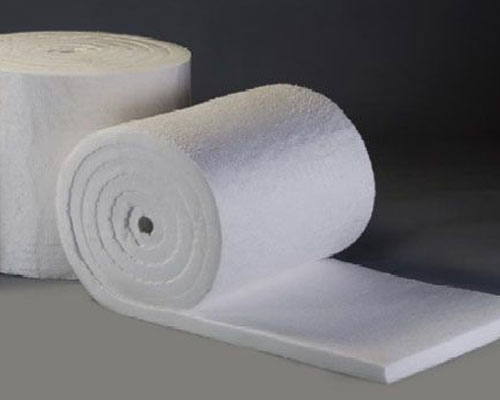
Efficient thermal management is critical in modern industrial operations such as metallurgy, petrochemical, ceramics, and power generation. Ceramic fiber products have become a cornerstone in high-temperature insulation due to their energy efficiency, safety, durability, and adaptability. Unlike traditional refractory materials such as firebricks or castables, ceramic fiber products are lightweight, flexible, and provide superior thermal insulation with faster heat-up and cool-down cycles.
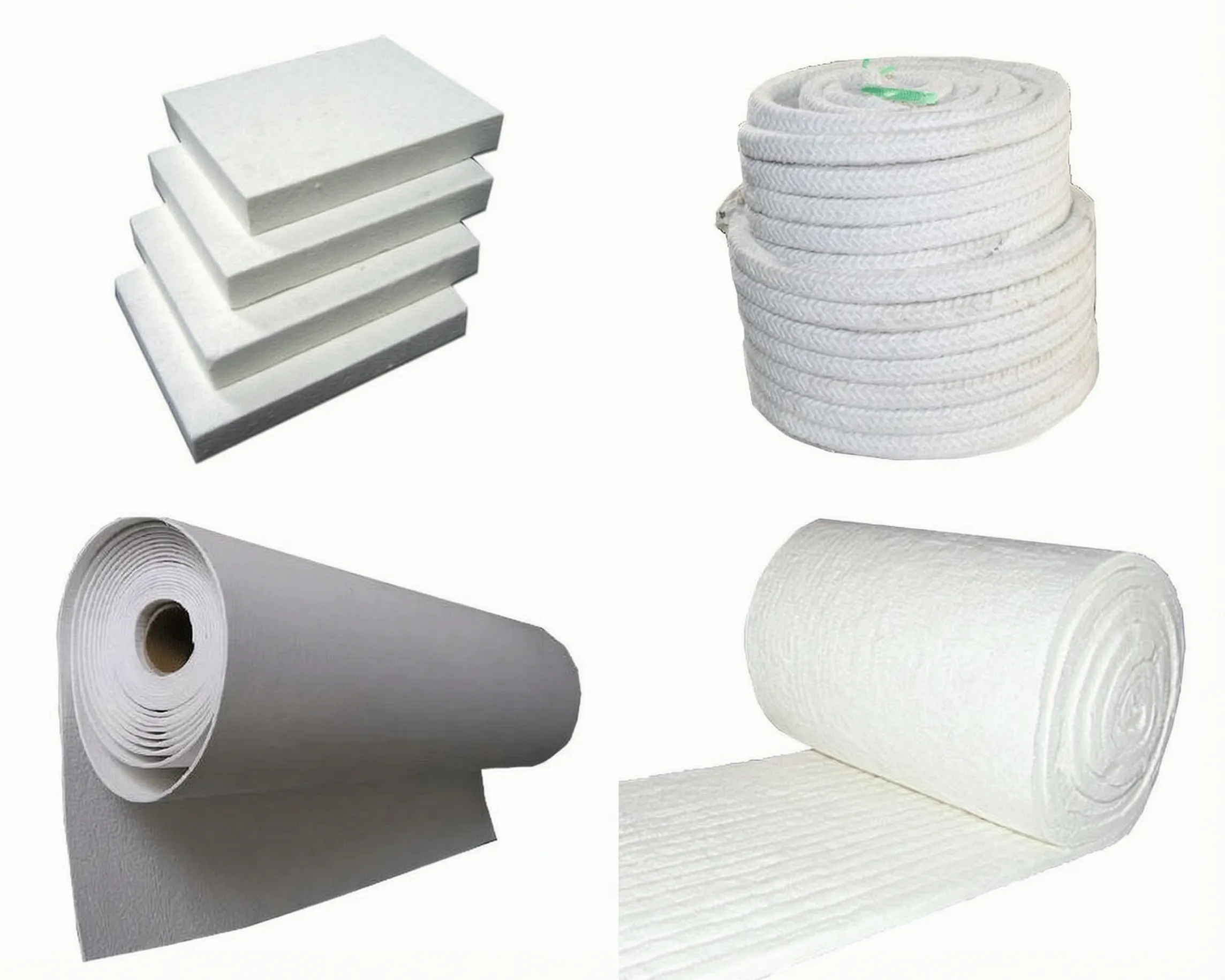
At AdTech , we provide a complete line of ceramic fiber solutions designed to meet diverse industrial needs. Our range includes:
- Ceramic Insulation Board
- Ceramic Fiber Rope
- Ceramic Fiber Paper
- Ceramic Wool Insulation
These products are engineered to withstand extreme temperatures, resist chemical attack, and provide long-term reliability.
What Are Ceramic Fiber Products?
Ceramic fiber products are made from high-purity alumina (Al₂O₃) and silica (SiO₂) fibers. Depending on the form—boards, ropes, papers, or wool—the products are tailored for structural insulation, sealing, or thermal barriers. They differ from traditional materials in several critical ways:
- Low Thermal Conductivity: Typically 0.12–0.18 W/m·K at 800°C, which minimizes heat loss even in high-temperature furnaces.
- High Service Temperature: Boards can withstand 1,400°C, while ropes, papers, and wool are suitable up to 1,260°C.
- Mechanical Flexibility: Boards and blankets are flexible, allowing for easy installation and vibration resistance.
- Chemical Resistance: Alumina-silica fibers resist most fluxes, slags, and oxidizing gases.
Practical insight: Foundries that replaced firebrick linings with ceramic fiber boards observed up to 40% faster heat-up times, reducing energy consumption and increasing throughput.
Four different types of Ceramic Fiber Product
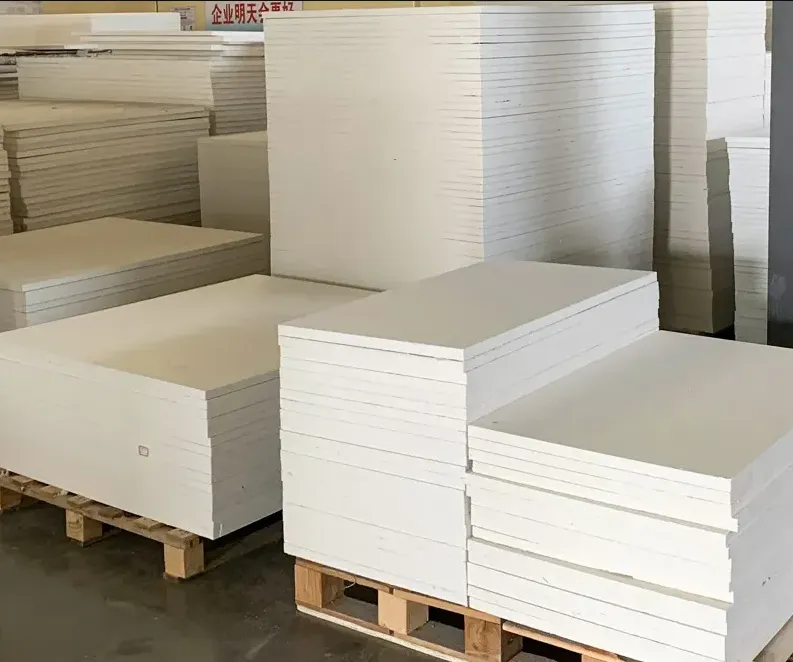
1. Ceramic Insulation Board
Ceramic insulation boards are high-density alumina-silica boards that provide both structural support and insulation. They are ideal for high-temperature applications where durability and thermal efficiency are critical.
Technical Highlights:
| Property | Specification |
|---|---|
| Density | 200–300 kg/m³ |
| Maximum Service Temperature | 1,400°C |
| Thermal Conductivity (800°C) | 0.14 W/m·K |
| Linear Shrinkage (24h at 1200°C) | <2% |
Applications and Benefits:
- Furnace walls, kiln doors, and high-temperature thermal barriers.
- Significantly reduces energy loss compared to traditional refractory bricks.
- Enables thinner furnace linings, which reduces overall furnace weight and construction costs.
Installation tip: Pre-compressing boards slightly during installation reduces air gaps, minimizing hot spots and improving energy efficiency.
Real-world example: A European aluminum foundry replaced 180mm thick brick linings with 50mm ceramic fiber boards, achieving 35% energy savings and faster melting cycles.
2. Ceramic Fiber Rope
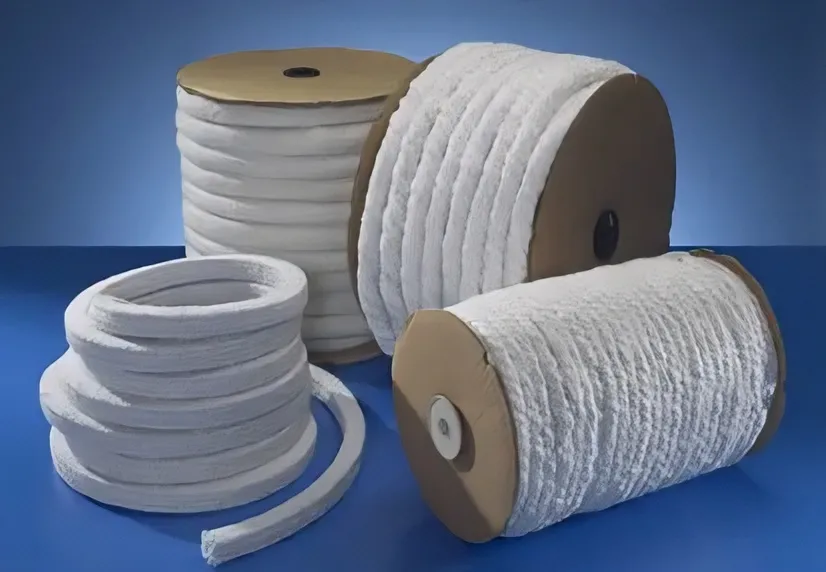
Ceramic fiber ropes are flexible, high-temperature sealing materials made from twisted alumina-silica fibers. Their compressibility makes them ideal for sealing irregular gaps in furnace doors, expansion joints, and pipes.
Technical Highlights:
| Property | Specification |
|---|---|
| Diameter | 6–50 mm |
| Maximum Service Temperature | 1,260°C |
| Recovery Rate | >90% after compression |
| Chemical Resistance | Excellent against most industrial gases |
Applications and Benefits:
- Seals furnace doors, joints, and high-temperature piping systems.
- Low thermal conductivity reduces heat loss at joints.
- Resists chemical attack from gases and minor slag splashes.
Practical tip: Combine ceramic fiber rope with refractory coatings at door edges for maximum thermal insulation and minimal heat leakage.
Real-world insight: Many steel heat-treatment facilities report reduced heat loss by 25–30% after replacing conventional gaskets with ceramic fiber ropes.
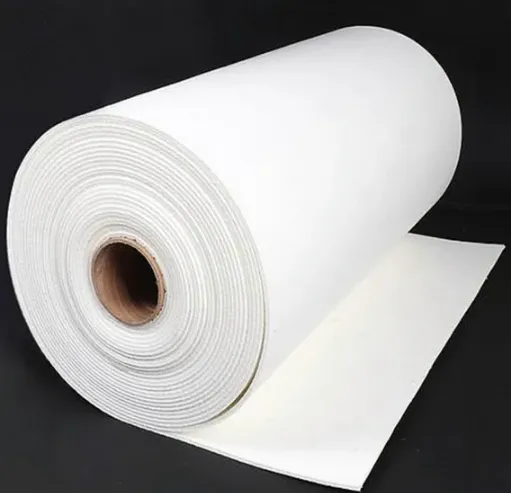
3. Ceramic Fiber Paper
Ceramic fiber paper is thin, lightweight insulation suitable for thermal barriers, gaskets, and under-refractory coatings. Its flexibility allows it to conform to irregular surfaces where boards or blankets are impractical.
Technical Highlights:
| Property | Specification |
|---|---|
| Thickness | 0.5–3 mm |
| Density | 160–220 kg/m³ |
| Maximum Service Temperature | 1,260°C |
| Thermal Conductivity (800°C) | 0.12 W/m·K |
Applications and Benefits:
- Lining furnace surfaces before applying castable refractories to improve insulation efficiency.
- Gaskets and thermal barriers in ovens and kilns.
- Lightweight and easy to handle, reducing labor costs during installation.
Expert tip: Use paper in combination with blankets in layered configurations to improve insulation in complex geometries.
Real-world example: A ceramic tile manufacturing facility replaced 1–2mm traditional fiber sheets with ceramic fiber paper, resulting in more consistent kiln temperature profiles and reduced energy consumption.
4. Ceramic Wool Insulation
Ceramic wool is available in loose or blanket form and provides lightweight, flexible, high-temperature insulation suitable for large cavities and industrial furnaces.
Technical Highlights:
| Property | Specification |
|---|---|
| Density | 80–120 kg/m³ |
| Maximum Service Temperature | 1,260°C |
| Thermal Conductivity (800°C) | 0.13 W/m·K |
| Compression Recovery | >85% |
Applications and Benefits:
- Ideal for furnace linings, industrial boiler insulation, and high-temperature pipes.
- Excellent thermal shock resistance, ensuring long-term durability.
- Can be combined with boards to maximize insulation performance and minimize energy loss.
Installation tip: When using blankets, ensure full coverage with minimal compression to maintain optimal thermal performance.
Real-world insight: Combined wool and board installations in European glass kilns led to 10–15% energy savings, with faster startup times.
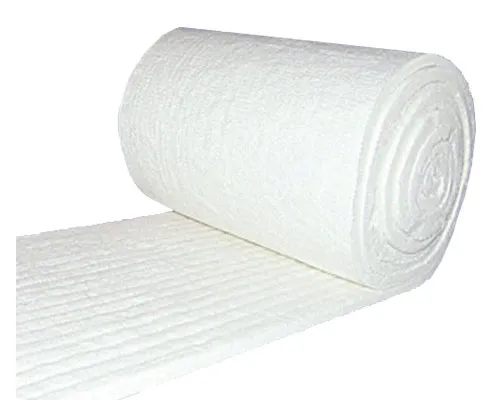
If your project requires the use of Ceramic Fiber Blanket, you can contact us for a free quote.
Performance Comparison of Ceramic Fiber Products
| Product | Density (kg/m³) | Max Temp (°C) | Thermal Conductivity (W/m·K) | Typical Use |
|---|---|---|---|---|
| Board | 200–300 | 1,400 | 0.14 | Furnace walls, doors |
| Rope | 6–50 mm dia | 1,260 | 0.12–0.15 | Seals, joints, pipes |
| Paper | 0.5–3 mm thick | 1,260 | 0.12 | Gaskets, undercoatings |
| Wool | 80–120 | 1,260 | 0.13 | Blankets, loose fill insulation |
Source: Industrial Insulation Handbook 2023.
Note: Provides a quick comparison for selecting the right product based on application needs and operating environment.
Energy Efficiency and Cost Savings
| Furnace Type | Traditional Brick Thickness (mm) | Ceramic Fiber Board Thickness (mm) | Energy Savings (%) |
|---|---|---|---|
| Aluminum Melting | 180 | 50 | 35–40 |
| Steel Heat Treatment | 200 | 60 | 30–35 |
| Glass Kiln | 150 | 45 | 25–30 |
Source: Thermal Engineering Research, 2022.
Tips: Thinner ceramic fiber linings maintain insulation performance, reduce furnace weight, and cut operational costs.
Installation and Safety Best Practices
How to Install Ceramic Fiber Products Safely and Effectively?
- Always wear gloves, masks, and protective clothing.
- Boards should be slightly compressed during installation for better contact.
- Rope should be packed tightly into joints to maximize sealing performance.
- Paper should be cut cleanly with minimal fiber release.
- Wool blankets should be layered without compression to maintain insulation efficiency.
Tips: Inspect insulation annually for shrinkage, cracks, or chemical degradation. Replace damaged sections immediately to maintain performance.
FAQ
1. What are ceramic fiber products used for?
Ceramic fiber products are used for high-temperature insulation in industrial furnaces, kilns, boilers, and pipes. They help reduce heat loss, improve energy efficiency, and protect equipment.
2. What types of ceramic fiber products are available?
The main types are: Ceramic Insulation Boards, Ceramic Fiber Ropes, Ceramic Fiber Papers, and Ceramic Wool Insulation, each suited for specific applications and thermal requirements.
3. What is the maximum temperature for ceramic fiber products?
Boards can handle up to 1,400°C, while ropes, papers, and wool are typically rated for up to 1,260°C, depending on density and fiber composition.
4. Can ceramic fiber products replace traditional firebricks?
Yes, in many cases, boards and blankets can replace firebricks for insulation purposes, offering lighter weight, faster heat-up, and reduced energy consumption. Heavy-load areas may still require brick support.
5. Are ceramic fiber products safe to handle?
Yes, but precautions like gloves, masks, and protective clothing are recommended during installation to minimize fiber inhalation or skin irritation. Low-bio-soluble fibers reduce health risks.
6. How long do ceramic fiber products last?
Under continuous high-temperature conditions, properly installed boards, ropes, papers, and wool typically last 3–5 years. Maintenance and inspection can extend service life.
7. Can ceramic fiber ropes be used for sealing furnace doors and joints?
Yes, ceramic fiber ropes are highly compressible and heat-resistant, making them ideal for sealing expansion joints, furnace doors, and high-temperature piping.
8. How should ceramic fiber boards and blankets be installed?
Boards should be slightly compressed for optimal contact. Wool blankets should be layered without excessive compression. Paper should be cut cleanly and placed to cover irregular surfaces.
9. Do ceramic fiber products provide energy savings?
Yes, replacing traditional refractories with ceramic fiber boards, blankets, or ropes can reduce heat loss by 25–40%, depending on furnace type and lining thickness.
10. Where can I find official standards for ceramic fiber products?
Industry standards include ASTM (C167, C201, C356) and ISO specifications for thermal insulation. These provide guidelines for thermal conductivity, shrinkage, and mechanical properties.