
When scrap rates creep up and inclusion-related rejects start eating into your margins, the filter is usually the first thing that gets blamed—and honestly, it should be. A poorly made ceramic foam filter can collapse mid-pour, shed particles into the melt, or simply fail to catch the oxides and dross that ruin mechanical properties downstream. That is exactly why sourcing from reliable ceramic foam filter manufacturers matters more than most procurement teams realize.
The smelting of aluminum alloy is a critical step in the overall aluminum processing chain. The purification and refinement treatment technology during smelting—specifically the removal of non-metallic inclusions through flux treatment inside the furnace and ceramic foam filtration outside the furnace—has long been recognized as one of the most important methods for aluminum liquid purification. This two-step approach, combining internal flux refinement with external ceramic foam filtration, represents best practice in modern foundry operations.
Years of evaluation across aluminum, copper, and iron casting facilities show that the gap between a dependable filtration supplier and a mediocre one is far from subtle. It becomes evident in X-ray reject rates, tooling wear, and ultimately in whether end customers keep reordering. This guide breaks down what separates trustworthy ceramic foam filter manufacturers from the rest—and why AdTech, based in China’s aluminum-industry heartland, consistently ends up on shortlists for foundries that cannot afford filtration failures.
What Is a Ceramic Foam Filter and Why Does It Work?
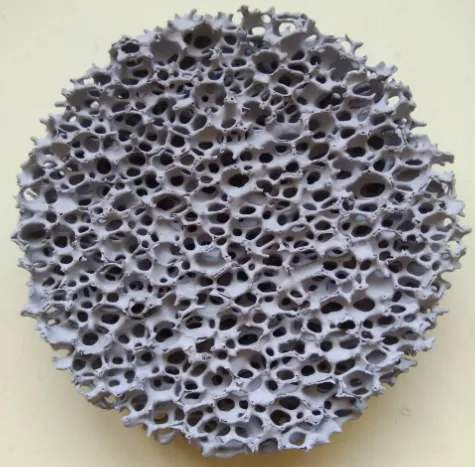
Before diving into supplier selection criteria, it helps to understand what actually makes ceramic foam filters so effective. A foam ceramic filter is a porous ceramic product with an open porosity rate of up to 80% and a bulk density of 0.3–0.6 g/cm³. Its unique quasi-three-dimensional network skeleton structure features interpenetrating pores that create an enormous surface area for capturing inclusions as molten metal flows through.
The history of this technology is worth noting. The earliest foam ceramic filter was successfully developed in 1978 in China and first applied in aluminum alloy casting systems. In April 1980, this breakthrough research was presented at the reputable American Foundry Annual Conference, marking the technology’s entry onto the global stage. Since then, foam ceramic filter materials have been developed and deployed worldwide, becoming a standard solution in the metallurgical industry.
The manufacturing process itself reveals why reliable ceramic foam filter manufacturers must maintain tight process control. The production typically uses a three-dimensional network structure with organic foam plastic featuring interconnected pores as a carrier. This carrier is immersed in a special thixotropic ceramic slurry, then a rolling process ensures the ceramic coating spreads evenly across the skeleton of the carrier. The coated foam is then dried, solidified, and fired at high temperatures. Every stage—slurry formulation, coating consistency, drying rate, and sintering profile—directly impacts the final filter performance.
This is why not all ceramic foam filter manufacturers produce equivalent results, even when using nominally similar specifications. The difference between a well-made filter and a substandard one lies in the invisible details of process control.
Why Does Choosing Reliable Ceramic Foam Filter Manufacturers Actually Matter?
Let’s skip the obvious answer (“quality”) and get specific. Ceramic foam filters sit at a critical control point in the molten metal process. They are the last line of defense before metal enters the mold cavity. If a filter fails—whether through thermal shock cracking, inadequate pore uniformity, or poor priming behavior—you are looking at:
- Inclusion defects that only surface during machining or, worse, in service
- Porosity clusters that weaken fatigue life in structural castings
- Unplanned downtime when a filter collapses and blocks the gating system
- Customer chargebacks that dwarf the cost of the filter itself
A single automotive wheel rejected at the OEM level can cost 50–200× what the filter cost. This is not a commodity purchase—it’s a risk management decision.
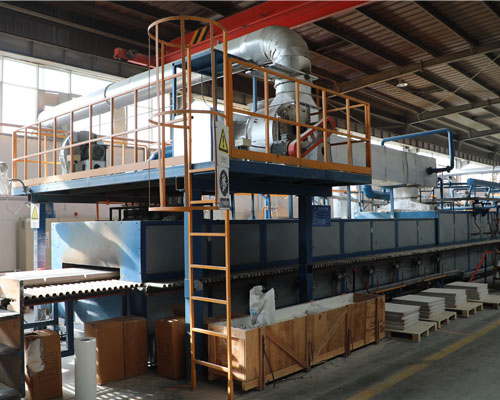
The difference between reliable ceramic foam filter manufacturers and unreliable ones comes down to process control: raw material consistency, slurry formulation, kiln temperature profiling, and final inspection rigor. These are things you cannot see on a spec sheet but absolutely feel on the production floor.
What Makes a Ceramic Foam Filter Manufacturer Truly Reliable?
Consistent Raw Material Sourcing
The base material—whether alumina, silicon carbide, zirconia, or a blend—determines everything. Reliable ceramic foam filter manufacturers lock in supply agreements with verified mineral sources and run incoming material analysis on every batch. At AdTech, raw materials go through XRF (X-ray fluorescence) and particle size distribution testing before they ever touch a mixing tank. That sounds basic, but you would be surprised how many suppliers skip this step and wonder why their filters behave differently from lot to lot.
Repeatable Manufacturing Process
Foam replication—the process of impregnating polyurethane foam with ceramic slurry, then burning out the organic template—is deceptively tricky. Slurry viscosity, immersion time, excess slurry removal, drying rate, and sintering profile all have to be controlled within tight windows. AdTech runs a fully automated slurry coating line with real-time viscosity monitoring and programmable kiln curves. The result is pore-per-inch (PPI) consistency that stays within ±2 PPI across an entire production run.
Rigorous Quality Inspection
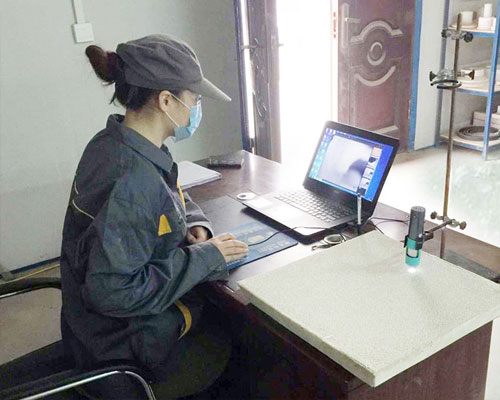
Every reputable manufacturer tests compressive strength and porosity. What sets the best apart is how much they test and what they do with the data. AdTech performs the following on every production batch:
| Inspection Parameter | Test Method | Acceptance Standard |
|---|---|---|
| Compressive Strength (cold) | ASTM C133 equivalent | ≥ 1.0 MPa (for 30 PPI alumina) |
| Porosity (open cell) | Archimedes method | 80–90% |
| Thermal Shock Resistance | 3 cycles, 1100 °C → water quench | No visible cracking |
| Chemical Composition (Al₂O₃ content) | XRF analysis | ≥ 84% for standard alumina grade |
| Dimensional Tolerance | Manual + laser gauge | ±1.5 mm on length/width |
Data reflects AdTech’s internal QC protocol for alumina-based ceramic foam filters, aligned with industry benchmarks published by the American Foundry Society (AFS).
How Are Ceramic Foam Filters Applied in Production?
There are two primary application modes for ceramic foam filters in the purification of deformed aluminum alloy melt, and reliable ceramic foam filter manufacturers should understand both:
Mode 1: Semi-continuous casting line
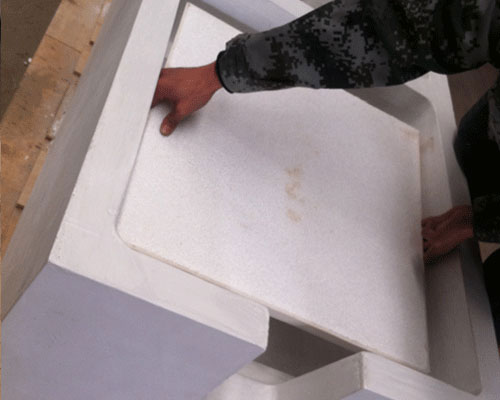
In this configuration, flux powder is used to refine the melt inside the furnace, while foam ceramic filter plates are installed outside the furnace for final filtration. The filter plate must be replaced after each casting cycle. To enhance purification effectiveness, some advanced foundries have also integrated trough-type online degassing units before the filtration stage. This combination of degassing + filtration represents the current state-of-the-art in aluminum purification.
Mode 2: Continuous casting and rolling line
Here, the filter replacement cycle is determined based on the mechanical integrity of the filter plate—essentially when it begins to show signs of degradation rather than on a fixed schedule.
The selection of filter plate size is determined by two factors: the unit time flow rate of molten aluminum and the total volume of molten aluminum to be processed. Meanwhile, the choice of pore size (PPI) is driven by the cleanliness requirements of the final aluminum product. The higher the cleanliness requirement, the smaller the pore size selected. A 10 PPI filter might suffice for general engineering castings, while 40 or 50 PPI filters become necessary for premium aerospace or automotive components.
It is important to understand that foam ceramic filtration is the final stage of aluminum liquid purification. Prior to this step, flux powder spraying refinement or online degassing unit removes the bulk of inclusions and hydrogen. However, the remaining impurity phase particles are increasingly subtle and diffuse. How to promote the accumulation, growth, and hydrogen adsorption of these fine impurities during foam ceramic filtration—rather than relying solely on the mechanical “filter cake” interception effect—is the key challenge that next-generation ceramic foam filter materials are designed to address.
Which Ceramic Foam Filter Types Do Reliable Manufacturers Offer?
Not every casting application needs the same filter. A manufacturer worth partnering with should offer a range of materials and specifications—not just a one-size-fits-all product. Here is how the main types break down:
| Filter Material | Typical PPI Range | Max Service Temp | Primary Application |
|---|---|---|---|
| Alumina (Al₂O₃) | 10–60 PPI | 1200 °C | Aluminum alloy casting |
| Silicon Carbide (SiC) | 10–40 PPI | 1500 °C | Iron and steel casting |
| Zirconia (ZrO₂) | 10–30 PPI | 1700 °C | Steel and superalloy casting |
| Carbon-Bonded Alumina | 10–30 PPI | 1100 °C | Copper and bronze casting |
Temperature and PPI data sourced from ceramic engineering references and AdTech product datasheets.
AdTech manufactures all four categories at its Jiaozuo, Henan production base and maintains ready stock of the most common sizes (12″, 15″, 17″, 20″, 23″, and 26″ square filters) in 10, 20, 30, 40, 50, 60, 70 and 80 PPI. If you need a custom size or chemistry—we have the formulation flexibility to do it. You can explore the full catalog at AdTech’s product page.
How Do You Evaluate Ceramic Foam Filter Quality Before Committing to a Supplier?
This is where a lot of buyers get tripped up. Spec sheets look similar across suppliers. Here is what I actually recommend doing:
1. Request a Trial Batch—Then Break a Few Filters
Literally. Snap a filter in half and look at the cross-section. Are the cell walls uniform? Is there excess slurry clogging the interior cells (a common defect called “blinding”)? Are there visible cracks or weak spots near the edges? A well-made filter should have an open, consistent internal structure all the way through—not just on the surface.
2. Run a Priming Test
Set a filter in a test frame and pour molten aluminum at your normal temperature. A good filter should prime (begin passing metal) within 2–3 seconds at 720–740 °C for standard aluminum alloys. If it takes longer, or if it primes unevenly, you will get turbulence and reoxidation—defeating the whole purpose of filtering.
3. Check the Packaging
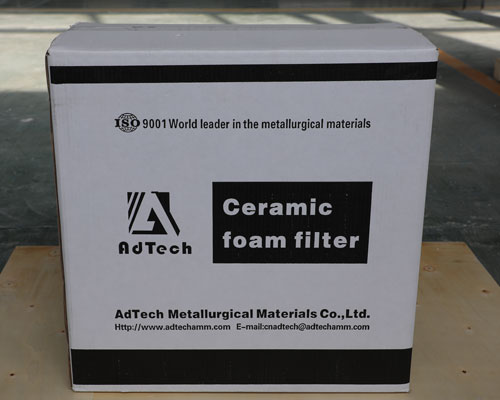
This sounds trivial, but it isn’t. Ceramic foam filters are fragile. Reliable ceramic foam filter manufacturers invest in proper packaging—individual shrink-wrap, foam separators, reinforced cartons, and palletized shipping. AdTech ships filters in compartmentalized cartons with moisture-barrier film specifically to prevent breakage and humidity damage during ocean freight. I have seen competitors ship filters loose in a box with newspaper as padding. You get what you pay for.
4. Ask for SPC Data
Statistical process control charts from recent production runs tell you more than any sales pitch. If a supplier cannot (or will not) share Cpk values for critical dimensions and strength, that is a red flag.
What Are the Most Common Problems Caused by Low-Quality Ceramic Foam Filters?
I want to be concrete here because these are issues I have personally seen at casting plants that were trying to save a few cents per filter:
- Filter cracking during preheat: Caused by poor thermal shock resistance. The filter fractures before metal even touches it, sending ceramic fragments into the mold.
- Partial priming: Metal channels through a few cells while the rest of the filter stays dry. You get reduced effective filtration area and higher metal velocity through the open channels—leading to turbulence and new oxide formation.
- Shedding / erosion: Weak cell walls erode under metal flow, introducing ceramic inclusions that are nearly impossible to distinguish from oxide inclusions in X-ray inspection.
- Inconsistent PPI: A nominally “30 PPI” filter that actually varies from 25–35 PPI across its surface will produce inconsistent flow rates and unpredictable metallurgical results.
Every one of these failure modes traces back to manufacturing process control—which is exactly what separates reliable ceramic foam filter manufacturers from the pack.
AdTech Real Case: Transforming a Turkish Billet Casting Line
One of the most instructive projects AdTech completed in recent years involved a secondary aluminum smelter in Izmir, Turkey producing 6063-series extrusion billets. The plant was running a horizontal DC (direct chill) casting line with an annual output of roughly 30,000 metric tons. Their existing ceramic foam filters—sourced from a regional supplier—were causing persistent problems:
- Reject rates for billet surface defects (oxide trails, pinhole porosity) averaged 4.8%, well above their target of 2%.
- Filters were cracking during preheat approximately once per 15 casts, forcing line stoppages of 30–45 minutes each time.
- Metallurgical sampling showed inclusion counts (measured by PoDFA analysis) in the 0.8–1.2 mm²/kg range—too high for their automotive-grade extrusion customers.
The plant’s quality manager reached out to AdTech in mid-2024 after seeing the company’s products at the ALUMINIUM trade fair in Düsseldorf. AdTech’s technical sales team proposed a switch to their Al₂O₃-based 30 PPI filters in 17″ × 17″ × 50mm format, combined with a modified preheat protocol.
Here is what happened over the next six months:
Phase 1 – Trial (first 2 months): AdTech shipped 500 filters for a controlled trial. Their applications engineer flew to Izmir and spent four days on-site, observing the existing process and calibrating the preheat burner to match the filter’s thermal mass. They recommended extending the preheat time from 4 minutes to 6.5 minutes at a lower flame intensity—this eliminated the thermal shock cracking entirely.
Phase 2 – Full adoption (months 3–6): The plant transitioned fully to AdTech filters. Reject rates dropped from 4.8% to 1.6%. PoDFA inclusion counts came down to 0.3–0.5 mm²/kg. The cracking issue did not recur in over 1,200 consecutive casts.
Phase 3 – Ongoing partnership: The Turkish smelter now orders approximately 6,000 filters per quarter from AdTech under a rolling supply agreement. They have since expanded the relationship to include AdTech’s degassing equipment and hot-top casting components.
What made this work was not just the filter itself—it was AdTech’s willingness to put an engineer on a plane, diagnose the root cause (which turned out to be preheat practice as much as filter quality), and stay involved until the numbers moved. That is what reliable ceramic foam filter manufacturers actually do. They solve problems, not just ship boxes.
How Does AdTech Compare to Other Ceramic Foam Filter Manufacturers Globally?
This is a fair question, and I want to answer it honestly. There are several established players in this space—Pyrotek, SELEE (now part of Porvair), and Drache are well-known names with strong reputations in aluminum filtration. AdTech does not claim to be bigger than these companies. What AdTech does offer is:
- Price-performance ratio that is genuinely difficult to beat. Because manufacturing is fully vertically integrated in China—from raw material processing through sintering and QC—AdTech’s cost structure allows them to compete on price without cutting corners on quality.
- Technical support with actual follow-through. Not a call center—real engineers who understand casting metallurgy.
- Flexibility on order size and customization. Many larger manufacturers have high MOQs and long lead times for non-standard sizes. AdTech can turn around custom orders in 2–3 weeks.
- Proven track record across 40+ countries, with particular depth in the Middle East, Southeast Asia, Eastern Europe, and South America.
| Evaluation Criteria | AdTech | Typical Large Multinational | Typical Low-Cost Supplier |
|---|---|---|---|
| Product Consistency (Cpk > 1.33) | Yes | Yes | Often No |
| On-site Technical Support | Included | Paid / limited availability | Rarely available |
| Custom Sizes & Chemistries | 2–3 week lead time | 6–8 week lead time | Limited capability |
| Standard Sizes in Stock | Yes (7″–23″) | Yes | Inconsistent |
| Price Competitiveness | High | Moderate | High (but quality risk) |
| ISO 9001 Certification | Yes | Yes | Sometimes |
Comparison based on publicly available supplier information and direct industry experience. Multinational data generalized across major Western filtration brands.
What Should You Ask a Ceramic Foam Filter Supplier Before Placing an Order?
If you are currently evaluating ceramic foam filter manufacturers—or thinking about switching—here are the questions I would ask. These are the ones that separate serious manufacturers from traders reselling someone else’s product:
- Where are your filters actually manufactured? (Many “manufacturers” are actually trading companies.)
- Can you share sintering temperature profiles for the specific product I’m ordering?
- What is your batch-to-batch compressive strength variation?
- Do you test every batch for thermal shock resistance, or just sample periodically?
- Can you provide PoDFA or LiMCA data from end users who have validated your filters?
- Will you send a technical representative to my plant for the initial trial?
- What is your defect rate on incoming inspection at customer sites? (A reliable manufacturer should know this number and be willing to share it.)
AdTech’s answer to all seven is transparent and documented. If a prospective supplier hesitates on any of them, keep looking.
How Is the Ceramic Foam Filter Market Evolving?
The global ceramic foam filter market is projected to grow at roughly 5–6% CAGR through 2030, driven by tightening quality standards in automotive lightweighting (more aluminum = more filtration demand) and infrastructure-driven steel consumption in developing economies.
Key trends to watch:
- Finer pore sizes gaining adoption: 40 and 50 PPI filters, once considered specialty items, are becoming standard for premium aluminum castings. AdTech has invested in production capacity specifically for these finer grades.
- Dual-stage filtration: Some advanced casting lines now use a coarse filter (10–20 PPI) followed by a fine filter (40–50 PPI) in series. This extends filter life while achieving very low inclusion levels.
- Sustainability pressure: Foundries are being asked to document waste streams. Ceramic foam filters are single-use, so there is growing interest in filters that maximize metal yield (less metal retained in the filter after casting). AdTech’s optimized cell geometry is designed specifically to minimize metal retention.
Why Do Foundries Keep Coming Back to AdTech?
I could give you the marketing answer—quality, service, value. But the real answer, from conversations with plant managers who use AdTech filters, is simpler: the filters work, and when something goes wrong, AdTech picks up the phone.
That is what “reliable” means in practice. It is not a buzzword. It is a filter that does not crack at 3 AM during a night shift pour. It is a supplier who notices that your order pattern changed and asks if everything is okay with the product. It is an engineer who will sit in your cast house for three days to figure out why your inclusion counts spiked.
If you are looking for reliable ceramic foam filter manufacturers who combine genuine technical capability with competitive pricing and responsive support, AdTech deserves a serious look. Request a free sample batch, test it head-to-head against your current supplier, and let the results speak.
AdTech workers strictly control quality of Ceramic Foam Filter Plates
FAQ
1. What is the difference between 30 PPI and 40 PPI ceramic foam filters?
PPI stands for pores per inch. The higher the number, the finer the filtration and the smaller the inclusions it captures. 30 PPI works well for general aluminum casting; 40 PPI is the right call when your end customer is running X-ray or ultrasonic inspection on finished parts. The trade-off is flow resistance—finer filters need longer preheat and slightly more metallostatic pressure to prime. When in doubt, run a PoDFA analysis on your cast metal and let the inclusion count guide the decision.
2. How long does a ceramic foam filter last, and when should it be replaced?
In semi-continuous DC casting, filters are single-use—one filter per cast. In continuous casting and rolling lines, replacement is condition-based: reduced flow rate, visible thermal damage, or edge chipping are all signs it is time to swap it out. Never push a filter past its design capacity to save a few dollars. A mid-cast failure and the contamination it causes will cost far more than the filter itself.
3. Why do ceramic foam filters crack during preheat, and how can I prevent it?
Almost always a combination of two things: substandard filter material and too-aggressive preheat practice. Applying high-intensity direct flame too quickly creates a steep temperature gradient across the filter body—the surface heats before the core catches up, and the stress cracks it. The fix is simple: extend preheat time and reduce initial flame intensity. A manufacturer worth working with will give you specific preheat parameters for their product rather than leaving you to figure it out yourself.
4. What standard sizes do ceramic foam filters come in?
Square formats from 7×7 inches up to 23×23 inches are the industry standard, with thicknesses typically between 40–60mm. Common PPI ratings are 10, 20, 30, 40, and 50. For non-standard dimensions or custom chemistry, you need a manufacturer with real in-house formulation capability—not a trading company pulling from someone else’s stock. Capable manufacturers can typically turn around custom orders in 2–3 weeks.
5. Can ceramic foam filters be used for metals other than aluminum?
Yes, but material selection matters. Alumina filters handle aluminum and some copper alloys up to around 1200°C. Silicon carbide filters are suited for iron and steel casting up to 1500°C. Zirconia filters cover high-alloy steels and superalloys where temperatures push toward 1700°C. Using the wrong filter material for your metal is a fairly common mistake—it leads to premature breakdown or outright failure mid-pour.
6. How do I know if a supplier is actually a manufacturer or just a trading company?
Ask for sintering temperature profiles and batch-level QC records. A real manufacturer can produce these without hesitation. A trading company cannot, because they do not control the process. Better yet, request a factory audit—video or in-person. Also pay attention to whether their technical contact has actual casting floor experience or just a sales background. That difference becomes obvious within the first five minutes of a technical conversation.
7. What certifications should a reliable ceramic foam filter manufacturer have?
ISO 9001 is the baseline—it confirms a documented quality management system is in place. If you supply automotive OEMs, IATF 16949 compliance across your supply chain may also be required. Beyond certificates, always ask for third-party lab reports on compressive strength, open porosity, and chemical composition. Paperwork tells you a process exists; test data tells you whether it actually works.
8. What is the “filter cake” effect, and why does it matter?
As casting progresses, captured inclusions build up on the upstream face of the filter, forming a layer that actually improves filtration efficiency over time—it catches finer particles that the ceramic structure alone might miss. The limitation is that mechanical interception alone is not enough for very high cleanliness requirements. Advanced filter formulations go further by incorporating surface chemistry that actively adsorbs fine inclusions and hydrogen-related defects rather than just blocking them physically.
9. Do I need both online degassing and ceramic foam filtration, or will one do the job?
They do different things. Degassing removes dissolved hydrogen and floats larger inclusion clusters before the metal reaches the filter. Filtration catches the fine solid inclusions that degassing leaves behind. Neither replaces the other. For anything where fatigue life and mechanical properties are critical—automotive, aerospace, thin-wall extrusions—running both in series is simply the standard. Skipping one to cut costs almost always shows up in your rejection data eventually.
10. How do I start a trial with AdTech?
Reach out through the AdTech Website with the basics: alloy type, pour temperature, current filter size, and what problem you are trying to fix. The technical team will recommend a specific grade and size, ship a trial batch, and provide written setup guidelines including preheat parameters. For more complex applications, an on-site visit can be arranged. After the trial, they will review your before-and-after data with you—rejection rates, inclusion counts, process observations—and adjust from there. The point is to show you a measurable result before you commit to anything.