
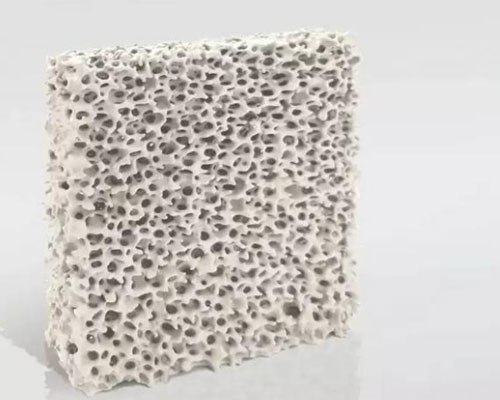
Ceramic foam material is a class of highly porous ceramics characterized by a three-dimensional interconnected structure. Unlike traditional dense ceramics, it is designed to combine lightweight structure, high permeability, and thermal stability, making it suitable for demanding industrial environments.
In industrial practice, ceramic foam material is not evaluated only by its composition, but by how consistently its internal structure can be reproduced under large-scale production conditions. Small variations in pore uniformity or coating thickness can lead to significant differences in performance, especially in high-temperature or flow-dependent applications.
While it is widely known for use in metal filtration, ceramic foam material itself is a foundational engineering material used across multiple industries, including catalysis, thermal insulation, and chemical processing.
Understanding its structure and manufacturing process is essential, because in practice, performance is determined more by microstructure than by composition alone.
What Is Ceramic Foam Material and Why Is It Important
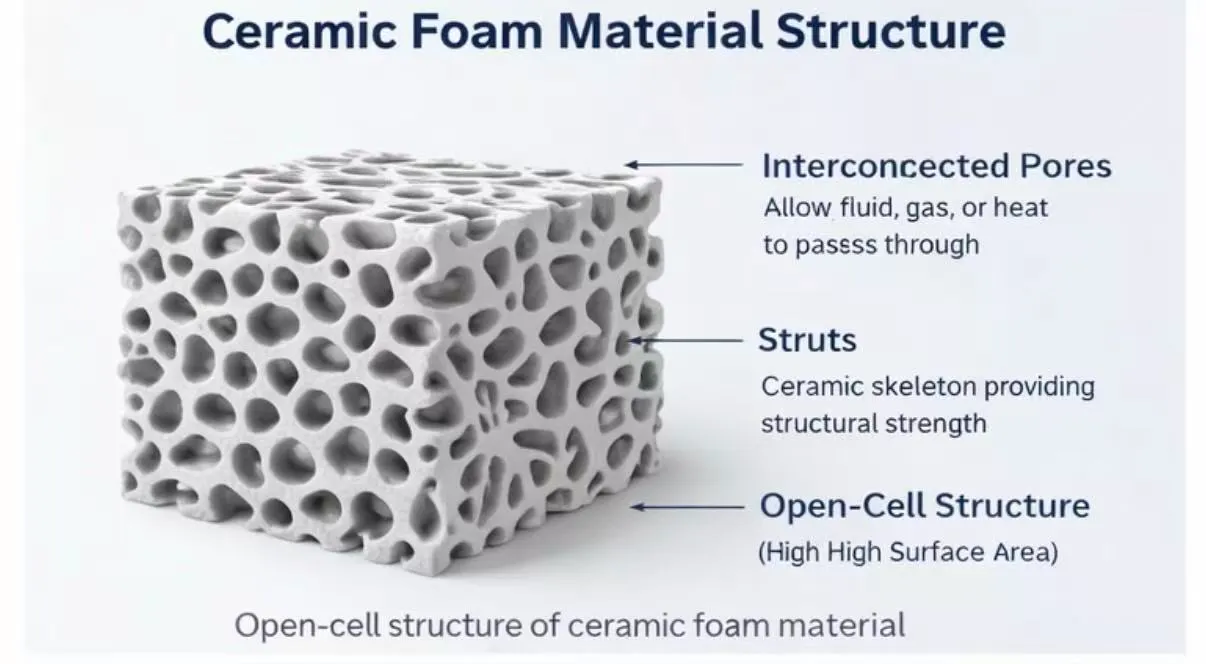
Ceramic foam material is an open-cell porous ceramic produced by replicating a polymer foam template. The result is a rigid skeleton with interconnected pores that allow fluid, gas, or heat to pass through.
Key structural features:
- Porosity: typically 80–90%
- Open-cell interconnected network
- Low bulk density
- High surface area
Unlike closed-cell ceramics, this open structure enables mass transfer and flow control, which is why the material is widely used in systems requiring permeability.
From a materials science perspective, ceramic foam is closer to a functional structure material than a simple refractory product.
How Is Ceramic Foam Material Manufactured Step by Step
The manufacturing process defines the final structure and performance. Even small variations can significantly affect strength and permeability.
Typical production steps:
- Polyurethane foam template preparation
A flexible foam with controlled pore density is selected - Slurry impregnation
The foam is coated with ceramic slurry (e.g., alumina-based) - Excess slurry removal
Compressed air or rollers ensure uniform coating thickness - Drying and curing
Stabilizes the coated structure - High-temperature sintering (≈1600–1700°C)
The organic template burns out, leaving a ceramic skeleton
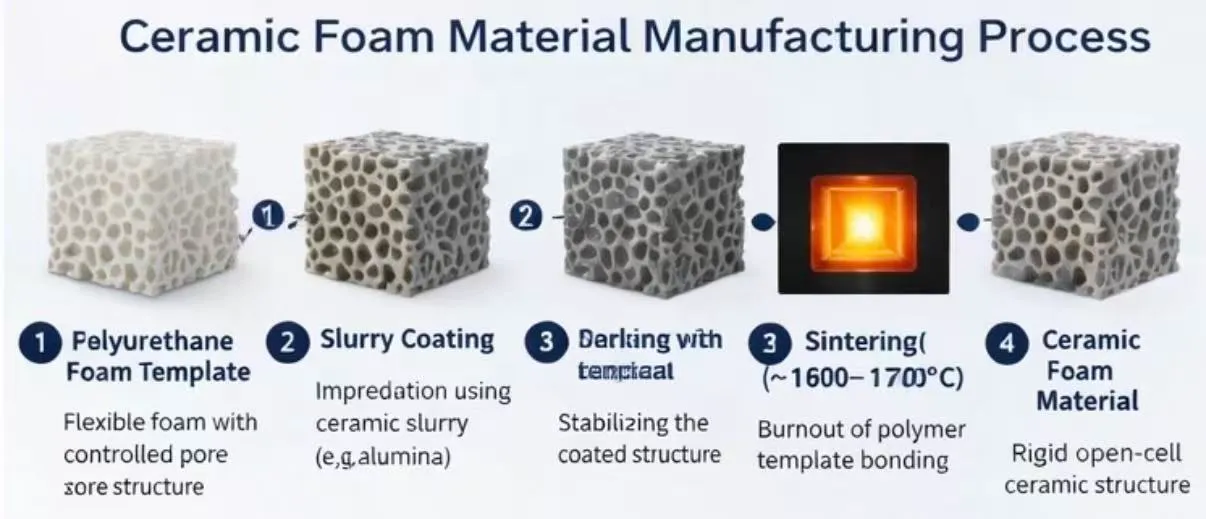
Table 1 – Key Manufacturing Parameters
| Parameter | Typical Range | Impact on Material |
|---|---|---|
| Slurry viscosity | Medium | Controls coating uniformity |
| Sintering temperature | 1600–1700°C | Determines strength |
| Coating thickness | Controlled | Affects pore openness |
| Template quality | High | Defines pore structure |
Inconsistent coating is one of the most common causes of weak structure and pore blockage.
Another common issue in production is incomplete burnout of the polymer template, which can leave residual carbon or structural defects after sintering. This often results in weak points within the ceramic skeleton and reduces thermal shock resistance.
In high-quality production lines, strict control of heating rate and atmosphere during sintering is essential to ensure complete template removal and uniform ceramic bonding.
What Determines the Microstructure of Ceramic Foam Material
The defining feature of ceramic foam material is its three-dimensional microstructure.
This structure determines:
- Permeability
- Mechanical strength
- Thermal behavior
Key microstructural factors:
- Cell size distribution
- Strut thickness (ceramic skeleton thickness)
- Interconnectivity between pores
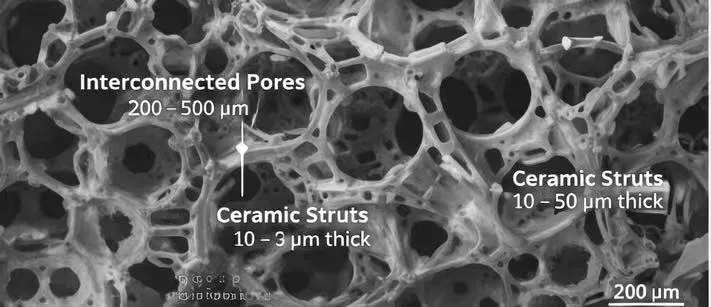
Table 2 – Structure vs Performance Relationship
| Structural Feature | Effect on Performance |
|---|---|
| Larger pores | Higher flow capacity |
| Smaller pores | Higher filtration precision |
| Thick struts | Higher mechanical strength |
| High connectivity | Better permeability |
There is always a trade-off between strength and permeability. Optimizing this balance is the core of material design.
In practical applications, permeability is often correlated with pore size distribution and porosity. For example, materials with higher open porosity (>85%) typically show better flow characteristics but may sacrifice mechanical strength if the strut thickness is not properly controlled.
This is why material design always involves balancing porosity and structural integrity rather than maximizing a single parameter.
What Types of Ceramic Foam Materials Are Available
Ceramic foam materials are classified based on composition.
Common types:
- Alumina (Al₂O₃)
Widely used due to chemical stability and cost balance - Silicon Carbide (SiC)
Higher thermal conductivity and strength - Zirconia (ZrO₂)
Excellent resistance at extreme temperatures
In aluminum-related applications, alumina-based ceramic foam materials are generally preferred due to their chemical compatibility with molten aluminum and relatively stable oxidation behavior. Silicon carbide materials, while stronger, may introduce unwanted reactions in certain alloy systems if not properly controlled.
Table 3 – Material Properties Comparison
| Material | Thermal Stability | Strength | Typical Use |
|---|---|---|---|
| Alumina | High | Moderate | General industrial use |
| SiC | Very high | High | Metallurgy |
| Zirconia | Extreme | Moderate | Aerospace / high-end |
According to ASM International, porous ceramics like alumina and silicon carbide are widely used in applications requiring both structural stability and high-temperature resistance.
What Are the Physical and Thermal Properties of Ceramic Foam Material
Ceramic foam material combines lightweight structure with strong thermal performance.
Typical properties:
- Density: ~0.3–0.6 g/cm³
- Thermal conductivity: low
- Thermal expansion: low and stable
- Thermal shock resistance: high
👉 These properties make it suitable for repeated heating and cooling cycles, which are common in industrial environments.
Where Is Ceramic Foam Material Used Beyond Metal Filtration
Although widely associated with aluminum casting filtration, ceramic foam material is used in many other industrial fields:
1. Catalyst carriers
High surface area supports chemical reactions
2. Thermal insulation systems
Low thermal conductivity reduces heat loss
3. Sound absorption materials
Porous structure dissipates acoustic energy
4. Chemical filtration
Allows fluid flow while capturing particles
According to The American Ceramic Society, porous ceramics are increasingly used in advanced applications due to their multifunctional properties.
This diversity of applications highlights that ceramic foam material should be understood as a platform material, where its structure can be adapted to serve different functional roles beyond a single industry.
Why Does Structure Matters More Than Composition
Although ceramic foam materials are widely associated with filtration in casting processes, their core value lies in their structural properties rather than the application itself.
In molten metal systems, non-metallic inclusions and flow instability are major factors affecting casting quality. Traditional filtration solutions, such as wire mesh or perforated plates, primarily rely on surface interception and are limited in their ability to capture fine inclusions or influence flow behavior.
With the development of porous ceramic materials, especially open-cell ceramic foam structures, filtration mechanisms have evolved significantly. The three-dimensional network allows not only mechanical interception of larger particles, but also deep-bed filtration, where finer inclusions are captured within the internal structure.
At the same time, the interconnected pores contribute to flow rectification. As molten metal passes through the material, turbulence is reduced and the flow becomes more stable, which indirectly improves casting consistency.
From a material perspective, this performance is not achieved by chemical composition alone, but by the combination of pore structure, connectivity, and structural integrity formed during manufacturing.
In practice, improvements in casting yield and reduction in defects are often attributed to this structural advantage rather than filtration as a standalone function.
A common misconception is that material composition alone determines performance.
In practice:
👉 Two ceramic foams with the same material (e.g., alumina) can behave very differently.
The difference comes from:
- Pore uniformity
- Structural integrity
- Manufacturing consistency
👉 Key insight:
Structure defines performance. Composition only sets the baseline.
From an engineering perspective, this is why two suppliers offering the “same material” may deliver completely different performance in real applications. The difference often lies in process control, not raw material selection.
What Is the Difference Between Ceramic Foam Material and Dense Ceramic
| Property | Ceramic Foam Material | Dense Ceramic |
|---|---|---|
| Porosity | High | Low |
| Weight | Light | Heavy |
| Permeability | High | None |
| Strength | Moderate | High |
Foam ceramics are used when flow, heat exchange, or surface interaction is required.
How Do You Ensure Quality and Consistency in Ceramic Foam Material
In industrial use, consistency is critical.
Reliable ceramic foam material requires:
- Uniform pore distribution
- Stable strength across batches
- Controlled shrinkage during sintering
Even small defects can lead to:
- Structural collapse
- Uneven flow behavior
- Reduced service life
In large-scale industrial supply, batch-to-batch consistency is often more important than peak performance. A slightly lower-performing but stable material is usually preferred over a high-performance material with inconsistent quality.
How to Design and Select Ceramic Foam Material for Different Applications
Selecting ceramic foam material is not only about choosing the right composition, but also about understanding how structural parameters influence performance in real applications.
In practice, engineers must balance multiple factors rather than optimizing a single property.
1. Porosity vs Strength Trade-off
Higher porosity improves permeability and reduces flow resistance, but it also weakens the structural integrity of the material.
Lower porosity provides better mechanical strength, but may restrict flow or reduce functional efficiency in applications requiring fluid or gas transfer.
👉 In most industrial scenarios, a balanced porosity range (typically 80–90%) is preferred rather than extreme values.
2. Pore Size Distribution and Uniformity
Uniform pore size distribution ensures consistent performance across the entire material.
Non-uniform structures may lead to:
- Localized flow concentration
- Uneven stress distribution
- Reduced overall efficiency
👉 In filtration-related environments, inconsistent pore structure is one of the main causes of unstable performance.
3. Strut Thickness and Structural Integrity
The thickness of the ceramic skeleton (strut) directly affects:
- Mechanical strength
- Thermal shock resistance
- Durability under repeated use
Thicker struts improve strength but reduce open porosity, while thinner structures increase permeability but may become fragile.
👉 This balance is typically controlled during slurry coating and sintering stages.
4. Thermal Compatibility with Application Environment
Ceramic foam material must match the thermal conditions of its working environment.
Important considerations include:
- Maximum operating temperature
- Thermal expansion behavior
- Resistance to thermal cycling
Mismatch in thermal expansion can lead to cracking or structural degradation over time.
5. Permeability and Flow Behavior
Permeability is influenced by:
- Pore size
- Connectivity
- Overall porosity
Rather than focusing on a single parameter, engineers often evaluate how the structure behaves under actual flow conditions.
👉 In many cases, improving flow stability is more important than simply increasing flow rate.
6. Manufacturing Consistency
Even with the same design parameters, production quality plays a decisive role.
Variations in:
- Slurry viscosity
- Coating thickness
- Sintering conditions
can lead to significant differences in final performance.
👉 This is why supplier capability is often as important as material specification.
7. Application-Oriented Optimization
Different applications require different optimization priorities:
- Filtration systems → balance permeability and capture efficiency
- Thermal systems → prioritize insulation and stability
- Catalyst supports → maximize surface area
👉 There is no “universal best design”—only application-specific optimization.
FAQ
1. What is ceramic foam material made of?
It is typically made from alumina, silicon carbide, or zirconia.
2. How is ceramic foam different from regular ceramic?
It has a porous, open-cell structure instead of a dense structure.
3. What determines its performance?
Mainly the microstructure, not just the material composition.
4. Is ceramic foam material strong?
It has moderate strength but excellent thermal resistance.
5. Can it withstand high temperatures?
Yes, typically above 1200°C depending on material type.
6. Why is porosity important?
It allows flow, heat transfer, and filtration.
7. What industries use ceramic foam material?
Metallurgy, chemical processing, aerospace, and energy.
8. Is it reusable?
Depends on application, but often designed for single or limited use.
9. Can the structure be customized?
Yes, pore size and density can be controlled during production.
10. What is the biggest challenge in production?
Maintaining uniform coating and structural stability.
Related posts:
 Ceramic Foam Filter
 Ceramic Casting Filters
 Molten Aluminum Ceramic Foam Filter
 Ceramic Foam Filter Manufacturing Process
 Ceramic Filter for Foundry
 Ceramic Foam Filter Plates
 Ceramic Foam Filters Manufacturer
 CFF Molten Aluminum Filtration
 Foam Ceramic Filters Manufacturing Process
 Filters for Aluminum Filtration
 Molten Metal Foam Ceramic Filter
 How to Choose Ceramic Foam Filters