
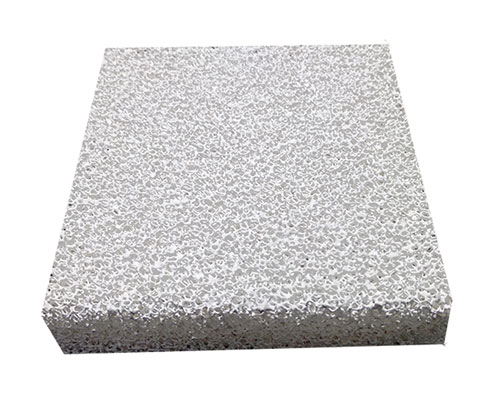
What is Foam Ceramic Filters
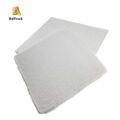
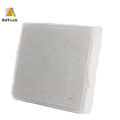
Foam Ceramic Filters are porous filtration materials used in aluminum casting and metal filtration processes to remove non-metallic inclusions and improve melt cleanliness. They were originally developed for high-purity forging aluminum alloys, where strict cleanliness requirements are critical for applications such as aluminum cans and lids, aluminum foil, aerospace extrusion materials, electronic plates, forged components, and metal wires.
In early applications, foam ceramic filters were primarily used in high-quality aluminum castings for aerospace industries, where filtration efficiency directly affected product performance and reliability. As aluminum casting technology evolved, foam ceramic filters became widely adopted in commercial casting and automotive applications, where they play a key role in reducing inclusions, improving surface quality, and enhancing mechanical properties.
Today, foam ceramic filters are considered an essential solution in aluminum filtration systems, helping foundries achieve stable production, lower defect rates, and consistent casting quality.
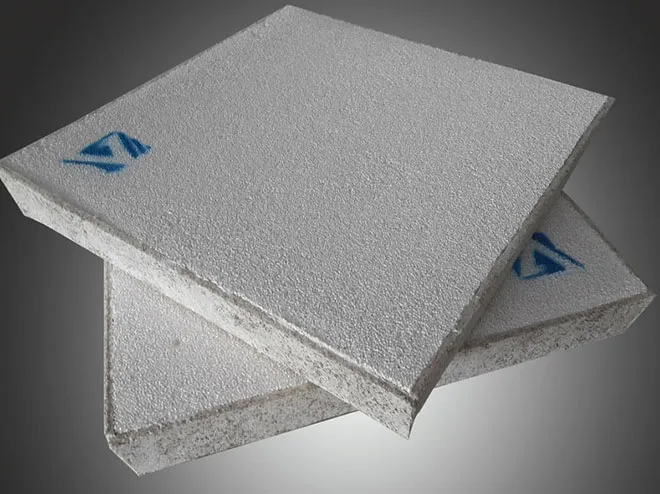
What Foam Ceramic Filters Actually Solve in Aluminum Casting
Foam ceramic filters are widely used in aluminum casting, but their real value is often misunderstood.
Most descriptions stop at “removing inclusions.”
In practice, what foundries care about is different:
👉 Can this filter make my production more stable?
👉 Will it reduce scrap or just slow down pouring?
From real casting operations, foam ceramic filters solve three practical problems:
- Uncontrolled inclusion flow entering the mold
- Turbulent metal flow causing oxide film defects
- Inconsistent casting quality between batches
That’s why they are not just filtration materials—they are part of a process stabilization tool.
Foam Ceramic Filters for Aluminum Casting: What Engineers Look For
When engineers evaluate foam ceramic filters, they don’t start with PPI.
They start with risk points in their process.
Typical questions include:
- Is my melt clean enough for finer filtration?
- Will this filter restrict flow at current pouring speed?
- Can my filtration box ensure proper sealing?
These questions determine whether a filter improves quality—or creates new problems.
What Specifications of Foam Ceramic Filters Actually Matter
Instead of listing generic specs, here is how parameters affect real production:
Table 1: Key Parameters Interpreted from an Engineering Perspective
| Parameter | Typical Value | What It Really Means in Production |
|---|---|---|
| PPI | 10–60 | Controls balance between flow and filtration |
| Porosity | 80–90% | Determines how easily metal passes through |
| Thickness | 15–25 mm | Affects pressure drop and structural strength |
| Material | Al₂O₃ ≥ 95% | Ensures thermal stability and chemical resistance |
| Compressive Strength | ≥ 1.0 MPa | Prevents breakage during installation and pouring |
Two filters with identical specs can behave differently if flow conditions or melt cleanliness differ.
How to Choose Foam Ceramic Filters Without Trial and Error
Most trial-and-error in filtration does not come from the filter itself, but from how it is selected.
In many cases, filters are chosen based on specification alone—such as PPI or thickness—without considering actual process conditions. This often leads to mismatches between filtration capacity and real operating requirements.
In practice, choosing foam ceramic filters based only on specifications, rather than process conditions, is one of the most common causes of unstable filtration performance.
Table 2: PPI Selection Based on Real Casting Conditions
| Casting Condition | Recommended PPI | Why |
|---|---|---|
| High flow / thick sections | 10–20 | Prevents flow restriction |
| Standard casting | 30–40 | Balanced filtration and stability |
| High-quality thin-wall casting | 40–50 | Better inclusion capture |
| Dirty melt (unstable upstream) | Avoid high PPI | Reduces clogging risk |
These differences are not just theoretical—each PPI range behaves very differently under real casting conditions, especially when flow rate and melt cleanliness vary.
👉 Tips:
DON’T CHOOSE HIGHER PPI THAN NECESSARY, it will lead to
- Early clogging
- Flow instability
- Reduced productivity
Custom Pore Design for Different Casting Conditions
In real casting applications, standard specifications are not always sufficient. Different alloys, flow rates, and casting systems often require tailored filtration solutions.
Foam ceramic filters can be designed with a wide range of pore structures, including non-standard apertures, to match specific process conditions. For more details on available specifications and customization options, refer to ceramic foam filters for aluminum casting.
Foam Ceramic Filter Lifespan: What Really Determines It
Filter lifespan is one of the most misunderstood aspects.
It is rarely determined by the filter itself.
Key factors affecting lifespan:
- Inclusion load (most important)
High oxide content dramatically shortens filter life - Flow rate and metal velocity
Higher velocity increases particle impact and accumulation - Head pressure stability
Low pressure leads to uneven penetration - Temperature consistency
Affects viscosity and flow behavior
Table 3: Lifespan vs Operating Conditions
| Condition | Expected Lifespan | Real Risk |
|---|---|---|
| Clean melt + stable flow | Long | Predictable performance |
| Dirty melt + stable flow | Medium | Gradual clogging |
| Clean melt + unstable flow | Unstable | Flow fluctuation |
| Dirty melt + unstable system | Short | Sudden failure |
👉Tips:Filters that “fail suddenly” are usually not defective-they are overloaded by uncontrolled upstream conditions.
Common Foam Ceramic Filters Problems (From Real Foundries)
1. Filter Clogging Too Fast
- Not a filter issue
- Usually caused by insufficient fluxing or degassing
2. No Improvement in Casting Quality
- Often due to metal bypassing the filter
- Caused by poor sealing or installation gaps
3. Slow Pouring or Incomplete Filling
- Filter resistance too high
- PPI mismatch with flow rate
👉Tips: Many filtration problems are incorrectly blamed on the filter, when they are actually caused by process mismatch.
Foam Ceramic Filters Installation: Where Most Failures Happen
Installation is often treated as a simple step, but in practice, it can completely determine whether a foam ceramic filter actually works.
A previous project clearly demonstrated this.
In the early 2020s, a customer from Russia purchased 30 PPI foam ceramic filters (12″ × 12″ × 2″, 1,200 pcs) for a gravity casting line. Shortly after installation, they reported that filtration performance did not meet expectations—defects remained, and filter consumption was higher than normal.
After reviewing on-site conditions, the root cause was identified:
- The filters were not tightly fitted into the filter seat
- No proper sealing material was applied at the edges
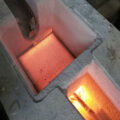
- Molten aluminum partially bypassed the filter instead of passing through it
As a result, even though the filters themselves were functioning correctly, a portion of the melt was never filtered at all.
This case led to an important internal change.
👉 Since then, we have standardized both product design and installation support:
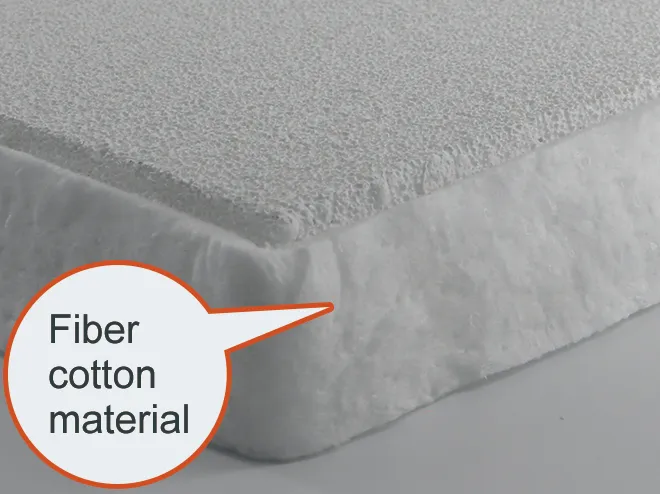
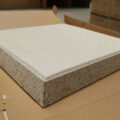
- Each foam ceramic filter is now supplied with pre-attached expansion fiber edges, ensuring a tighter seal during installation
- Installation guidelines have been refined based on real foundry conditions, not just theoretical setups
- For key customers, on-site or remote technical support is provided to verify proper installation
After these improvements, similar issues have been largely eliminated in subsequent projects.
What this means in practice:
Installation errors can have a bigger impact than filter specifications.
But with properly designed products and guided installation, this risk can be effectively controlled.
👉 In other words, while installation is a critical factor, choosing a supplier who has already solved these issues in real applications makes a significant difference.
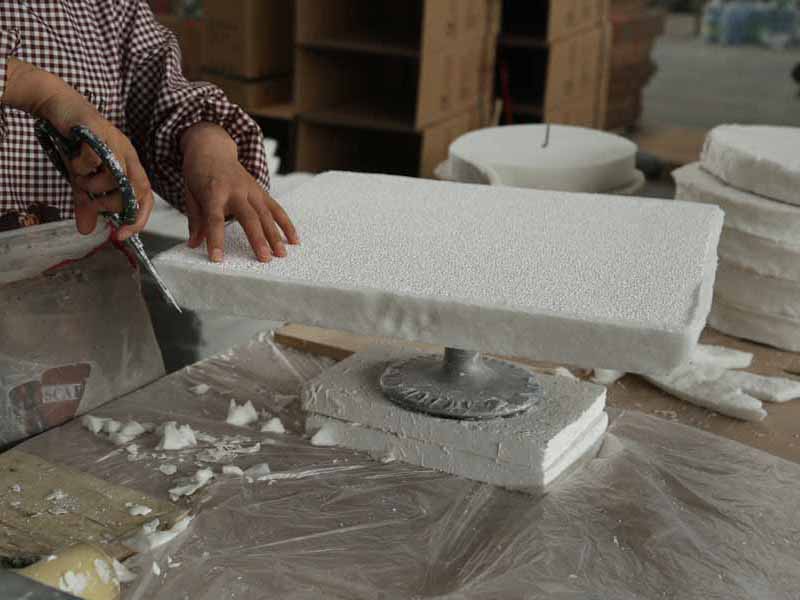
Foam Ceramic Filters Installation Tolerance and Fit Requirements
In practical applications, filter performance depends heavily on installation accuracy—especially dimensional matching.
Typical installation tolerances include:
- Filter seat gap: ≤ 2 mm
- Flatness deviation: ≤ 1 mm
- Edge compression: uniform across all sides
If these conditions are not met, molten aluminum will preferentially flow through the path of least resistance—bypassing the filter entirely.
This is why many filtration failures are not visible during installation, but only appear as quality issues later in production.
For a complete explanation of system design and integration, refer to:
👉Ceramic Foam Filter for Aluminum Casting: Technical Guide to Selection, PPI & Performance
Foam Ceramic Filters vs Mesh Filters in Aluminum Casting
In aluminum casting, mesh filters are sometimes used as a lower-cost alternative. However, their performance differs significantly from foam ceramic filters.
| Aspect | Mesh Filter | Foam Ceramic Filter |
|---|---|---|
| Filtration type | Surface filtration | Deep-bed filtration |
| Inclusion capture | Limited | High efficiency |
| Flow behavior | Minimal control | Stabilized flow |
| Clogging behavior | Rapid blocking | Gradual loading |
In practice, mesh filters may stop large particles, but they do not effectively remove fine inclusions or stabilize flow.
What Determines Foam Ceramic Filters Performance in Real Production
In real casting conditions, foam ceramic filters perform well only when three factors are controlled:
- Melt cleanliness before filtration
- Stable flow and pressure conditions
- Proper installation without bypass
👉 Among these, installation and sealing are often the most underestimated.
FAQ
1. What are foam ceramic filters used for?
To remove inclusions from molten aluminum before casting.
2. What is the best PPI for foam ceramic filters?
Typically 30–40 PPI for balanced performance.
3. Why do foam ceramic filters clog?
Due to high inclusion content or excessive flow rate.
4. How long do foam ceramic filters last?
Depends on melt cleanliness and operating conditions.
5. Are foam ceramic filters reusable?
No, they are single-use.
6. What affects filtration efficiency most?
Flow stability and sealing quality.
7. Can filters improve casting quality?
Yes, by reducing inclusions and stabilizing flow.
8. Where are foam ceramic filters installed?
In plate-type filtering units or gating systems.
9. What causes filtration failure?
Usually bypass, clogging, or process mismatch.
10. Are foam ceramic filters necessary?
For high-quality aluminum casting, they are essential.
Related posts:
 Filter Foundry
 Ceramic Filter for Aluminum Foundry
 Ceramic Filter Plate
 Ceramic Foam Filter Manufacturers
 Ceramic Filter for Casting
 Foundry Ceramic Filters
 Porous Ceramic Filter: Features, Applications, and Working Principle
 Ceramic Foam Filter Boards
 Ceramic Foam Filter from China
 Ceramic Filter Foundry
 Molten Aluminum Filtration
 CFF Filtration