In modern aluminum casting production, product quality is no longer determined only by alloy composition or melting equipment. The most critical factor influencing casting integrity is molten metal cleanliness at the moment of pouring.
Even when using high-quality aluminum alloys and advanced furnaces, contamination such as oxide films, slag particles, and refractory inclusions can still enter the mold cavity. These invisible impurities are one of the main causes of porosity, leakage, and mechanical failure in finished castings.
This is why the Ceramic Foam Casting Filter has become a standard component in modern foundry engineering.
It is widely used in aluminum gravity casting, low-pressure casting, and investment casting systems to ensure that molten metal entering the mold is clean, stable, and free from harmful inclusions.
What Is a Ceramic Foam Casting Filter?
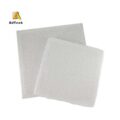
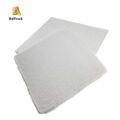
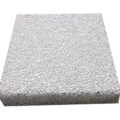
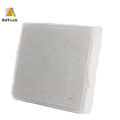
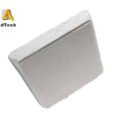
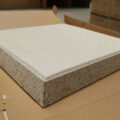
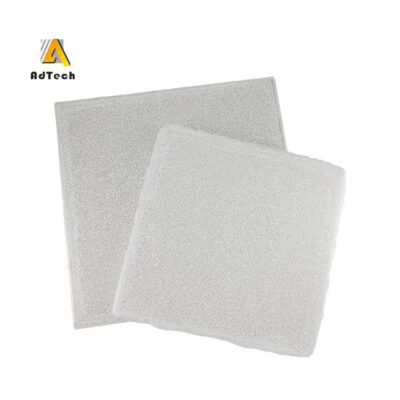
A Ceramic Foam Casting Filter (CFCF) is a porous ceramic structure designed for deep filtration of molten metal. Unlike traditional mesh filters that only block particles on the surface, ceramic foam filters use a three-dimensional interconnected pore structure to capture impurities throughout the entire filter body.
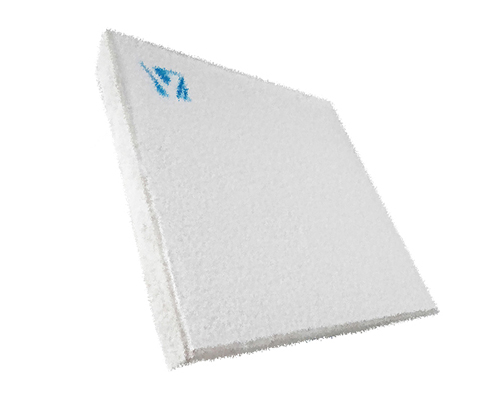
This allows it to perform depth filtration, which is significantly more effective for removing fine inclusions and oxide films from aluminum alloys.
How does ceramic foam fliter work in real casting conditions?
In actual aluminum casting environments, molten aluminum typically contains:
- Oxide films formed during melting and transfer
- Furnace lining erosion particles
- Flux residues and salt inclusions
- Hydrogen-related micro defects
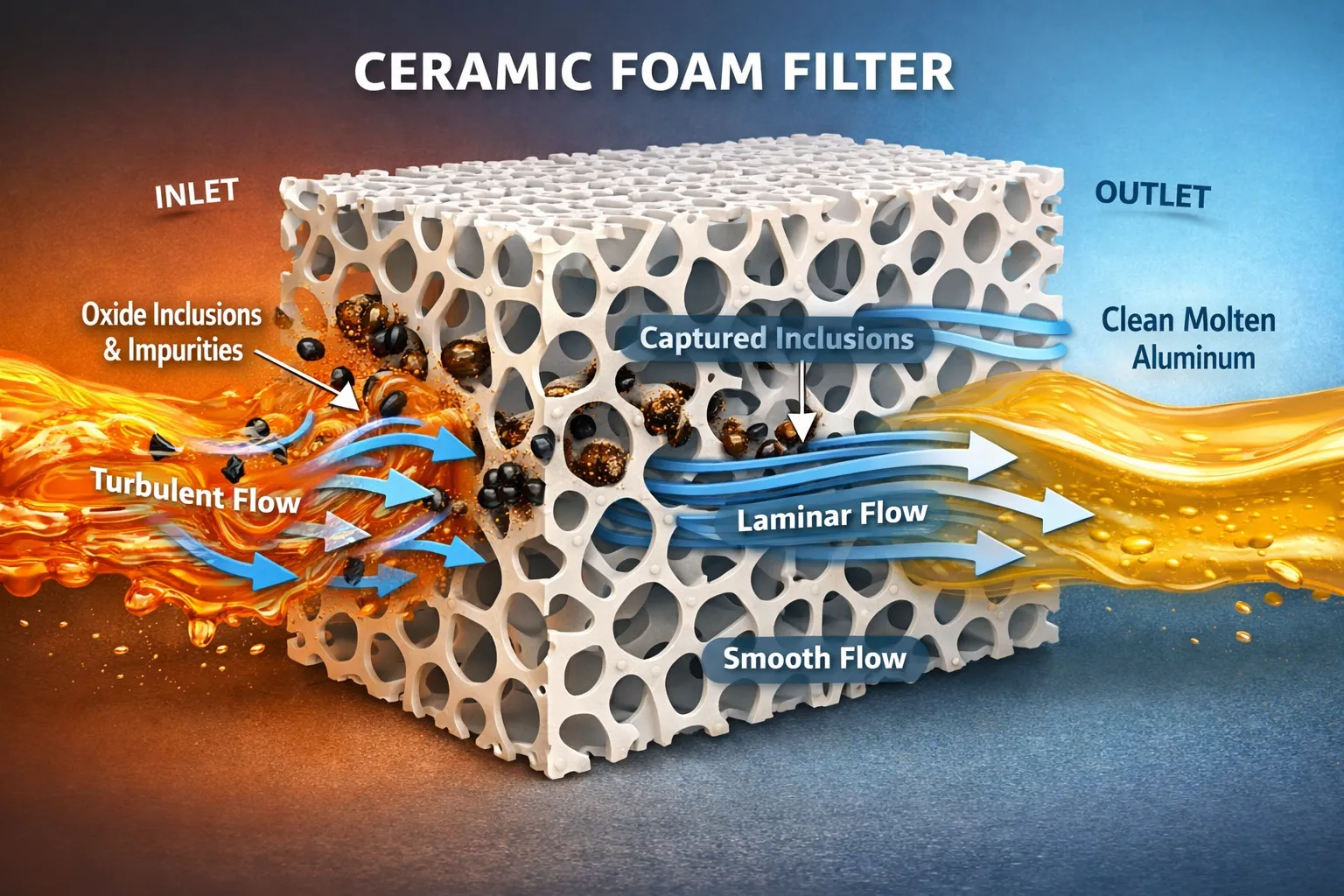
When molten metal passes through the ceramic foam filter, three mechanisms occur simultaneously:
- Interception – particles are physically trapped inside pores
- Inertial impaction – flow direction changes force particles into filter walls
- Adhesion effect – oxide films attach to ceramic surfaces due to surface energy interaction
This multi-mechanism process makes ceramic foam filters significantly more efficient than traditional filtration systems.
Why Ceramic Foam Casting Filter Is Critical in Aluminum Foundries
In aluminum casting, most defects are not caused by mold design issues, but by contaminated molten metal entering the cavity.
Key problems solved by ceramic foam filters
1. Porosity reduction
Hydrogen gas and oxide clusters are removed before solidification, reducing internal porosity.
2. Inclusion removal
Non-metallic particles such as slag and refractory debris are captured effectively.
3. Mechanical strength improvement
Cleaner microstructure improves tensile strength, elongation, and fatigue resistance.
4. Surface quality improvement
Reduces pinholes, surface roughness, and sub-surface defects.
5. Machining performance improvement
Reduces abrasive inclusions that damage CNC tools and increase wear rate.
📌 In industrial production, properly designed filtration systems can reduce defect rates by 20%–60% depending on melt cleanliness and gating design quality.
Ceramic Foam Casting Filter Technical Properties
Table 1: Engineering Performance Parameters
| Parameter | Typical Range | Functional Meaning |
|---|---|---|
| Material | Al₂O₃ / SiC / ZrO₂ | Determines thermal and chemical stability |
| Porosity | 80%–92% | Controls flow resistance and filtration depth |
| PPI (Pores Per Inch) | 10–40 PPI | Defines filtration precision level |
| Compressive Strength | 1.5–3.5 MPa | Structural stability under molten pressure |
| Max Temperature | up to 1700°C | Suitable for aluminum and magnesium alloys |
📌 Engineering insight: higher porosity improves flow but reduces capture efficiency—selection must balance cleanliness and casting speed.
How to Select Ceramic Foam Casting Filter (Engineering Decision Guide)
Correct selection is critical in real production environments. Wrong PPI selection is one of the most common causes of:
- Misruns
- Incomplete filling
- Flow restriction
- Turbulence-induced oxidation
Table 2: PPI Selection Based on Casting Application
| Application | Alloy Type | Recommended PPI | Engineering Reason |
|---|---|---|---|
| General aluminum parts | ADC12 / A380 | 10–20 PPI | Stable flow priority |
| Automotive structural parts | Al-Si-Mg alloys | 20–30 PPI | Balanced filtration and filling |
| Aerospace components | High purity aluminum | 30–40 PPI | Maximum inclusion removal |
| Thick-section castings | Large parts | 10–15 PPI | Avoid flow restriction |
📌 Field observation: excessive PPI without gating adjustment often causes premature solidification and incomplete cavity filling.
For detailed specifications and product options, please refer to our ceramic foam casting filter products page.
Ceramic Foam Filter Installation in Gating System Design
Even high-quality filters can fail if incorrectly installed.
Where should it be placed?
The optimal location is in a laminar flow region of the runner system, typically:
- Between pouring basin and runner
- Before mold cavity entry
- In controlled flow transition zone
Table 3: Installation Engineering Logic
| Position | Function | Risk if Incorrect |
|---|---|---|
| Pouring basin | Early slag capture | High clogging risk |
| Runner system | Main filtration zone | Optimal performance zone |
| Mold inlet | Final filtration stage | Flow turbulence risk |
📌 Key principle: ceramic foam filters improve system quality—they do not compensate for poor gating design.
Wanna practical installation steps and correct placement procedures,?
Please refer to our How to Use Ceramic Foam Filter guide page for a detailed engineering walkthrough.
Why Ceramic Foam Filters Fail in Production
Many foundries experience inconsistent performance not because of filter quality, but system-level issues:
Main failure causes
- High oxide content in molten aluminum
- Poor degassing efficiency
- Excessive pouring turbulence
- Incorrect filter preheating
- Wrong PPI selection for flow conditions
Engineering solutions
- Preheat filters to 300–500°C
- Improve rotary degassing process
- Optimize gating ratio for laminar flow
- Reduce pouring height and turbulence
- Apply staged filtration for high-end castings
To better understand how ceramic foam filters remove inclusions and stabilize flow, see our porous ceramic filter solutions for aluminum casting systems.
Industrial Benefits of Ceramic Foam Casting Filter
Based on aluminum casting production data and engineering reports:
- Scrap rate reduction: 15%–45%
- Inclusion defect reduction: up to 60%
- Mechanical property consistency improvement: ~20%
- Reduced machining tool wear in high-silicon alloys
- Improved batch-to-batch production stability
According to industry references such as ASM International and Modern Casting, molten metal filtration is one of the most cost-effective quality improvement methods in aluminum casting.
In many cases, filtration performance issues are also closely related to melt quality upstream;
For a deeper understanding of impurity control before filtration, see our guide on the effect of refining flux in aluminum impurity removal.
Ceramic Foam Filter vs Metal Mesh Filter
Ceramic foam filters use 3D depth filtration, while mesh filters rely on 2D surface interception only.
Key differences:
- Higher inclusion capture efficiency
- Better thermal shock resistance
- More stable flow behavior
- Longer effective filtration life
- Better suitability for high-performance castings
How to Evaluate Ceramic Foam Filter Performance
In real production environments, engineers evaluate performance using:
- X-ray inspection (porosity detection)
- Metallographic inclusion analysis
- Mechanical tensile testing comparison
- Flow simulation vs real casting validation
A stable filtration system must show consistent defect reduction across production batches, not only laboratory results.
Conclusion
The Ceramic Foam Casting Filter is a critical filtration technology in modern aluminum casting systems. It directly determines molten metal cleanliness, defect rate, and final mechanical performance.
When correctly selected and integrated into a properly designed gating system, it significantly improves casting yield, reduces scrap, and stabilizes mass production quality.
In high-performance manufacturing environments, ceramic foam filtration is no longer optional—it is a fundamental requirement for producing reliable aluminum components at industrial scale.
FAQ
1.What is a ceramic foam casting filter used for?
It removes slag, oxide films, and non-metallic inclusions from molten aluminum before casting.
2. What does PPI mean in ceramic foam filters?
PPI stands for pores per inch and indicates how fine the filtration structure is.
3. What PPI is best for aluminum casting?
Most applications use 10–30 PPI depending on casting complexity and cleanliness requirements.
4. Can ceramic foam filters reduce porosity?
Yes, they reduce hydrogen and oxide-related porosity by cleaning molten metal before solidification.
5. Are ceramic foam casting filters reusable?
No, they are single-use consumables because pores become saturated after use.
6. Do ceramic foam filters slow down metal flow?
Slightly, but proper design maintains stable laminar flow without affecting mold filling.
7. Where should ceramic foam filters be installed?
In the runner system or between pouring basin and mold cavity.
8. Do ceramic foam filters require preheating?
Yes, preheating to 300–500°C prevents thermal shock and improves flow stability.
9. What defects can ceramic foam filters eliminate?
Porosity, slag inclusions, oxide films, and surface pinholes.
10. Which industries use ceramic foam casting filters?
Automotive, aerospace, machinery, rail transport, and precision aluminum casting industries.